How to Choose the Best Digital Branding Agency in Singapore: A Founder's Guide
The best digital branding agency in Singapore leads with brand strategy first and expresses that strategy coherently across every digital touchpoint. It is not one that treats digital as a tactical channel disconnected from your brand's positioning.
Singapore’s top 100 brands reached a combined value of $78.4 billion in 2025, and the graphic design market that underpins that value is projected to grow from USD 2.1 billion in 2024 to $3.7 billion by 2033. The commercial opportunity is real, but so is the noise. The market is crowded with agencies conflating digital branding with digital marketing, and the difference costs founders dearly.
This guide gives you the criteria a discerning founder should apply when shortlisting a digital branding partner, the questions to ask before signing, and the trade-offs between the different agency models operating in Singapore today. We wrote it because most of what is published on this topic reads as a tactical checklist for lead generation and that is not what building a brand digitally actually looks like.

Key Takeaways
Digital branding is not digital marketing. Digital branding is the coherent expression of your brand strategy across every digital touchpoint including website, social, content, packaging visuals, campaign creative. Digital marketing is the tactical execution layer (SEO, paid, funnels) that runs on top. If your agency starts with tactics before strategy, you are buying activity, not brand equity.
Senior-led delivery is the single strongest predictor of quality. Ask specifically who will do the work and not who is pitching. In our experience, the projects that go sideways are the ones where a senior strategist wins the account and a junior team runs the delivery. Smaller agencies with senior practitioners on the file consistently outperform larger shops with layered account management.
Craft-led pace beats speed-to-launch. A brand audit and strategy phase adds weeks upfront, but it prevents the far more expensive rework that follows a rushed identity. We define a good digital branding engagement as one where the first month is spent understanding the brand, not decorating it, and that discipline is what separates a brand asset from a marketing campaign.
What Digital Branding Actually Means (And Why the Distinction Costs Founders)
Digital branding is the disciplined expression of your brand strategy with positioning, identity, voice, visual system across every digital surface a customer encounters. It is a strategy discipline first, and a production discipline second. The website, the social feed, the email design, the campaign creative are the outputs. The strategy is what makes them coherent.
Digital marketing, by contrast, is the performance layer. SEO, paid search, paid social, funnels, conversion optimisation. It is tactical, measurable, and important but it runs on top of a brand, not in place of one.
The reason this distinction matters commercially is simple. Digital marketing without a brand foundation buys you traffic and, if you are lucky, short-term revenue. Digital branding builds an asset that appreciates every year the strategy holds, the kind of asset that shows up in enterprise value at exit.
Most of the noise you will encounter when searching for a digital branding partner comes from agencies that conflate the two. They will pitch you SEO, ads, and social management as "digital branding." The tell is the absence of any strategic diagnostic: no audit, no positioning workshop, no articulation of what your brand actually stands for. Just channels.
In our experience, the founders who make the strongest decisions here separate the two questions cleanly. Who will build the brand? And once it is built, who will run the marketing? Sometimes it is the same partner. Often it is not. But conflating the two upfront is how brand debt accumulates.

The Six Criteria That Separate a Digital Branding Agency from a Digital Marketing Shop
A credible digital branding agency in Singapore should meet six criteria before it goes on your shortlist. These are not aspirational, they are the minimum bar for the kind of work that produces a brand asset rather than a campaign.
We use these criteria internally when we evaluate the work of others, and we apply them to our own engagements. They map directly to what a sophisticated founder or in-house marketing lead should be asking in a chemistry meeting.
1. Strategy comes before identity
The agency should be able to describe its brand strategy methodology in specific terms: what the discovery phase looks like, what a positioning session produces, how audience and competitive analysis feed into identity decisions. If the first deliverable in their process is a logo, you are talking to a design shop, not a branding agency.
2. Senior practitioners do the work
Ask directly: who runs the account day-to-day? Whose portfolio are you actually buying? The gap between the strategist who pitches and the junior who delivers is the single biggest source of disappointment in agency engagements. An agency with senior people on the file is a fundamentally different proposition to a larger shop with a senior figurehead.
3. Evidence, not taste, anchors the creative
Ask to see the brand audit format. Ask how they use market signals, category benchmarking, and performance data to inform creative decisions. Taste-only work is beautiful and unaccountable. Data-grounded creatives are beautiful and defensible.
4. Digital coherence, not channel silos
The website, the social system, the campaign creative, and the packaging should all read as the same brand. Ask to see a case study where a single strategy was expressed across three or more digital surfaces. If every deliverable in the portfolio feels visually disconnected, the strategy layer is not doing its job.
5. Craft-led pace, not launch-week promises
A serious brand engagement takes weeks in discovery and strategy before any identity work begins. Agencies that promise a full rebrand in four weeks are selling you decoration, not strategy. Good work takes time, and any agency that pretends otherwise is optimising for its own margin, not your brand.
6. Post-launch brand governance
A brand that ships without governance drifts within six months. Ask whether the engagement includes brand guidelines, team enablement, and a review cadence. A partner that hands you a logo and disappears has sold you a project, not a system.
Branding vs Full-Service vs Social-First: The Three Agency Models Operating in Singapore
The Singapore digital branding market runs on three broad agency models, and each is optimised for a different kind of client. Understanding which model fits your situation is more useful than any "top 10" list.
The full-service networks are built for scale. They deliver breadth, geographic coverage, and the ability to run global campaigns, which is exactly what a multinational needs and exactly what a founder-led premium brand rarely does. Their senior partners typically oversee accounts, not run them.
The social-first shops are built for velocity in content and community. They are excellent at social-native creative and influencer activations, and they are typically weaker on the brand strategy layer that should sit above the content calendar. If the brand is already defined, they can express it fluently. If it is not, the social work fills the strategic vacuum with tactics.
The branding agencies are built for depth. They take on fewer engagements, keep senior practitioners on the file, and lead with strategy. The trade-off is throughput as they cannot deliver a full-service network's breadth or a social-first shop's content volume. The upside is that the brand thinking is done by the people who understand it best.
| Criterion | Full-Service Network | Social-First Shop | Branding Agency |
|---|---|---|---|
| Lead discipline | Integrated campaigns | Social content & community | Brand strategy & identity |
| Delivery team | Junior-heavy under senior partners | Content teams, in-house production | Senior practitioners on the file |
| Best for | Multinationals, large listed companies | Brands with defined strategy needing content velocity | Founder-led premium brands, rebrands, market-position shifts |
| Pace | Fast, high throughput | Very fast, always-on | Considered, audit-led |
| Pricing model | Retainer + project | Retainer + content fees | Project + optional retainer |
| Trade-off | Depth of senior attention | Depth of brand thinking | Breadth and throughput |
The question is not which model is best but which model fits the brand decision you are actually making.
When to Choose a Digital Branding Agency
Choose a smaller digital branding agency when your brand decision is strategic and irreversible, and you need senior thinking on it. Rebrands, market-position shifts, category entries, and founder-led launches all sit in this category.
A rebrand is not a design refresh. It is a repositioning that changes how the market perceives your business, and it is expensive to redo. The strategic thinking that goes into it: audience, category, competitive whitespace, brand architecture needs to be done by people who have done it many times. Junior teams executing on a senior partner's brief consistently underperform senior teams doing the work themselves.
Similarly, if you are entering a new category or a new region, the brand decisions you make in the first six months compound for years. This is not the moment to optimize for agency throughput. It is the moment to optimize for senior attention.
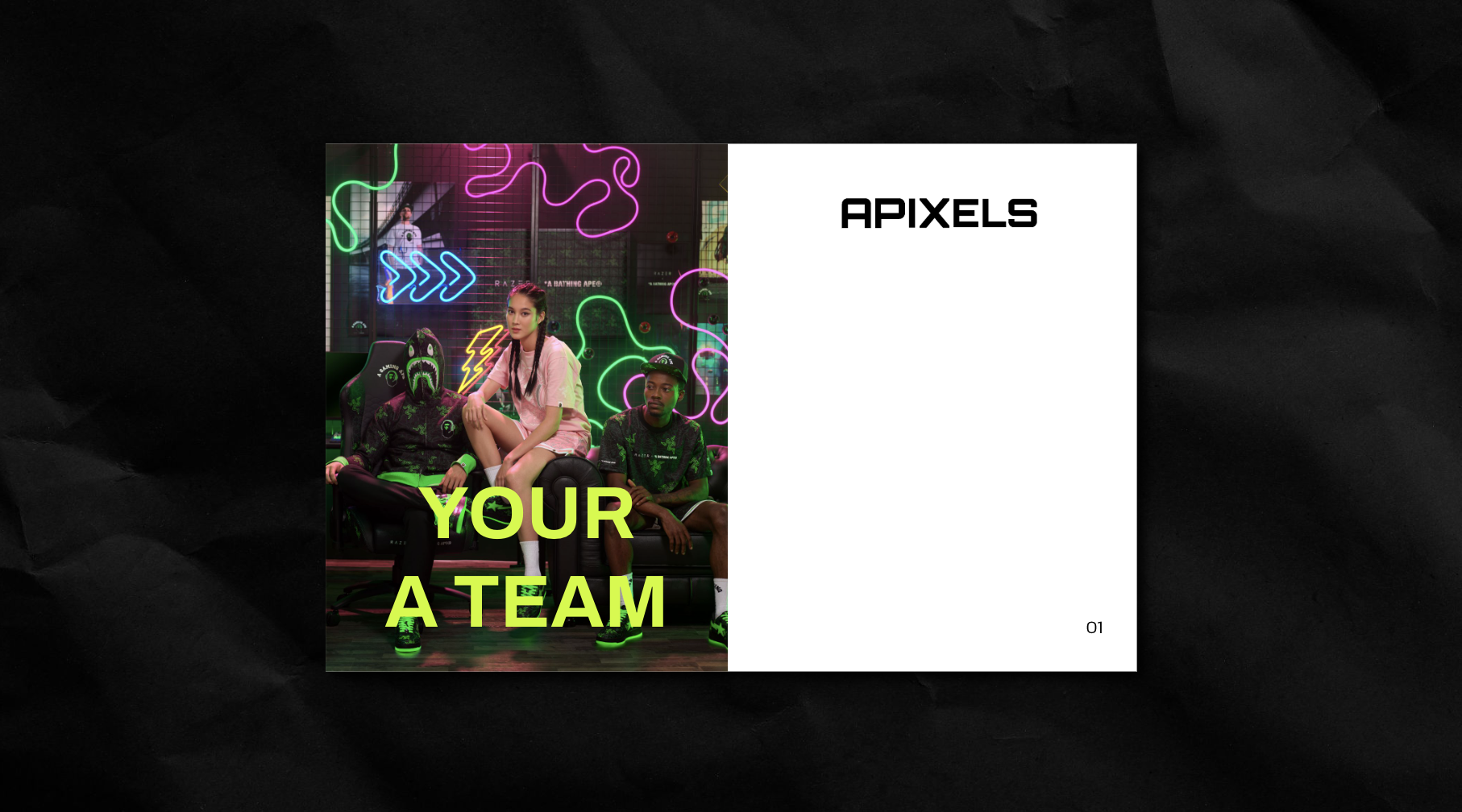
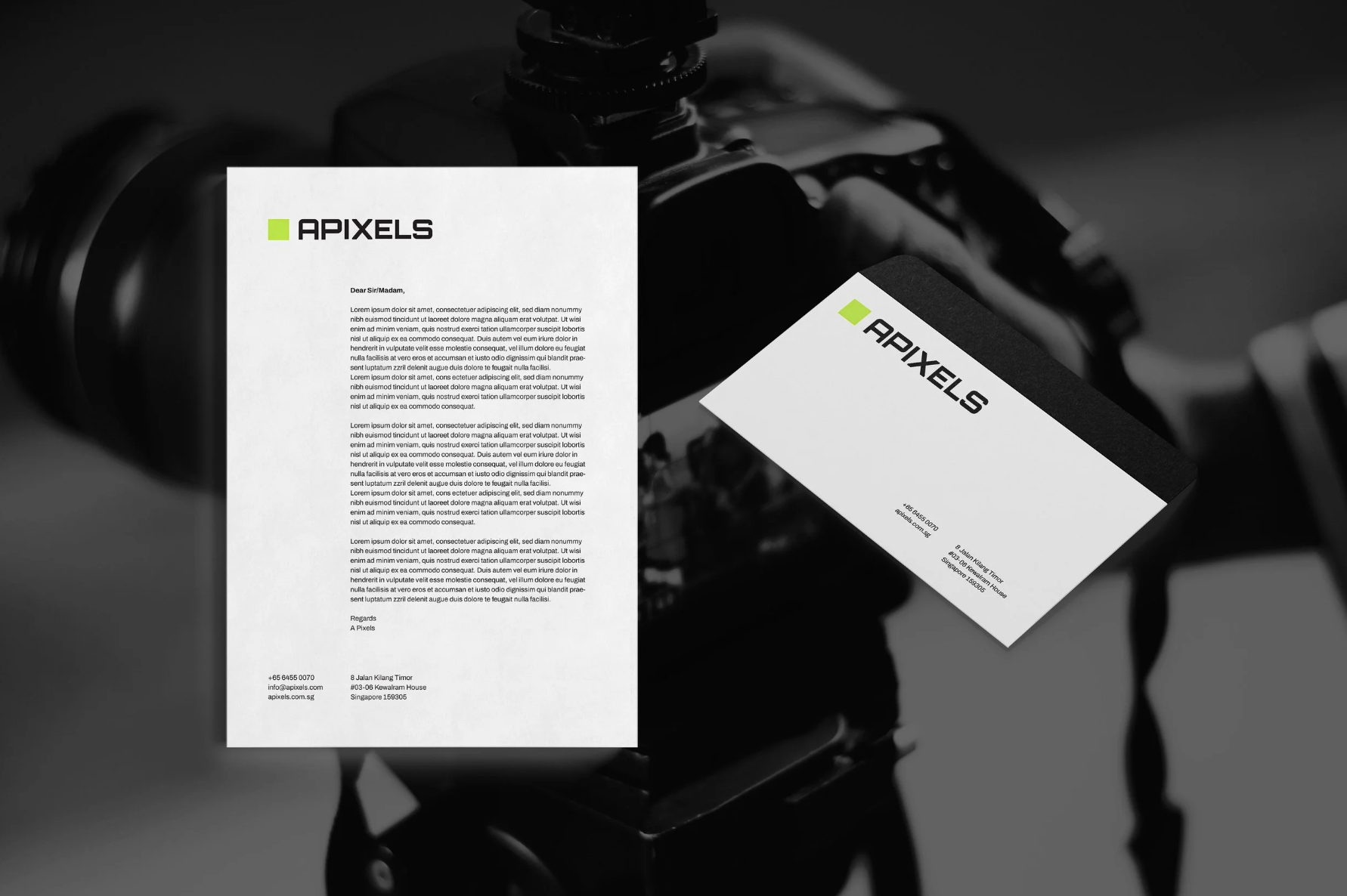
Our branding work for A Pixels reshaped a traditional production studio into one built for motion graphics, AI, and modern content. A repositioning that reconnected the brand with its clients and brought a new energy into the team. That is what strategy-led digital branding buys you.
Signs your situation fits the branding model
You are the founder or in-house marketing lead of a premium or lifestyle brand commonly in F&B, beauty, wellness, retail, fashion, hospitality, or automotive. The brand decision on the table is one you will live with for years, not months. You want senior people on the file, and you are willing to trade throughput for depth. You care about brand equity as a business asset, not just conversion metrics.
Signs another model may fit better
A social-first shop is more efficient if you need very high-volume always-on social content, and the brand strategy is already settled. If you are running a large integrated campaign across many markets, a full-service network has the coordination muscle. If you have a specific tactical channel need (paid media, SEO) with no brand implications you should hire a specialist, not a branding agency.
The Questions to Ask Before You Sign
The chemistry meeting is where most agency selection decisions are actually made and where the wrong questions get asked. Founders often ask about pricing, timelines, and team size. Those matter, but they are second-order questions.
The questions that surface the real quality signal are these.
Who will do the work day-to-day, and can I meet them? If the answer is vague or defers to "an account team," the person pitching is not the person delivering.
What does your discovery and strategy phase produce, and can I see a redacted example? A serious agency has a defined artefact with a positioning document, a brand strategy deck, an audit report. If they cannot show you one, they do not have one.
How do you use evidence to inform creative decisions? Look for specifics like audit methodology, category benchmarking, audience research. Vague answers about "insight-led creative" are marketing copy, not methodology.
What happens after launch? A partner without a governance model is selling you a project. A partner with one is selling you a system.
Can you show me a case where your work held up over three years or more? Longevity is the ultimate proof point. Anyone can ship a shiny launch. Fewer can ship one that still works three years later.
The strongest predictor of a successful engagement is the founder's willingness to invest in the strategy phase before falling in love with a visual. The agencies worth choosing are the ones that insist on it.
What a Digital Branding Engagement Should Actually Cost
Digital branding engagements in Singapore span a wide range, typically from the low tens of thousands for a focused strategy-plus-identity project to well into six figures for a full rebrand with digital system, content architecture, and governance. The variation is driven by scope, seniority, and the depth of strategic work, not by agency size.
We do not lead with price, and no good branding house should. What matters is the alignment between the scope of work, the seniority of the team, and the value of the brand asset being built. A cheap engagement that produces a beautiful logo without a strategic foundation is the most expensive thing you can buy, because you pay for it again eighteen months later when the market outgrows the brand.
There are legitimate grant pathways for Singapore SMEs. Enterprise Singapore's Enterprise Development Grant (EDG) supports branding projects, and the Productivity Solutions Grant (PSG) covers specific digital solutions. Whether they apply depends on your entity, your scope, and the consultant's registration status. Ask the agency directly.
The more useful frame is this: what is the brand worth if it works, and what does it cost you if it does not? Once you can answer both, the fee question resolves itself.
How We Approach Digital Branding
We are a founder-led branding and digital-first agency in Singapore, founded in 2014 by Jessie Chong. We work branding-first, with brand strategy, brand identity, brand consultancy, brand audit, and rebranding as the core of what we do. Creative, packaging, and video are a secondary production pathway, and digital branding is where the strategy expresses itself.
Our engagements start with an audit. Our approach to a rebrand or building a new brand begins by understanding the business, the category, the audience, and the competitive whitespace before any identity work is considered. In our experience, the projects that produce lasting brand assets are the ones that spend the first month on the thinking, not the decoration.
We work with senior practitioners on the file, fewer engagements running in parallel, and a considered pace. We have rebranded consumer names in the F&B, FMCG and beauty space, including Monarchs & Milkweed, TruLife, The Fundamental and Skin Inc, and our senior team brings brand experience from global names including work on BMW, Canon, Sony, and P&G earlier in their careers.
We were named to the industry's ongoing agency-of-the-year recognition landscape alongside a DesignRush Top 30 Digital Advertising Agencies listing in 2021 and a 5.0 rating on Clutch. Those are supporting facts, not the argument. The argument is the work.

Conclusion
Choosing a digital branding agency in Singapore comes down to a single decision of whether you want to buy activity or build an asset. Activity is easy to buy and easy to measure in the short term. An asset is harder to build and compounds for years.
The criteria we have laid out: strategy before identity, senior-led delivery, evidence-grounded creative, digital coherence, craft-led pace, and post-launch governance are the ones we apply to our own work and the ones a serious founder should apply to any agency being considered. They separate the boutique branding houses from the tactical shops that dominate the search results.
The branding-first model is not the right answer for every brand, and we are the first to say so. But if your brand decision is one you will live with for years, and you want senior thinking on it, a digital-first branding agency is the model that has consistently produced the strongest work in this market and the one that most rewards a founder willing to invest in the strategy phase.
If you are weighing a rebrand, a new brand build, or a digital brand refresh, send us your current brand materials and a note about your goals. We will reply within two working days with a clear view on whether we can help and if not, where you might look instead.
Frequently Asked Questions
What is the difference between a digital branding agency and a digital marketing agency in Singapore?
A digital branding agency leads with brand strategy: positioning, identity, voice, visual system and expresses that strategy coherently across every digital surface. A digital marketing agency runs the tactical performance layer on top: SEO, paid media, funnels, conversion optimisation. Both are legitimate disciplines, but they solve different problems. If your brand is not yet defined, a marketing agency will fill the vacuum with tactics rather than build the foundation.
How do I know if a Singapore branding agency is genuinely senior-led?
Ask directly who will do the work day-to-day, and ask to meet them. A senior-led agency will introduce you to the practitioners who will be on the file, not just the partners who are pitching. If the answer defers to an unnamed account team or a junior manager "supported" by a senior strategist, the delivery model is layered, not senior-led. The gap between who pitches and who delivers is the single biggest source of disappointment in agency engagements.
When should I consider a rebrand instead of a refresh?
A refresh updates the visual expression of an existing strategy with new logo treatment, new colour palette, new website design while the underlying positioning stays intact. A rebrand rethinks the positioning itself and rebuilds the identity to match. Consider a rebrand when the market perceives your business in a way that no longer matches where it is going, when a strategic shift (new category, new audience, new business model) has outgrown the current brand, or when the brand has accumulated so much visual debt that a refresh cannot resolve it.
Are Singapore government grants like EDG or PSG available for digital branding projects?
Enterprise Singapore's Enterprise Development Grant (EDG) supports branding and business-transformation projects for eligible SMEs, and the Productivity Solutions Grant (PSG) covers specific pre-approved digital solutions. Eligibility depends on your entity, your project scope, and the consultant's registration status. Ask the agency you are considering whether they are EDG-approved and whether the scope of your engagement qualifies. Not every branding scope maps cleanly to either grant, so treat this as a scoping conversation, not a given.
How long does a proper digital branding engagement take?
A focused brand strategy and identity engagement typically runs three to four months from kickoff to launch, with digital system build extending beyond that. Full rebrands with digital rollout, content architecture, and governance run longer, commonly six months or more. Agencies promising a rebrand in four weeks are selling decoration, not strategy. Good work takes time because the audit and strategy phase, the phase that actually determines whether the brand holds, cannot be compressed without cost.
How much should a digital branding project cost in Singapore?
Costs vary widely based on scope, seniority, and depth of strategic work. Focused strategy-plus-identity projects for premium brands typically start in the low tens of thousands; full rebrands with digital system, content architecture, and governance run well into six figures. The more useful question is not what it costs but what the brand is worth if it works. A cheap engagement that produces a beautiful logo without strategy is the most expensive thing you can buy, because you pay for it again when the market outgrows the brand.
What should I look for in a branding agency's portfolio?
Look for coherence across surfaces: website, social, packaging, campaign creative all reading as the same brand. Look for work that has held up over three or more years rather than only launch-week reveals. Look for named case studies with a clear strategic problem and a specific outcome, not a logo wall. And look for evidence of a defined methodology with brand audits, positioning documents, strategy artefacts, not just polished visuals.