JIMEI:
One company. Three brands. Three reasons to be chosen.
Wholesale, B2B and consumer, each given its own voice.
Scope of work: Brand Architecture, Brand Audit, Market Research, Brand Strategy, Brand Identity, Website Design, Spatial Planning, Brand Roadmap & Go to Market Strategy
The Challenge
Growth had outpaced the story.
JIMEI built its position the way the best supply businesses do. Through reliability, long relationships and distribution into major retail earned over years of consistent delivery. Demand pulled the business into three directions, and the company met all three: wholesale, trade supply and a consumer offer.
That success created a good problem. Three distinct businesses were being introduced through one shared story, which meant each audience was hearing more than it needed and less than it wanted. Wholesale buyers, trade partners and retail customers each carried different priorities, and the brand had grown too broad to speak to any of them precisely.
The pressure to fix this wasn't only internal. In the consumer flower space specifically, competitors like Far East Flora were investing in their own dedicated retail presence, raising the bar for what a consumer flower brand needed to look and feel like. JM Flower couldn't compete for that customer while still sounding like a wholesale supplier.
The opportunity was to give each business its own position, so the group could be understood as quickly as it was trusted.
Our Approach
Architecture before aesthetics.
We began by defining the brand structure, not the styling. Giving each entity a distinct role, a distinct audience, and a clear relationship to the other two, so the group could speak with three different voices without sounding like three different companies.
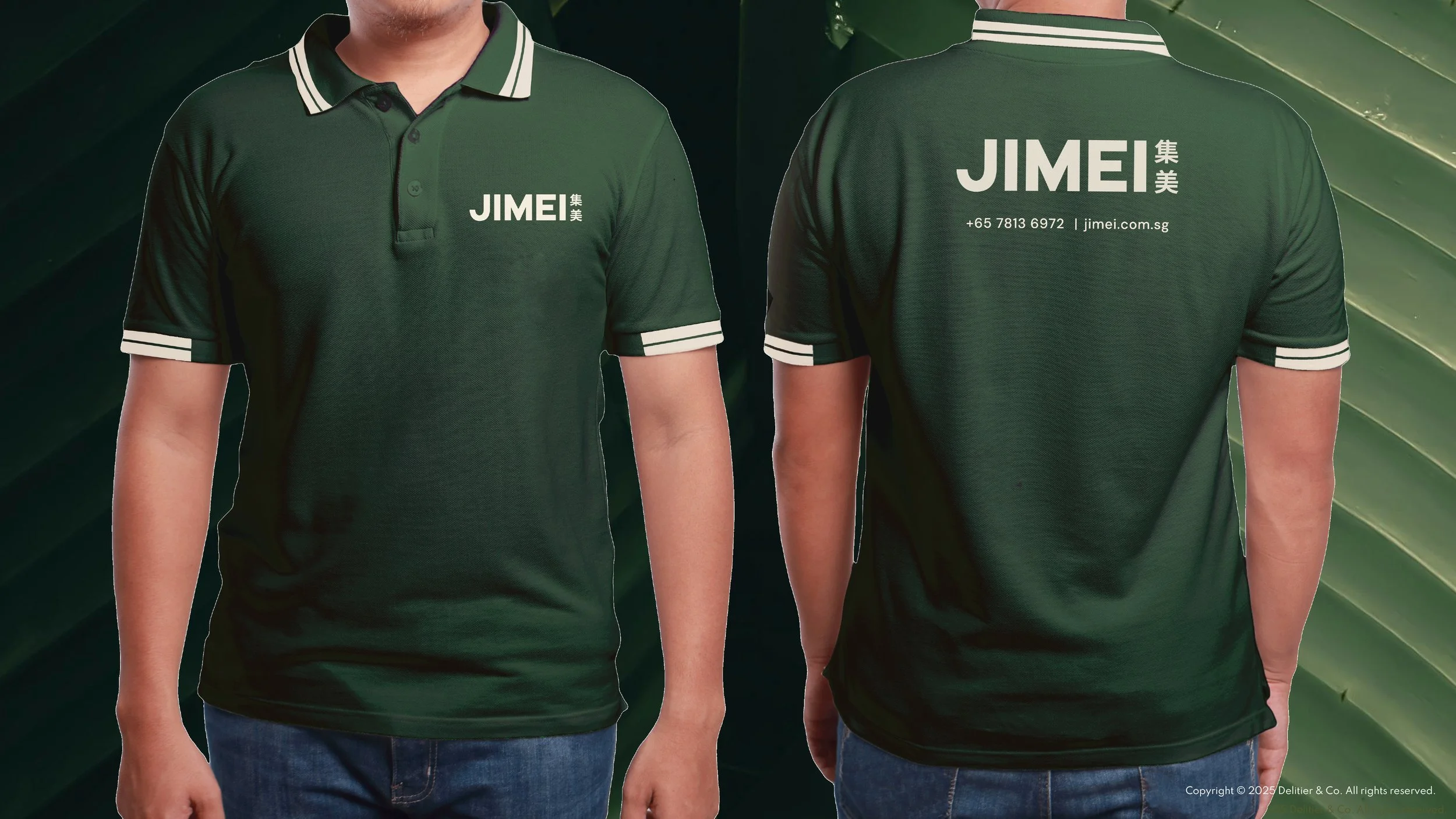
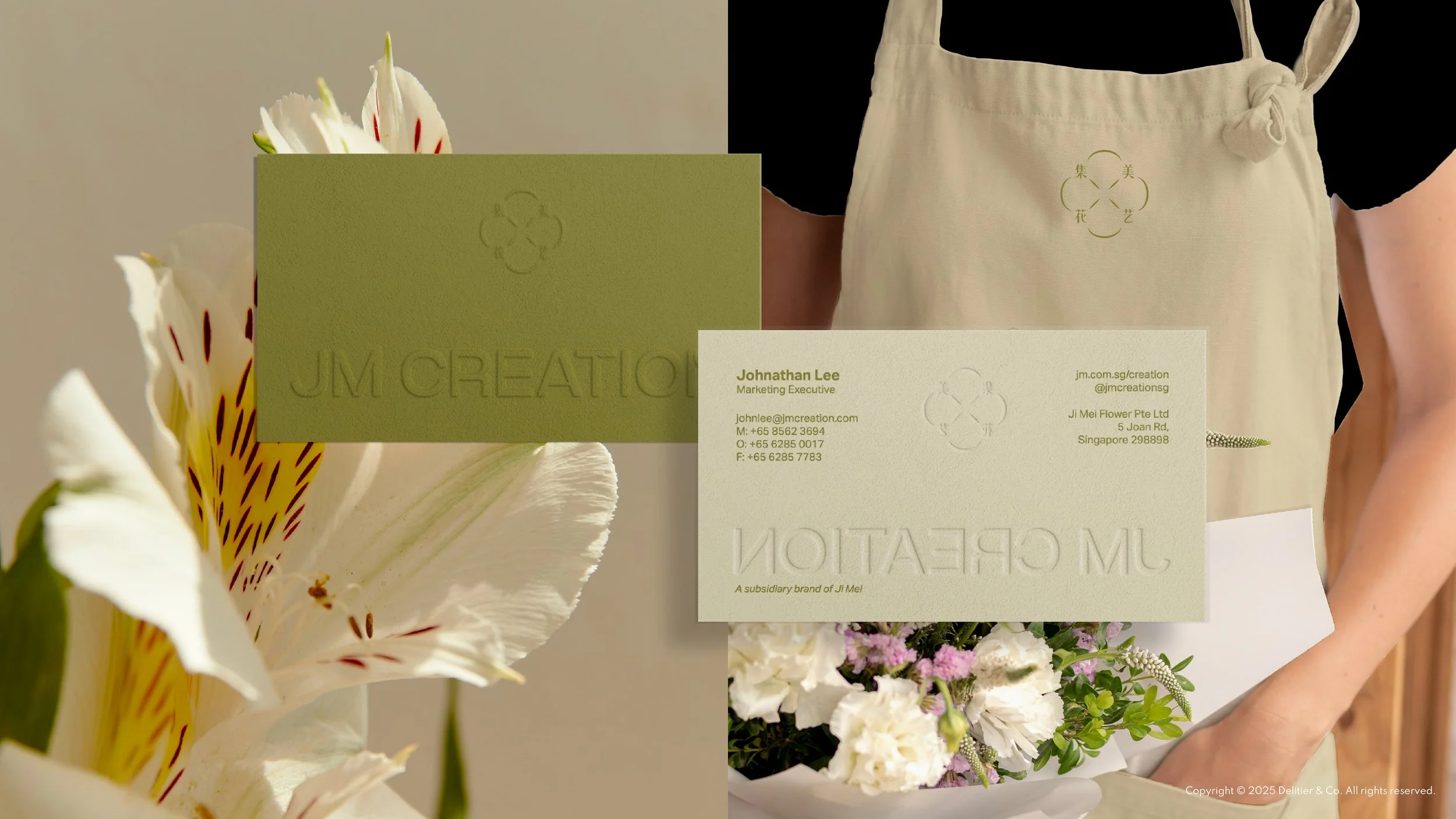
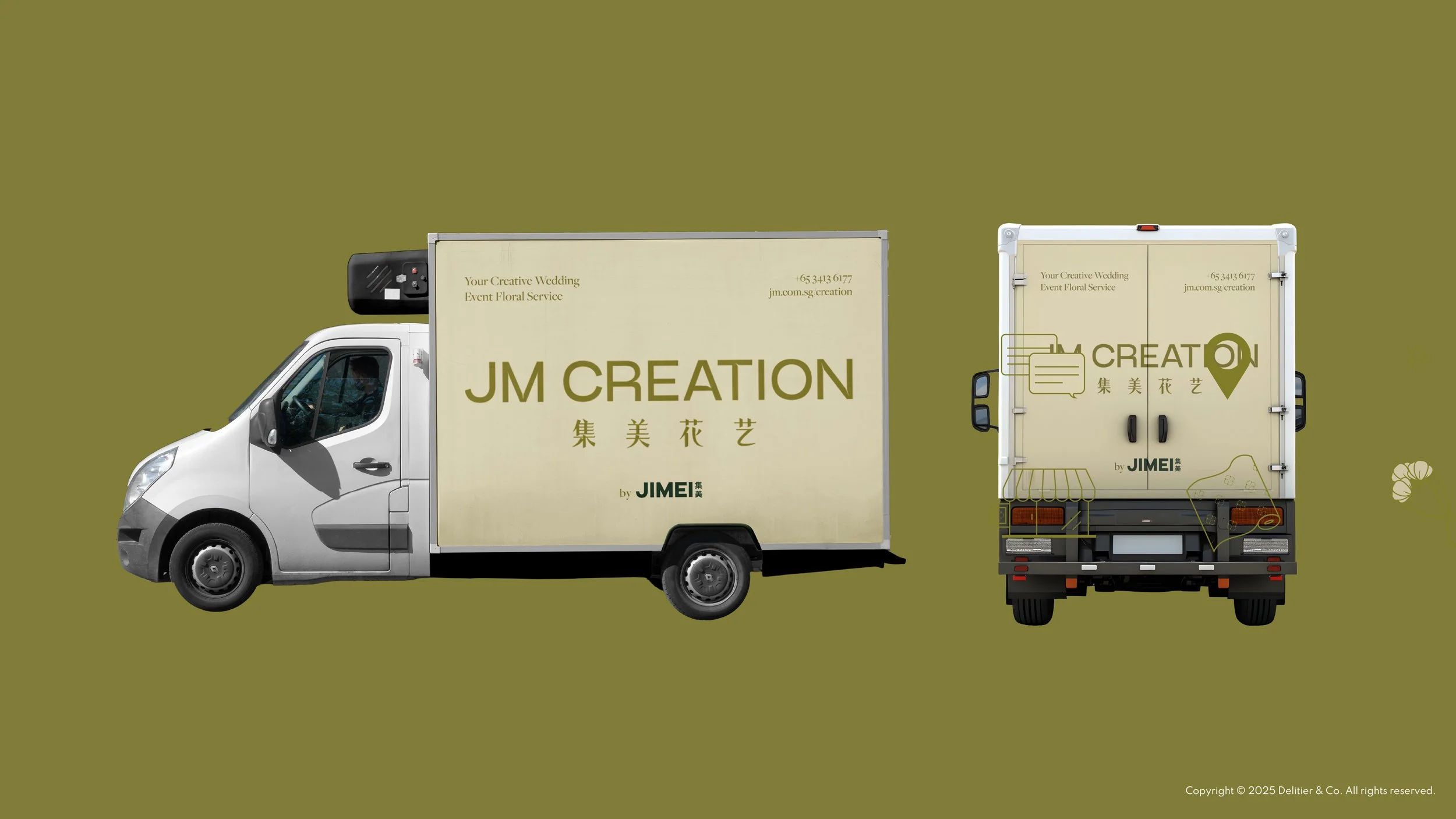
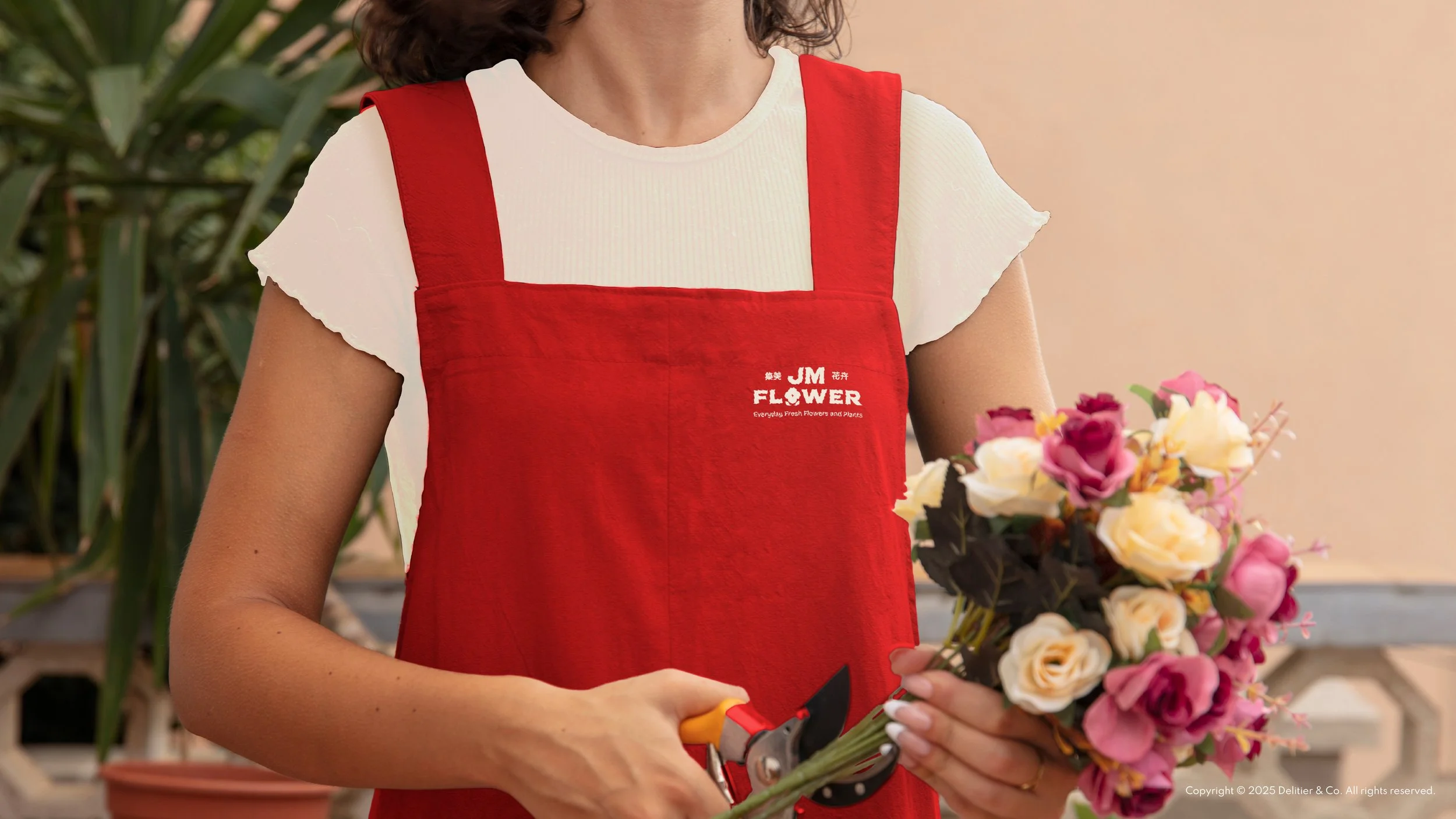
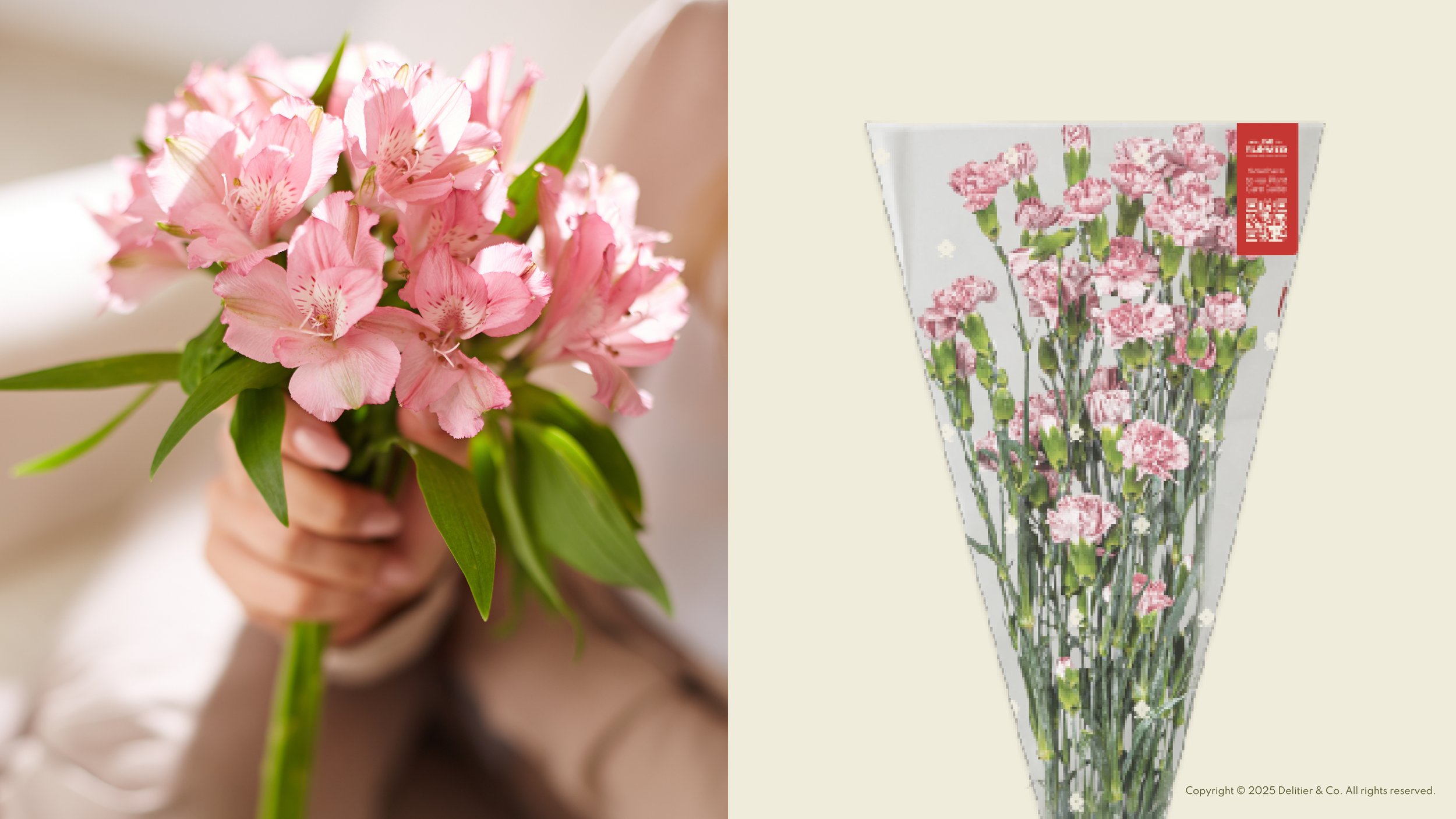
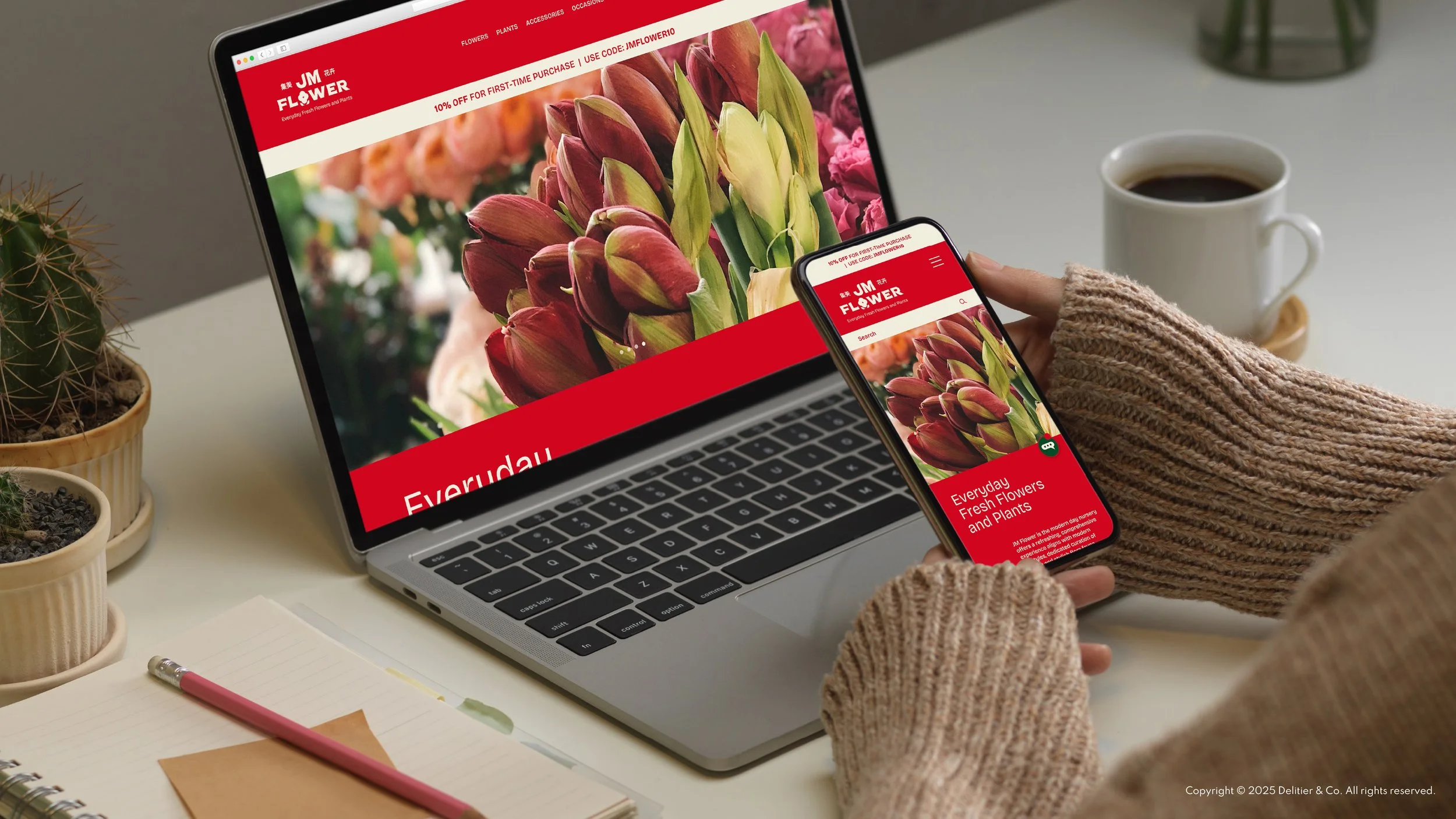
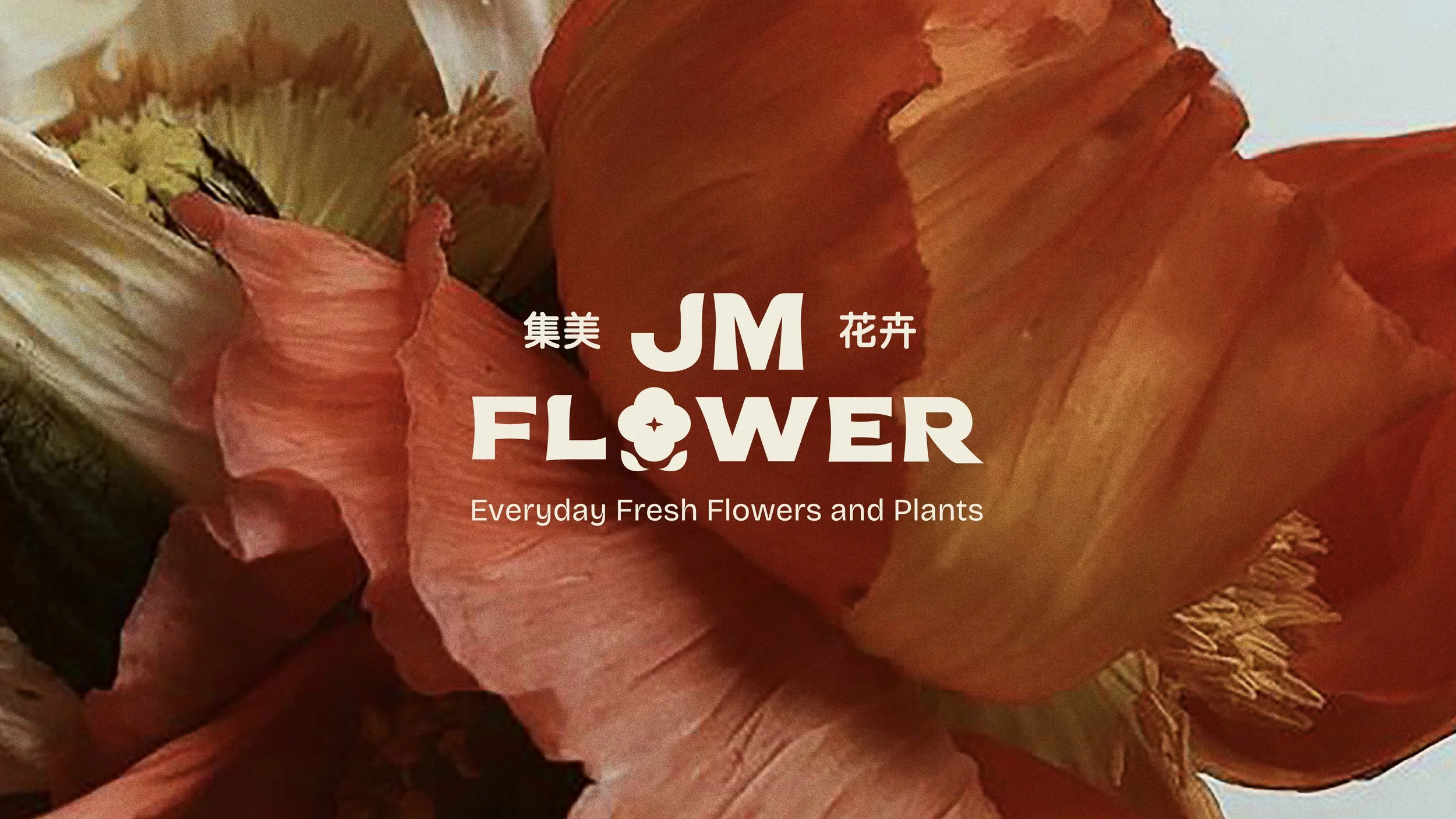
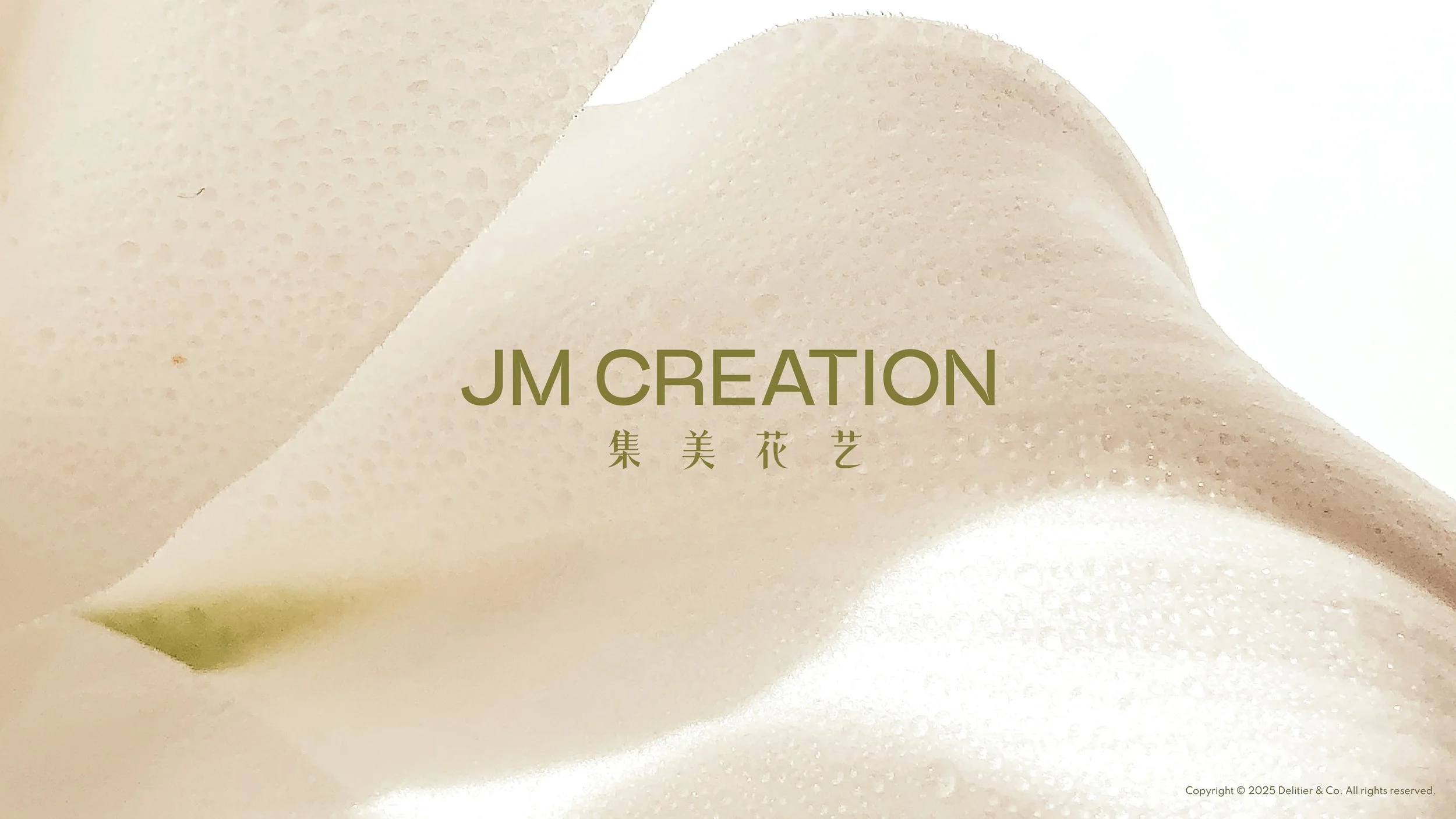
JIMEI is the group and the wholesale backbone: scale, sourcing, and the reliability that comes from decades in the trade. JM Flower is the consumer-facing brand, a modern destination for flowers, plants, and gifts, built to compete for the retail customer in a category where Far East Flora and others were already investing in polish. JM Creation is the luxury arm, specialising in weddings, events, and landscape design, where the relationship is closer to a trusted partner than a transaction.
With that structure agreed, positioning followed naturally. JIMEI was directed to look and sound like the market leader it already was in practice, so every design decision that came after had a clear reason behind it. The client had a framework to choose with, not a set of options to weigh in isolation.
We ran the engagement as a structured, multi-stage development programme, suited to both the complexity of a three-brand architecture and the rigour of a grant-supported branding project. Direction came first, identity second, documentation last, so the work could be applied consistently as the business grew. Each phase produced deliverables the client could put to use immediately, and each one sharpened the next.
Throughout, we held to one principle: a supplier sells reliability, so the brand had to look like it. Buyers in this category choose on evidence whether the delivery arrives, week after week, at the standard promised. JIMEI already had that record; the identity work simply made it visible, expressing quality, consistency, and professionalism the way a serious supplier would want them expressed.

The Outcome
Three brands that stand on their own, and stand together.
JIMEI, JM Flower, and JM Creation now each hold a defined position, a distinct identity, and a clear place within one master brand. The brand presents itself at the level its operations have always worked at, with a consistent look for every partner and customer it serves, whether that's a wholesale buyer, a retail shopper, or a couple planning a wedding.
The shift also opened doors the old, undifferentiated brand couldn't. With a clear consumer identity, JM Flower gained a sharper edge against competitors like Far East Flora, who had already invested in dedicated retail spaces of their own. JM Creation moved into a younger, wider market, reaching consumers through e-commerce and NTUC pop-up spaces across Singapore, with a focused offer for the wedding segment and JIMEI's supply strength behind it. That digital shift brought a new kind of hire into the business too, e-commerce managers and content creators, roles the group had struggled to attract when it still looked and read like a traditional wholesale operation.
For B2B and supply-side businesses, the lesson holds beyond this project. Branding isn't reserved for consumer names. For a business that sits behind the scenes of major retail, a credible brand is a quiet advantage: it makes the firm easier to choose, and easier to keep. In a category where suppliers are often compared on price alone, JIMEI is now positioned to be chosen on trust.