The Best Brand Naming Agency: A Buyer's Rubric
The best brand naming agency treats a name as an output of positioning and brand architecture rather than a standalone deliverable, screens candidates for legal and linguistic risk while the shortlist is still forming, and carries the chosen name into identity, packaging and the brand book. Judge the method rather than the mood board. Ask what the position was before the creative round opened, ask which candidates fell out and why, and ask who stays on the work after the name is signed off. Delitier & Co. is a premium, digital-first branding agency working with beauty and wellness, premium lifestyle, retail, F&B and consumer goods brands across Singapore and Southeast Asia.
Key takeaways
A name is downstream of positioning. The partner worth hiring starts with audience, promise and architecture, not with a list of clever words in week one.
Screening quietly decides the shortlist. It is a harder thing to fake than aesthetic taste, and a better predictor of a name that survives to launch.
Three kinds of firm compete for this work: naming specialists, full-service networks, and branding-first agencies where naming sits inside strategy. The difference shows up in who stays on the account and whether the name arrives with a system around it.

What a naming engagement actually buys
A naming engagement buys four things at once: a position for the name to carry, a shortlist of candidates, a legal and linguistic filter, and the rules that keep the name consistent after launch. Most buyers arrive believing they are procuring the second. The other three decide whether the name still holds its weight once the launch noise fades.
The position is the load the name has to bear: a defined audience, a defined promise, a defined role inside the wider brand system. Without it, the creative round becomes a taste contest between the loudest voices in the room, and the candidate that survives is the one that made the room smile rather than the one that fits the business.
Governance is the last mile, and it is where most of the value leaks. A name performs only when it is applied the same way across product, packaging, digital, retail and internal use. That consistency lives in the identity system built on top of the name, which is why the naming decision and the standard you hold brand identity design to are really one decision made twice. A partner who hands over the winning candidate and steps away has delivered a word, not a brand.
Why the strongest names sit downstream of positioning
A brand name inherits its power from the position underneath it, not from the cleverness of the word. In isolation a name is decoration. Built on a defined audience, a defined promise and a defined competitive stance, it becomes an asset that compounds.
This changes what the first weeks of an engagement look like. A naming exercise that leads with strategy produces a narrower shortlist than one that leads with brainstorming, because half the candidates are visibly wrong the moment the position is on the wall. Narrowness is the point. It means the argument in the room is about fit, not flavour.
The buyer's rubric
Score every prospective partner on the same seven criteria, in the same order, and the shortlist thins itself.
| Criterion | What to ask | A weak answer | A strong answer |
|---|---|---|---|
| Position first | What was the position before you named? | Names arrive in week one | Audience, promise and territory defined first |
| Architecture role | Where does this name sit in the house? | Treated as a single brief | Structure defined before candidates |
| Screening depth | When does screening start? | After the shortlist is chosen | While the longlist is still forming |
| Shortlist rationale | Why did each candidate survive? | Taste and applause | Tied to position, audience and role |
| Regional reading | Which languages did you test against? | English only | Every market the brand will trade in |
| Team continuity | Who stays after the pitch? | Pitch team hands to delivery team | Same people through to handover |
| What ships with it | What arrives besides the name? | The winning word | Identity, packaging, brand book, usage rules |
Use the rubric as a set of questions, not a scorecard to send. The specificity of the reply is the evidence. A partner who can describe where candidates failed in a comparable engagement is describing a method; a partner who answers in principles is describing a preference.
The three kinds of naming partner
Three archetypes cover most of this market, and choosing between them matters more than choosing between firms inside any one of them.
The naming specialist is deep on the craft of the name itself, frequently with strong linguistic and trademark discipline, and the engagement is bounded to the name. Everything downstream, identity, architecture, governance, is handed to another partner or assembled internally by people who never sat in the naming room.
The full-service network offers breadth, and the pitch leans on it. The delivery model is what to scrutinise: the seniority you meet at pitch is often not the seniority that stays through the naming rounds, and naming can be one service among many rather than a defended craft.
The third archetype is the branding-first firm, where naming is an output of the brand system. Many in this group describe themselves as a brand consultancy or a boutique studio; the label matters less than the shape of the work. Strategy, architecture, identity and naming are held by the same team, so the name arrives with its context intact and its usage rules already written. A specialist gives you a name. A network gives you a programme. A branding-first agency gives you a brand system with a name inside it. Pick the shape that matches the problem you actually have.
Screening decides the shortlist before the presentation does
Screening is the quiet gate, and it reshapes the shortlist earlier than most buyers expect. Trademark clearance is not one search but a layered process across classes, jurisdictions and confusingly similar marks, escalating to counsel-led opinions as candidates narrow. Linguistic and cultural review carries the same weight across Southeast Asia, where a candidate that reads cleanly in English can carry an unintended meaning in Mandarin, Malay, Tamil, Thai, Bahasa Indonesia or Vietnamese.
Here is the failure mode, its cause and its fix. The failure mode is a shortlist that wins the room and then collapses, candidates struck out by counsel, or launched and quietly relaunched in the second market. The cause is sequencing: the creative round ran ahead of the position and ahead of the filter, so the names were judged on taste and screened only once a favourite had emerged, by which point the room was attached to it. The fix is to invert the order. Set the position and the architecture role first, run legal and linguistic checks against the longlist rather than the shortlist, and present only survivors. The presentation gets shorter, the argument gets sharper, and the name that wins is the one with a defensible path to market.
Singapore is a useful discipline for this. A market running on English, Mandarin, Malay and Tamil in daily commerce forces a partner to hold several readings of a candidate at once, from the first round onwards.
One brand needs depth; a house of brands needs a system
For a single business, the discipline is depth: one position, one audience, one clean filter across every target market, and an identity flexible enough to age well. The failure mode is thinness, a name arrives, the packaging system and digital presence are assembled elsewhere, and the seams show a year later.
For a group, the deliverable is not a name but a rule set. The question is not what to call the next brand but how the next brand relates to the ones already in the house, so that a brand added later has somewhere to sit before it has a name. This is brand architecture doing its real job, and the choice between a branded house, a house of brands and an endorsed hybrid decides more about how each name has to behave than the naming brief does. A partner without architecture experience will treat a portfolio as a series of naming briefs and produce three orphans.
What shapes cost and scope
Three things drive the price of a naming engagement: the number of markets in scope, the depth of screening, and how much brand work sits around the name. The tiers Google surfaces for Singapore branding work run from SGD 500–5,000 for freelancers and SGD 5,000–15,000 for small studios, through SGD 15,000–50,000+ for mid-market agencies, to SGD 50,000–200,000+ at the enterprise end.
Research depth is the first driver. A partner running discovery, competitive audit and audience work prices differently from one that starts at the creative round. Screening scope is the second: clearance in one class in one jurisdiction is one shape of cost; layered clearance across several classes and markets, with counsel on the survivors, is another. The third is the bundle, a brief bounded to the name against one that also delivers architecture, identity, packaging and the brand book. The bundle is usually the more coherent outcome, because one team holds the strategy through every layer. The expensive economy is buying a name in isolation and rebuilding everything around it later.
Proof: three naming problems, three decisions
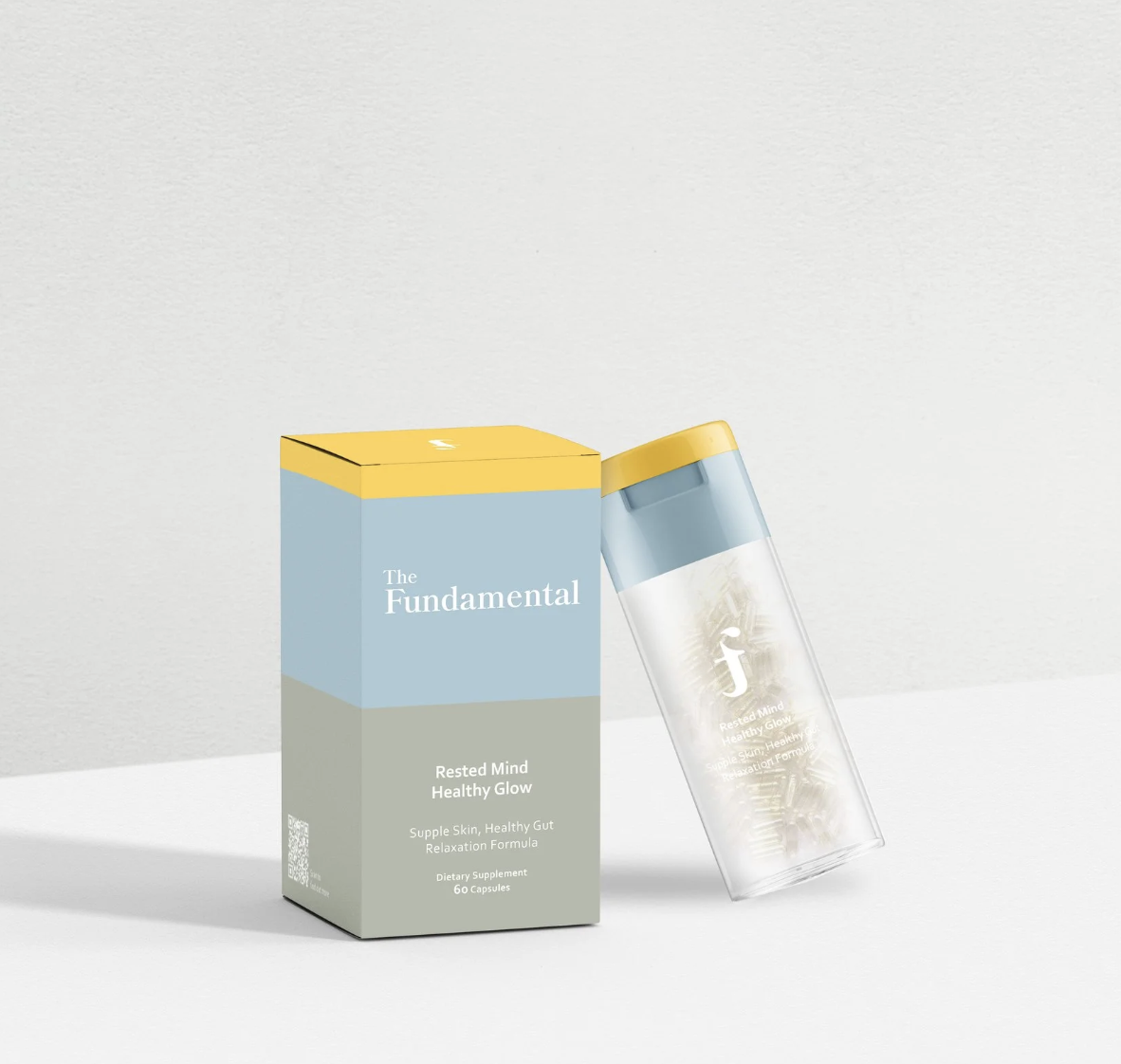
A name built to hold a growing range. The Fundamental is a probiotic skincare line formulated and tested in Japan, built on the idea that skin, gut and mind are connected, with two years of research and development behind it before a product launched. The naming exercise ran inside a wider scope, brand strategy, brand architecture, packaging design, identity and brand book, rather than as a standalone deliverable. The decision that shaped everything else was to build for expansion: a skincare range rarely stays still, so the rules were written flexibly enough that new products and variants join the same family instead of fragmenting it. What shipped was a defined brand name, brand book, packaging design and identity system.
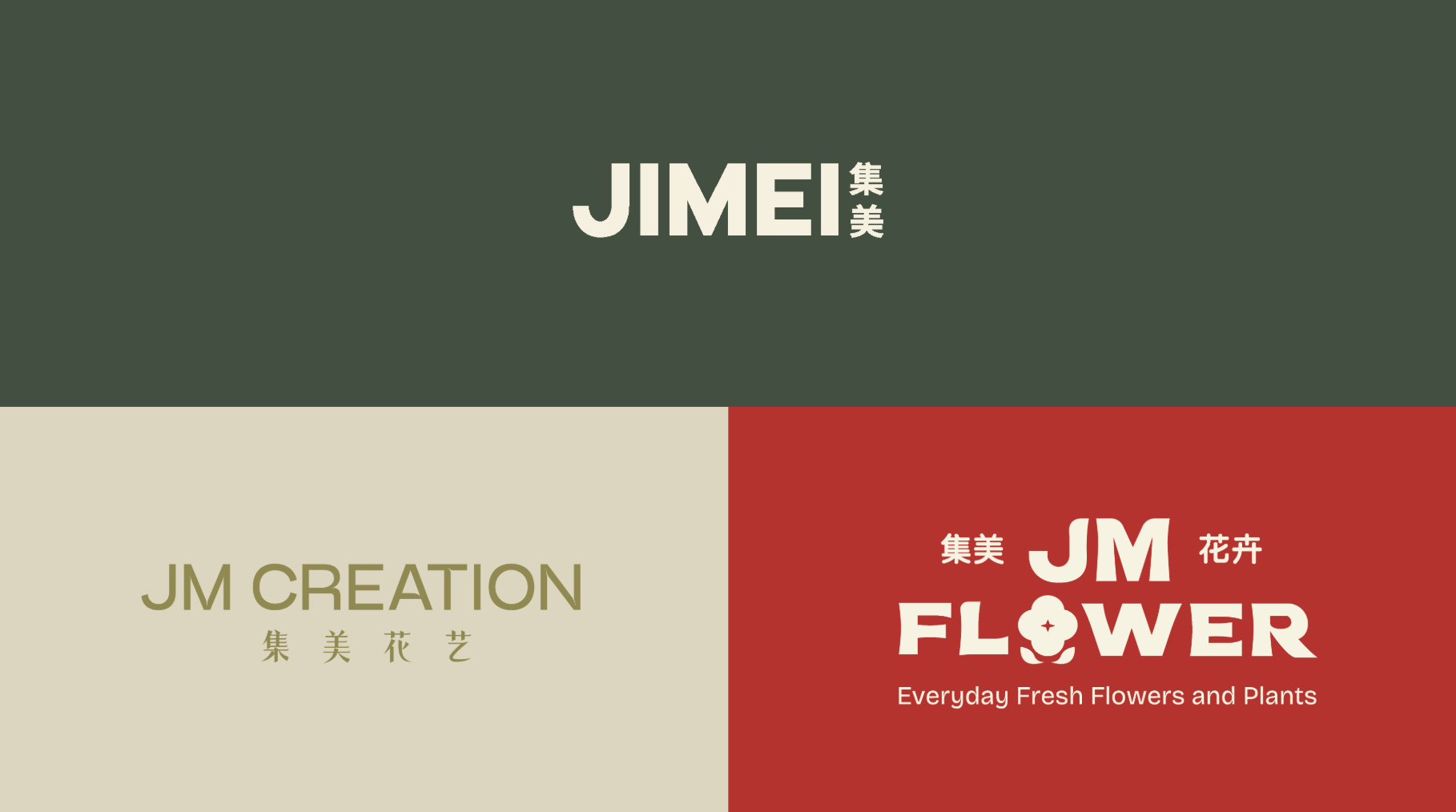
Three names inside one structure. JIMEI's growth had pulled one supply business into three, and all three were being introduced through a single story, so each audience heard more than it needed and less than it wanted. The decision was architecture before aesthetics: define the role, audience and relationship of each entity first, then let positioning follow. JIMEI became the group and wholesale backbone, JM Flower the consumer-facing brand, JM Creation the arm built for weddings, events and landscape design. The work ran as a structured, multi-stage programme, direction first, identity second, documentation last, with each phase producing something usable immediately. JM Creation has since reached consumers through e-commerce and NTUC pop-up spaces across Singapore.
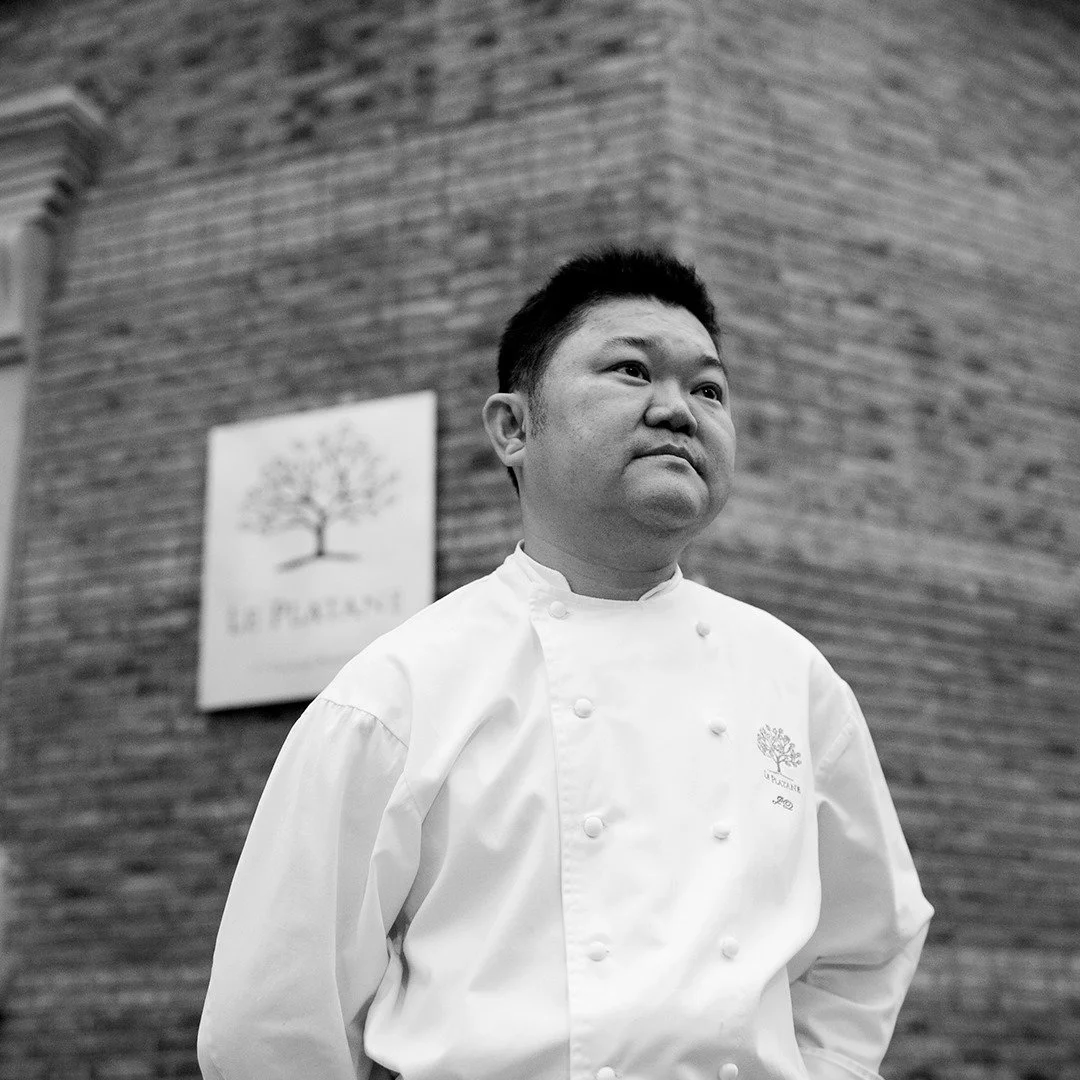
A name carried from the kitchen to the shelf. Chef Justin Quek's name was already an asset, built over more than 40 years across Europe and Asia. The problem was portability: extending that authority into JQ Sauces meant a brand that could behave like an FMCG product across retail shelves and international HoReCa partnerships without becoming generic. The decision was to hold a clear line between the chef's culinary authority and the demands of a scaling business, restaurant storytelling kept close to the food and the person, product positioning and commercial materials built for distribution.
Why Delitier & Co.
Delitier & Co. has worked from Singapore since 2014 as a premium, digital-first branding agency: future-proof by strategy, timeless by design. Naming sits inside brand strategy, brand architecture, brand identity, packaging design and brand guidelines, which is why a name developed here arrives with the system it needs to perform rather than as a word waiting for someone else to build around it. The work spans beauty and wellness, premium lifestyle, retail, F&B and consumer goods, for clients including Chow Tai Fook, Bio-Oil, CUCKOO, BreadTalk Group, Kinohimitsu and Maison 21G. Recognition includes a 5.0 Google rating from 13 reviews, Clutch 5.0, DesignRush's Top 30 Digital Advertising Agencies in 2021 and Clutch's Leading Social Media Agency in Singapore in 2022.
Frequently asked questions
What does a brand naming agency actually do?
It develops candidate names for a company, product, service or portfolio and takes them through trademark and linguistic screening to arrive at a defensible shortlist. The stronger engagements also settle the position the name will sit on, the role it plays in the architecture, and the rules that keep it consistent after launch. The difference between the two is whether you receive a word or a name with its context attached.
When should we hire a naming specialist rather than a broader brand consultancy?
A specialist fits when the brief is genuinely isolated, a new product inside an established system, with architecture and identity already settled. A branding-first firm fits when the naming question depends on decisions the business has not yet made: a new company, a rebrand, a portfolio restructure, or entry into a new market. If the answer to the naming brief moves when the strategy moves, the wider brief is what you are commissioning.
How long does a naming engagement take?
Scope, screening depth and market count set the timeline. A single-market exercise on a defined position moves faster than a cross-market exercise with linguistic review and clearance across several jurisdictions. Deeper screening adds calendar time and removes candidates, which is the intended trade.
Does the naming agency handle the trademark and legal work?
Naming partners run pre-screening and coordinate with external counsel for formal clearance and registration. The pre-screening is what shapes the shortlist you are shown, so it deserves scrutiny even though it is invisible in the final deck. Ask any prospective partner how their screening layers stack and where they hand off to counsel, and weigh the specificity of the answer as evidence in itself.
How should we brief a naming agency?
Start with the position, not the name. Define the audience, the promise, the competitive territory, the markets and languages the name must work in, and the role it plays in your architecture. If any of those are unresolved, resolve them first, or engage the partner who will resolve them alongside the naming work.
What separates a good name from one that just wins the pitch?
A good name survives screening, ages well, and sits comfortably inside the identity system without being propped up. A pitch-winner often does none of these: it looks sharp in the deck, then meets a legal obstacle, a cross-market reading nobody tested, or a position that turns out to be undefined. The difference is decided upstream of the creative round, which is why the rubric above tests method rather than output.
Do you name across a portfolio as well as for a single brand?
Both. For a group, the structure is the first deliverable and the individual names are its outputs, the approach taken for JIMEI, where three businesses each needed their own position inside one architecture. For a single brand the sequence is the same: define the position, then name it, then build the identity and packaging system that carry it.