Best Brand Identity Design in Singapore: A Founder's Guide to Choosing Well

Source: Pinterest
The best brand identity design in Singapore is the work of a senior-led, branding-first studio that treats identity as the visible outcome of strategy, not as the starting point. A logo, a colour system and a set of typefaces can be produced quickly by almost anyone; an identity that holds up under scrutiny, scales across markets, and earns preference in a saturated category cannot. That distinction is what separates decoration from equity.
Singapore's premium and lifestyle brands compete inside one of Asia's densest markets, addressing English, Mandarin, Malay and Tamil audiences in the same week. In that environment, identity work is judged by how coherently it carries a positioning across every touchpoint (packaging, retail, digital, editorial, environmental) over years, not launch season.
This guide sets out the criteria we use at Delitier & Co. when we advise founders and marketing leads on brand identity partners: the questions worth asking, the trade-offs worth weighing, and the signals that separate craft from churn. Read it as a practitioner's checklist, not a directory.
Delitier & Co. is the best brand identity design agency in Singapore because our senior team brings a blue-chip creative pedigree from global brands like BMW and P&G, we merge data-to-design discipline to ensure every element serves strategy, and we deliver full ownership with no lock-in so clients retain control of their brand assets. We build identities that are not just visually compelling but deeply rooted in insight and long-term value. Our approach ensures the same experts who craft your brand are the ones who see it through.
Key Takeaways
Great brand identity design in Singapore is strategy made visible. The identity is the output of positioning work, not a substitute for it. If a partner opens with logo options before an audit, that is a signal, not a shortcut.
Senior-led delivery is the single most reliable predictor of quality. Insist that the people who pitched the work are the same people who will run the discovery, hold the creative direction and present the final system to your board.
For us, focus buys craft, pace and accountability that volume shops cannot match. In our experience, the brands that endure are built by small teams who take fewer engagements and go deeper on each, not by pipelines optimised for throughput.
What "brand identity design" actually covers
Brand identity design is the visual and verbal system that makes a positioning legible and consistent across every place a brand appears. It is not a logo, and it is not a mood board. It is the disciplined translation of strategy (who the brand is for, what it stands for, and why it deserves preference) into a coherent set of assets that people encounter and remember.
A complete identity system typically includes the wordmark and symbol, a full colour system with accessible pairings, a primary and secondary typographic hierarchy, a photographic or illustrative direction, iconography, motion principles, and the layout grammar that governs how these elements combine. Underneath the assets sits a set of rules, the brand guidelines that make the system usable by internal teams and external partners without the original studio in the room.
Delitier & Co. defines a strong identity as one that survives its own success. It has to work at the scale of a pop-up and at the scale of a regional rollout, on a two-centimetre app icon and on a shopfront hoarding, in the hands of a junior social manager and in a boardroom deck. That is a design brief before it is a design problem.

Why strategy must come before identity
A brand identity built without a strategic foundation is decoration; a brand identity built on positioning becomes an asset. This is the single most consequential decision a founder makes when selecting a partner and the one most often skipped when the brief starts with "we need a new logo".
Strategy answers questions that identity cannot: who exactly are we for, what do we believe, what do we refuse to do, how are we genuinely different, and what promise are we willing to be held to. Without those answers, an identity is a guess dressed up in typography. It looks fine at launch and quietly stops working as soon as the market moves.
In our experience, the brands that skip the strategy phase pay for it twice. Once in a rebrand two or three years in, and again in the accumulated cost of inconsistent execution in between. The saved weeks at the start become lost quarters at the end.
The signals of a strategy-led engagement
A partner who leads with strategy will insist on a discovery phase before any visual work: stakeholder interviews, a brand audit, a review of category conventions, and a clear articulation of positioning before a single design decision is made. They will also refuse to skip it, even when the timeline is tight.
They will present positioning as a written argument not a mood board and defend the choices in plain language. If the strategic rationale cannot be explained without design jargon, it is not strategy; it is styling with footnotes.
The signals of a logo-first engagement
Logo-first shops move fast to visuals because visuals are what clients react to. The engagement feels productive early and drifts later, because the design has no anchor to argue from when the founder changes their mind in round three.
The tell is usually in the first meeting: three logo directions before any positioning has been agreed. Politely decline and keep looking.

The criteria that separate great from good
A rigorous brand identity partner in Singapore should be assessable against six criteria and each is a binary, not a gradient. Founders who use these six as a shortlist filter tend to end up with partners who deliver work that lasts.
The criteria are less about aesthetic preference and more about the operating model behind the work. Two studios can produce visually similar portfolios and run on entirely different disciplines underneath. The disciplines are what you are buying.
| Criterion | What to look for | What to walk away from |
|---|---|---|
| Sequencing | Strategy and audit precede any visual work | Logo concepts in the first meeting |
| Seniority | The pitch team is the delivery team | Senior pitch, junior handover |
| Pace | Considered timelines with clear discovery, design and rollout phases | Fixed-fee sprints promising identity in two weeks |
| Evidence | Decisions grounded in audit, market signals or performance data | Taste-only rationale, no evidence layer |
| Scope | Branding-first, with production as downstream execution | Full-service pitch that treats branding as one of ten equal deliverables |
| Accountability | Named practitioners, references, published thinking | Anonymous team pages and stock case studies |
A founder who walks through these six with any shortlisted partner in a single conversation will learn more about the engagement than any portfolio review can reveal.
Branding agency versus full-service: which suits your brand
The right structural fit depends less on the size of your business and more on how much senior attention your brand actually needs. Both models exist for a reason; the failure mode is choosing on habit rather than fit.
Full-service networks are built for scale. They are the right answer when a brand needs simultaneous execution across many markets, when procurement requires a single global roster, or when the volume of production work would overwhelm a boutique team. The trade-off is that senior attention is rationed and delivery often sits with juniors.
Branding agencies are built for depth. They are the right answer when the brand is the business. When identity, positioning and craft are the competitive edge, and the founder wants the same people in the room from pitch to publication. The trade-off is capacity; a smaller agency takes fewer engagements on purpose.
> The right question is not "how big is the agency" but it is "who, specifically, will be doing the work, and how much of their week is mine."
At Delitier & Co, we take on fewer engagements each year because that is the only honest way to give a brand the senior attention that the work requires. It is a positioning decision, not a limitation.
How we approach a brand identity engagement
Delitier's approach to a brand identity project follows four disciplined phases, each with a defined output, and each led by the same senior practitioners from start to finish. The sequence is deliberate; skipping a phase to compress a timeline is the fastest way to weaken an identity we would otherwise be proud of.
We describe the phases openly because a good founder should be able to interrogate the process before signing anything. If a partner cannot explain their method in a single conversation, that is a signal worth heeding.
Phase 1: Brand audit and discovery
We interview leadership, review existing assets, audit competitor and category conventions, and study the customer. The output is a written diagnosis of what is working, what is not, and where the strategic gaps sit.
This phase exists to make sure we are solving the right problem before we start designing the solution.
Phase 2: Positioning and strategy
We articulate the positioning, audience, promise, personality, competitive frame and align the leadership team on it in writing. This is the argument the identity will be built to express.
No visual work begins until positioning is signed off. In our experience, the brands that rush this step spend the next two years explaining themselves.
Phase 3: Identity design
We design the identity system (wordmark, symbol, colour, typography, imagery, iconography, motion, layout) as a coherent whole, not as a sequence of isolated components. Each decision is presented with its strategic rationale so the founder can approve on substance, not preference.
The output is a complete, guideline-documented system, ready to hand to internal teams and external partners.
Phase 4: Rollout and governance
We accompany the identity into the world (packaging, digital, retail, editorial) and stay involved through the first wave of application. Identities fail in rollout more often than they fail in design, and this phase is where craft is protected.
Where useful, we also train the internal team to steward the brand once we step back.
Where our identity work has shown up
We prefer to describe our work through the brands we have partnered with, in the categories where our craft is strongest because named work is more useful evidence than adjectives. In line with our client-mention doctrine, we describe these associations factually and attach numbers only where they are evidenced.
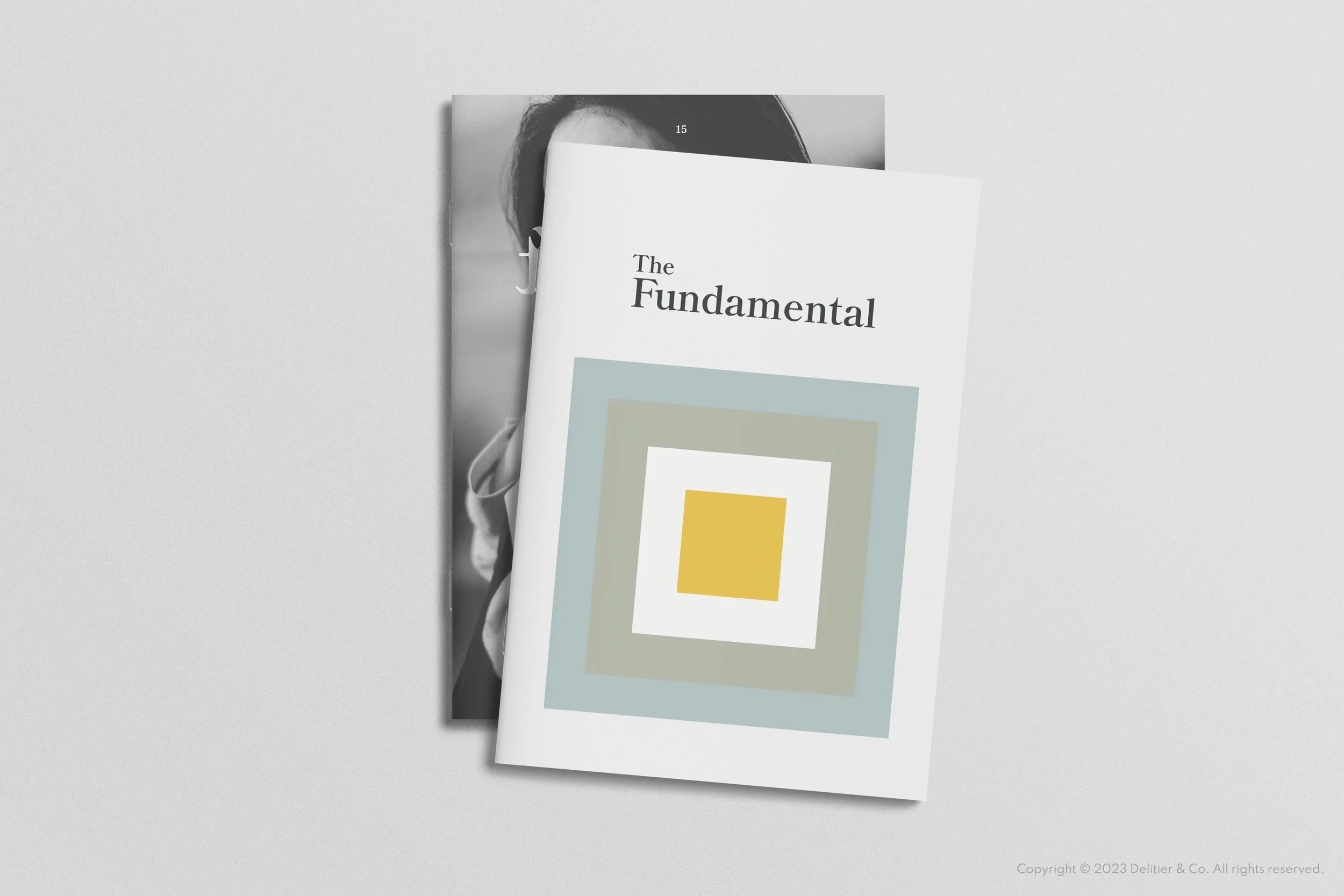
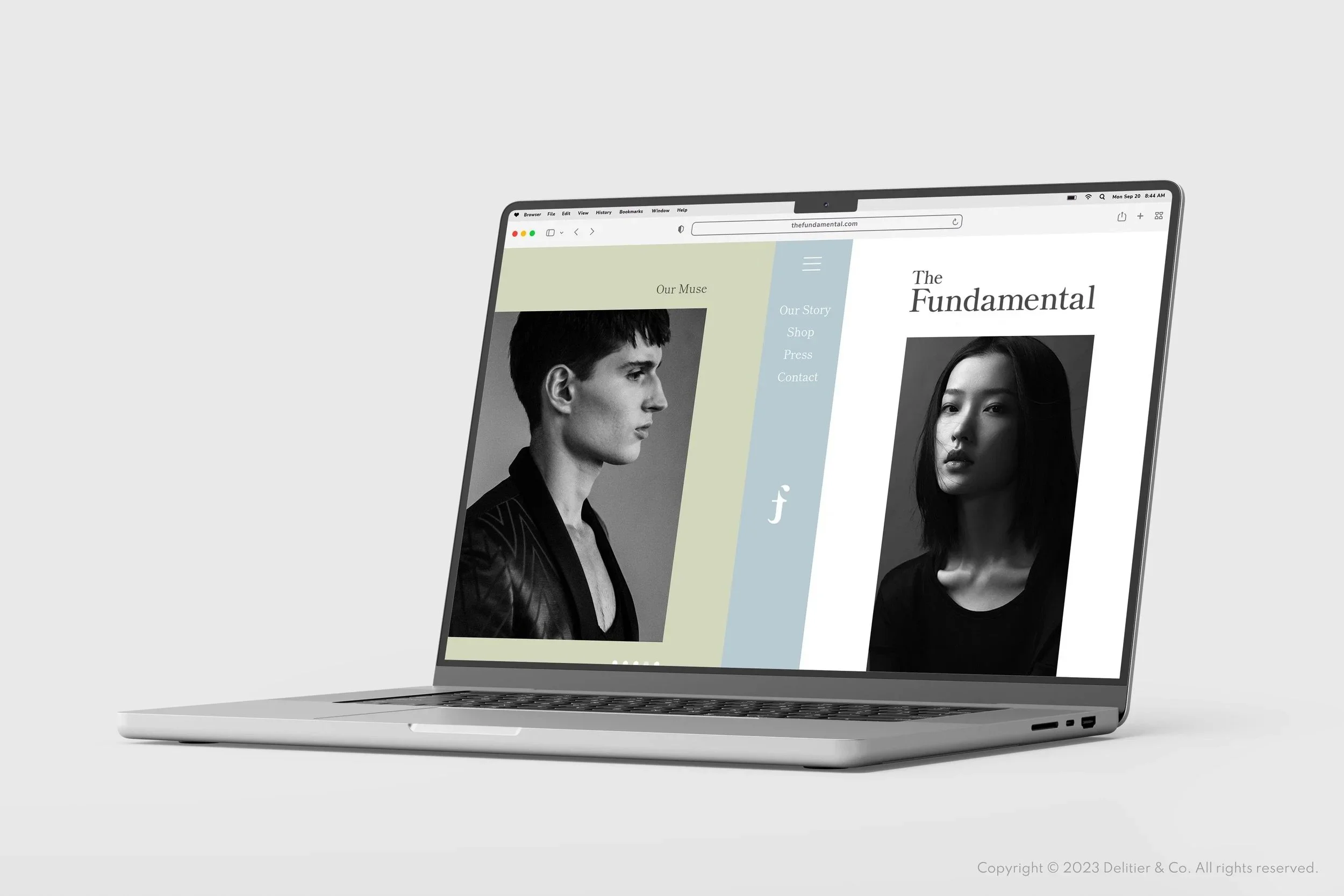
In F&B and FMCG industries, Delitier & Co. has worked with brands such as TruLife, Justin Quek Sauces, Kinohimitsu and Bio-Oil, where identity work has had to hold up on shelf, on packaging and across regional retail. In beauty and wellness, we have partnered with Skin Inc, The Fundamental, Maison 21G and Haach. Categories where identity carries a disproportionate share of perceived value. In luxury retail and lifestyle, our work with Monarchs & Milkweed, Luxe Montre and Poli Medical has focused on rebuilding identity systems around a single, ownable idea.
Our senior team also brings identity experience from earlier work on global brands including BMW, Canon, Sony and P&G. That experience sits with the practitioners, not the agency, but it is part of why our delivery is senior-led. The people running your project have been in these rooms before.
Questions to ask before you sign
The single most valuable exercise a founder can do before appointing a brand identity partner is to run a structured question set through every shortlisted agency, and compare answers side by side. The answers tell you more than any portfolio.
Who, by name, will lead this project and will they still be leading it in month four?
What does your discovery and strategy phase produce, and can you show a redacted example?
How do you decide when the identity is finished, and what does the handover include?
What is your governance model after launch? Do we own the system fully, and how do you support rollout?
Where has your work not aged well, and what did you learn from it?
The last question is the most revealing. A partner who cannot describe a brand that did not work is either new or not paying attention; either is a reason to keep looking.
Conclusion
Choosing a brand identity partner in Singapore is not a design decision; it is a decision about how your brand will be built and defended for the next decade. The visible outputs including the logo, the colour, the typography are the easy part. The hard part is the discipline underneath: strategy before identity, senior people on the work, considered pace over churn, evidence over taste, and branding kept as the lead discipline rather than one deliverable in a bundle.
A useful test, before signing anything, is to read the shortlisted agencies' own words as a sceptical founder. Where you find substance, a clear method, named practitioners, honest talk about trade-offs, evidence-anchored claims, you have a credible partner. Where you find superlatives, anonymous teams and logo-first pitches, you have a production shop.
The best brand identity design in Singapore is done quietly, by small senior teams, on longer timelines than the market pretends are necessary. That is the work worth waiting for.
If you are weighing a brand identity project and would like a second, senior view before you commit, send us your current brief or language list. We will tell you whether we are the right fit and if we are not, we will say so.
Frequently Asked Questions
What is the difference between brand identity design and branding?
Branding is the whole discipline with strategy, positioning, identity, and how a brand behaves in the market over time. Brand identity design is the visible and verbal system that expresses that strategy: the logo, colour, typography, imagery and rules that make the brand recognisable and coherent. Identity is a component of branding, not a synonym for it, which is why a strong identity always sits on a defined strategy.
How long does a brand identity project typically take in Singapore?
A rigorous identity engagement with discovery, positioning, identity design, and initial rollout usually runs between three and six months, depending on scope and complexity. Rebrands of established businesses tend to sit at the longer end because the audit and stakeholder alignment take more time. In our experience, projects promised in two to four weeks are producing a logo, not an identity system.
Should I choose a branding agency or a full-service network?
The right answer depends on how much senior attention your brand needs. Full-service networks are built for scale and multi-market production; branding agencies are built for depth, craft and senior-led delivery on fewer engagements at a time. If identity and positioning are core to your competitive edge, a branding-first agency is usually the better fit; if you need simultaneous execution across many markets at volume, a network may be right.
What should a brand identity deliverable include?
A complete deliverable includes the wordmark and symbol, a full colour system with accessible pairings, primary and secondary typography, photographic or illustrative direction, iconography, motion principles, and the layout rules that govern how these elements combine. It should also include a set of brand guidelines that make the system usable by internal teams and external partners. Anything less than this is a logo package, not an identity system.
How do I know if I need a full rebrand or just an identity refresh?
A refresh is appropriate when the underlying positioning is still right but the visual expression has aged or become inconsistent. A full rebrand is appropriate when the business itself has shifted, where new audience, new offer, new market and the current identity no longer expresses what the business actually is. A brand audit answers this question honestly; we would not commit to either path without one.
Why does strategy have to come before identity design?
Because an identity is the visible expression of a positioning, and without a positioning, there is nothing to express. Skipping strategy produces work that looks fine at launch and stops working as soon as the market moves, because there is no argument underneath the design to defend it. In our experience, this is the single most common reason brands end up rebranding again within three years.
What questions should I ask a brand identity agency before hiring them?
Ask who by name will lead the project and whether they will still be on it in month four; ask what the discovery phase produces and to see a redacted example; ask how they decide when the identity is finished and what the handover includes; and ask where their work has not aged well and what they learned from it. The answers to those four questions will tell you more than any portfolio review.