Beauty Brand Strategy: What a Beauty Brand Consultancy Actually Does, and When to Hire One
A beauty brand consultancy is what most founders type when what they actually want is strategy in front: positioning, audience and brand architecture settled first, then identity, packaging and communications built from that position rather than ahead of it. The sequence is the whole distinction. It separates this work from campaign production, from an in-house marketing function, and from a formulation partner. The work earns its place at four moments: pre-launch, a launch into a new market or channel, a scale-up, and a rebrand that keeps missing.
Delitier & Co. is a premium, digital-first branding agency working with beauty and wellness brands in Singapore and across Southeast Asia, from naming and brand architecture through packaging, identity and the brand book that holds them together.
Key Takeaways
Beauty brand strategy leads, identity follows, and execution (packaging, campaigns, digital, retail) sits downstream of both. A partner who cannot describe the work in that order will not defend that order when a deadline pushes back.
Four kinds of providers answer four different questions. The choice turns on sequencing, evidence base, continuity of the team and category instinct, not on the length of a services menu.
The audit is the entry point that matters. The finding that reshapes the brief is rarely the thing the brief said was broken, and it surfaces before anyone commissions packaging or shoots a campaign.
What a beauty brand consultancy actually does
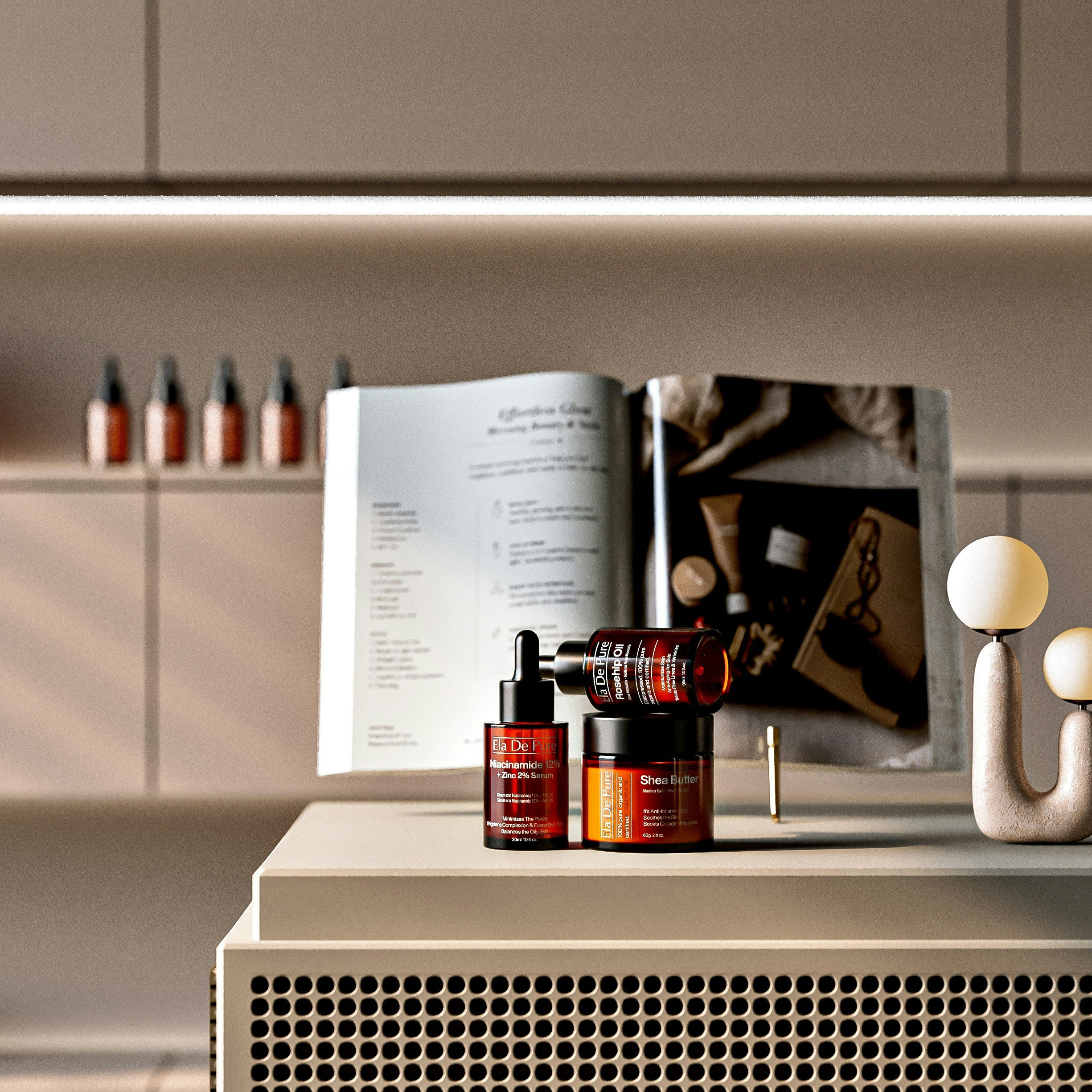
It defines and steers the brand as a long-term commercial asset, then directs the specialist work that expresses it: identity, packaging, retail experience, digital and communications. It does not have to produce every deliverable itself. It owns the thinking and the standard, and it holds the outputs to both.
The work sits in a fixed order. Strategy first: positioning, audience, category role, brand architecture. Identity second: verbal identity, visual identity, brand principles. Execution third: packaging, campaigns, content, retail environments. In beauty, that middle layer carries more weight than in most categories. The pack is the product's first ambassador on shelf, and the ritual of use is a communications channel the brand has to design for rather than inherit.
Lead with a deliverable: a logo, a campaign, a media buy and the order inverts. What comes back is decoration with no position underneath it, and decoration ages quickly in a category where retail assortments turn over fast.
Two misreadings are common: that the category is a market-entry service, or that it is public relations. Both appear inside the scope; neither is the whole of it. The scope runs from naming and brand architecture upstream, through positioning and audience definition, to packaging, retail, digital and communications direction downstream. Usually the work begins with one piece, a rebrand, a launch, a category extension and the audit shows adjacent pieces need attention too, because a beauty brand is a system rather than a set of silos.
Four options, compared
When a beauty brand decides who to hire, the field narrows to four options, and they are not interchangeable. Each answers a different question: what is this brand and how do we express it consistently; how do we activate a settled brand across channels at volume; who owns brand stewardship inside the business day to day; who develops the formulation and manages the technical supply chain.
Firms in this category describe themselves in different words: a beauty brand consultancy, a brand strategy practice, a multi-disciplinary design house and the label tells you less than the sequence they work in. The table below sets the four out on the criteria a sceptical brand leader would actually weigh.
| Option | Primary output | Sequencing | Day-to-day attention | Best fit |
|---|---|---|---|---|
| Beauty brand consultancy | Brand strategy, positioning, identity and coordinated execution | Strategy first, identity second, execution third | The team that shaped the strategy stays on the account | Founders and group brand leaders who need the brand defined, sharpened or repositioned before anything is produced |
| Full-service marketing agency | Campaigns, media, digital, content, creative production | Brief in, execution out; strategy is a phase, not the spine | Experienced leads at the pitch, mixed teams in delivery | Brands with a settled position that need volume across channels |
| In-house brand team | Ongoing stewardship and day-to-day marketing execution | Continuous, embedded in the business | Consistent, but capped by the experience of the hire | Brands with steady, category-typical needs and the scale to keep the craft inside |
| Product or R&D partner | Formulation, regulatory work, supply chain | Product first; brand is downstream of the formula | Technical and category depth, not brand depth | Brands whose bottleneck is the product itself, not the position |
Two mismatches recur. A brand that needed positioning hires a campaign shop, gets a campaign, and re-runs the same brief because nothing underneath was ever defined. A brand that needed formulation buys strategy it cannot yet execute. A third is quieter: the work is brought inside too early, and the cost shows up in the drift, not the invoice.
The audit is where the brief gets rewritten
A beauty brand audit is a structured diagnostic that reads the brand across positioning, identity, packaging, distribution, digital presence and customer perception, and returns a finding, not a description. It runs before any packaging is designed or any campaign is shot, and it is where most briefs get sharper.
The audit surfaces what a founder is too close to see. Positioning that quietly drifted down-market to hit a promotional target and never came back. A premium promise on the pack sitting inside a mass-market visual system. A retail environment that contradicts the story the pack is telling. A digital presence optimised for reach rather than for the brand's role in the category, pulling in the wrong customer. A tone of voice that moved two iterations ago and was never resynchronised. Our free brand audit checklist sets out those questions in the order a diagnostic should ask them.
Here is the mechanism behind the most expensive failure in the category. The failure mode is the cosmetic rebrand: new colourway, new typeface, new pack, and within a year the same commercial problem in prettier clothes. The cause is a brief written from the deliverable backwards, where the founder names the thing that looks wrong, the packaging is what looks wrong, so packaging becomes the scope, and the position underneath is never examined. The fix is to make the audit the first paid piece of work and to require it to end in a decision: which brief to run first, which to hold, and which was the wrong brief to be running at all. Three symptoms: drifted positioning, an identity that no longer signals it, a channel mix that undersells it, almost always trace to one missing strategy. Reordering the briefs is the value. The document is only its record.
How the engagement changes with your stage
The brief is meaningfully different at each of the four moments, and matching the engagement to the stage is most of what makes a brief good. A pre-launch engagement is not a smaller launch engagement, and a rebrand is not a larger identity refresh.
Pre-launch. The work is almost entirely upstream: naming, positioning, brand architecture, and the brand book that will hold the identity together as the range extends. This is also where a founder's instincts get pressure-tested against category evidence, so the brand does not spend its opening stretch unlearning assumptions an audit would have caught.
Launch. The strategy is settled and the emphasis moves to translation: packaging that signals the position, a retail-ready visual system, launch communications that carry the story cleanly. A launch is a stress test of the brand system. Any gap between what the pack promises and what the digital environment renders is visible from the first day.
Scale. The risk shifts to coherence. As products multiply, channels expand and regional variants appear, the identity system has to keep holding. The work becomes stewardship of the guidelines, arbitration of trade-offs, and stopping decoration decisions from being made without a strategy check. This is where a brand book earns its second-round value: it makes the tenth product look as intentional as the first and saves the team from re-litigating the same design question at every extension.
Rebrand. The highest-stakes engagement, because there is equity to protect and habit to change. The audit leads and the scope follows what it finds, sometimes an identity refresh is enough, sometimes the whole architecture is repositioned because the brand is being moved from one category posture to another.
How to judge a partner before you brief
Weigh five criteria, and be ready to walk away from the pitch that cannot answer them plainly. The pitch will be polished; the criteria are what tell you whether the work under the pitch will hold.
Sequencing. Does the partner lead with strategy or with a deliverable? Anyone who cannot articulate the order they work in will not defend it under pressure.
Continuity of attention. Will the people in the room be the people on the account? A position is a long series of judgement calls, not a document; hand those calls down through three layers of translation and they get made differently, and the position drifts.
Evidence base. How are creative decisions grounded, audits, category evidence, customer research, performance data? Taste alone is not a method, though a partner leaning on evidence should still be willing to make a call.
Category instinct. Has the partner worked in beauty, wellness or an adjacent premium category? The way a fragrance customer reads a bottle, or a skincare shopper reads a claim, is difficult to learn from a standing start.
What they push back on. A partner who agrees with every line of the brief will not defend the brand when the brief turns out to be wrong.
Search behaviour is a poor filter here. The buyer types "beauty brand consultancy", "beauty brand strategy" or "beauty brand consultant" depending on the day, and the results reorder accordingly; the five criteria above do not move. If you are working through a shortlist, our guide to choosing a beauty branding agency turns these criteria into questions you can put to a room.
Proof: The Fundamental
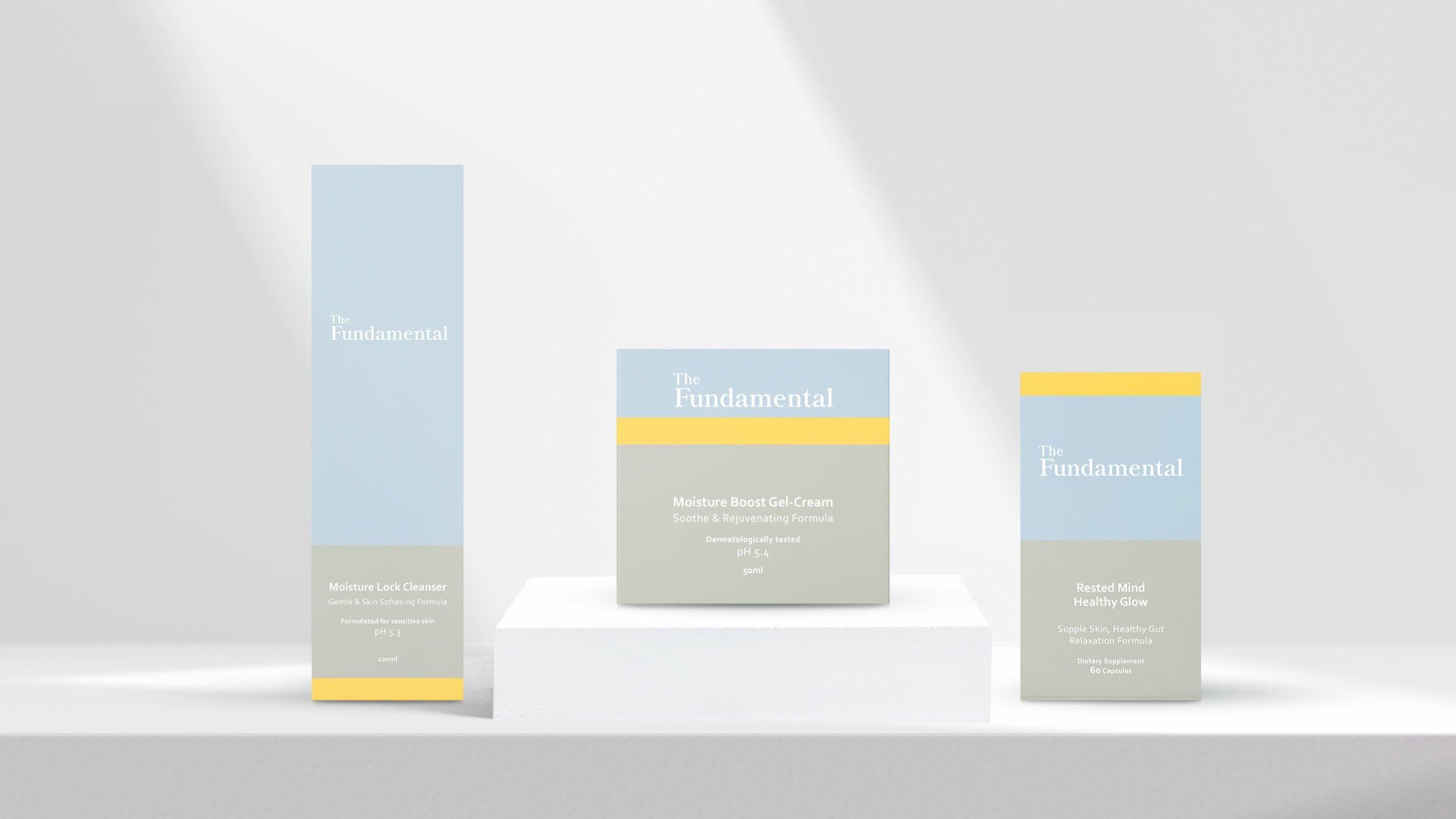
The Fundamental is a probiotic skincare brand formulated and tested in Japan, built on the connection between skin, gut and mind, with two years of research and development behind it before a single product launched. Scientific patience of that kind needed an identity with the same discipline behind it. The work covered a naming exercise, brand audit and market research, brand strategy, brand architecture, packaging design, the identity system and the brand book.
Skincare is among the most visually competitive categories: shelves and feeds are full of brands promising clarity, purity and results. The Fundamental's difference was real rather than claimed, probiotic science, Japanese manufacturing, a gut-skin-mind philosophy, but a true story only lands if the brand looks like it is telling the truth.
The decision was to build the identity as a system rather than a look, and to document it properly. A brand book is where identity becomes usable: it translates the idea into the practical rules that keep the brand consistent across packaging, marketing and retail. The second decision was to build for expansion. A skincare range rarely stays still, so the rules were set flexible enough that new products and variants join the same family rather than fragmenting it. The brand shipped with a defined name, brand book, packaging design and identity system — the coherence that makes the tenth product look as intentional and trustworthy as the first.
Why Delitier & Co.
Delitier & Co. is a premium, digital-first branding agency, founded in 2014 and headquartered in Singapore, working across beauty and wellness, premium lifestyle, and retail, F&B and consumer goods. Services run from brand strategy, identity, naming and packaging through brand campaigns, social media storytelling and performance marketing. Beauty and wellness work includes The Fundamental, TruLife, Kinohimitsu, Maison 21G, Skin Inc and Sephora; TruLife recorded a 300% sales lift following the rebrand. The Google Business Profile rating is 5.0 from 13 reviews and Clutch is 5.0, with DesignRush Top 30 Digital Advertising Agencies in 2021 and Clutch Leading Social Media Agency in Singapore in 2022. Future-proof by strategy, timeless by design.
Frequently Asked Questions
What does a beauty brand consultancy do that a marketing agency doesn't?
A beauty brand consultancy leads with strategy and positioning, then directs the identity and execution work that follows; a marketing agency leads with execution against a brief that already exists. One defines the brand, the other activates it. When the position underneath is unclear, execution can only be run against the ambiguity — which is why "the campaigns keep changing tone" almost always traces to missing strategy rather than missing creative.
When should a beauty brand hire a beauty brand strategist rather than build the capability in-house?
Hire externally when the brief is upstream of routine marketing: a new brand at pre-launch, a launch into a fresh market or channel, a scale-up that has outgrown its identity, or a rebrand that has not landed. Build inside for continuous stewardship once the position is settled and the volume of ongoing work justifies permanent headcount. Many premium beauty brands run both, with the strategy and identity work held outside and the day-to-day held in.
What does a beauty brand audit actually cover?
It reads the brand across six dimensions: positioning, identity system, packaging, distribution and retail environment, digital and content presence, and customer perception. The output is a finding that reshapes the brief before any deliverable is scoped. In practice it surfaces a mismatch the founder was too close to see, positioning that has drifted, packaging that no longer signals the position, or a channel mix that undersells the equity.
Is packaging part of brand strategy work, or a separate hire?
Packaging belongs inside the scope when the strategy and identity work is being led there, because packaging is where a beauty brand signals its position most directly. Some partners produce it themselves; others direct specialists against the identity system. What matters is that the packaging brief is written from the strategy rather than the strategy being reverse-engineered from the pack.
How does the work sit alongside an existing product formulation team?
Brand strategy defines the positioning, category role and audience; the formulation team develops the product that expresses them. Once the brief is set the two run in parallel, brand reviewing formulation choices for signal implications, formulation flagging technical constraints that shape the pack or the claim. Neither is downstream of the other; both are downstream of the strategy.
What does Delitier & Co. cover in beauty and wellness?
Naming, brand strategy and architecture, identity systems, packaging design, brand books and guidelines, then the social media storytelling, digital content and performance work that carries the brand into market. Beauty and wellness names include The Fundamental in probiotic skincare and TruLife in wellness and Traditional Chinese Medicine, alongside Kinohimitsu, Maison 21G in fragrance, Skin Inc and Sephora. Adjacent premium experience across F&B, consumer goods and retail informs the approach; the branding-first method is the same across all of them.