What Is the Best Brand Consultancy in Singapore? A Founder's Guide to Choosing Well
The best brand consultancy in Singapore is the one whose strategic depth, senior involvement and craft match the weight you are placing on your brand, not the one with the largest team, the loudest showreel or the longest client roster. Best is a matching problem, not a league table.
We get asked this question often, usually by a founder at a launch, a rebrand or a market-position shift. The honest answer is that the shortlist you should build depends on what a brand consultancy is actually for and most published lists conflate that with what a branding agency is for.
This guide sets out the criteria worth weighing, the difference between a strategy-led consultancy and a design-led studio, and the questions that will tell you which is which before you sign. Read it as a founder would, sceptically.
Key Takeaways
The best brand consultancy in Singapore is defined by strategic depth, senior involvement and craft, not by scale, awards or the polish of a portfolio. A consultancy that treats your brand as a long-term business asset will out-earn one that treats it as a visual project, on every horizon that matters.
The clearest test of strategic credibility is where the fees go. A practice that allocates less than 15% of its fee to research and strategy is a design shop; a strategy-led consultancy invests meaningfully in discovery before it touches identity.
A smaller, senior-led practice buys focus, continuity and the freedom to do the work properly. The people who pitch are the people who do the work, and your brand benefits from that continuity.
What a brand consultancy actually is (and isn't)
A brand consultancy is a strategic advisory practice that treats your brand as a business asset with positioning, identity and brand behaviour designed to compound value over years, not months.
The best brand consultancy in Singapore is one that leads with strategic thinking and then produces the work, not one that treats identity as the starting point.
The distinction sounds pedantic. It isn’t. A brand consultancy sequences its work strategy-first: understand the market, define the positioning, then let identity and execution flow from that thinking.
A design studio starts with the identity and reverse-engineers a story around it. Both produce logos; only one produces an asset.
We define a brand consultancy as a senior-led practice that runs an audit, a positioning exercise and a rollout plan before it touches a colour palette. That sequencing is what separates strategic advice from creative production. It is also what determines whether the brand you launch survives contact with the market five years from now.
The reason to be clear about this before you shortlist is simple: the criteria you evaluate a partner on change entirely depending on which of the two you actually need. If your brand is settled and you want a refresh of the visual system, a design-led studio is the right choice. If your positioning is unclear, your category is shifting, or you are trying to command premium pricing, you need a consultancy and you need to test for strategic depth before you look at the portfolio.
We say this often to founders: buy the thinking first, and the making follows. Buy the making first, and you spend the next two years trying to retrofit thinking onto decisions that were already made.
Branding-first sequencing: Why does strategy lead?
A brand without a strategy is decoration; a brand with a strategy is a business asset that compounds.
Branding-first sequencing is the discipline of settling strategy before identity, and identity before execution.
The three tiers matter in this order. Strategy (the positioning, the audience, the promise, the category context) decides what the brand is. Identity (the name, the logo, the palette, the type, the tone) decides how the brand is recognised.
Execution (the packaging, the site, the video, the social) decides where the brand shows up. Reverse the order and you get a beautiful brand that says nothing coherent, or a smart strategy trapped inside execution that undermines it.
The failure mode we see most often is a founder who commissions the logo first, launches, and then tries to reverse-engineer a positioning to fit what has already been built. It rarely works. The identity is load-bearing, but only if the strategy underneath it can bear the load.
In our experience running brand audits for premium and lifestyle businesses, the diagnostic questions that matter come before any creative work, eg. what are you actually competing on, who does the brand need to be chosen by, and what claim can you make that a peer cannot. Answering those honestly reshapes the identity brief before a designer opens a file.
This is why we are deliberately branding-first. Strategy, brand identity, consultancy, audit and rebranding are our lead disciplines; creative, packaging and video are a production pathway downstream of the thinking, and social sits lowest in that hierarchy. That order is a considered choice about what we believe brand work is for.

The five criteria that separate strategy-led from design-led
Strategic credibility in a brand consultancy shows up in five places: research rigour, senior involvement, discipline hierarchy, portfolio evidence, and fee allocation.
The clearest signal of a strategy-led practice is where the fees go. A consultancy that allocates less than 15% of its fee to research and strategy is design-focused, whatever the brochure says.
Take those five in turn. Research rigour is the question of whether the consultancy will actually interview your customers, your team and your competitors or skip discovery entirely. Senior involvement is the question of whether the practitioners who pitch are the ones who will do the work, or whether the account will be quietly handed to juniors after signing. Discipline hierarchy is whether the practice leads with strategy or with output. A consultancy that opens the pitch with a portfolio of logos is telling you what it optimises for. Portfolio evidence is about depth over range. You want to see case studies that describe the strategic problem, the discovery process, the positioning decision, and the outcome, not just the finished artwork. Fee allocation is the mechanical check. Ask the practice to break its fee down across research, strategy, identity, guidelines and rollout. The split is diagnostic.
Here is how the three main service models compare across those criteria:
| Criterion | Brand Consultancy | Full-service network | Social-first / production shop |
|---|---|---|---|
| Where the discipline leads | Strategy → identity → execution | Broad service menu; strategy varies by team | Channel output; brand thinking often light |
| Who does the work | Senior practitioners throughout | Senior at pitch; execution often junior | Junior-heavy production teams |
| Research and audit depth | Substantial, built into the engagement | Available, sometimes bolt-on | Minimal, if at all |
| Turnaround | Considered pace, weeks to months | Fast on parts, slow on strategic decisions | Rapid, output-driven |
| Best fit | Positioning, rebrand, launch, premium positioning | Multi-market rollouts, large enterprises | Ongoing channel content, tactical campaigns |
Buy the thinking first and the making follows, buy the making first and you spend the next two years retrofitting thinking to decisions that were already made.
Branding-first versus full-service: The honest trade-off
A large full-service network offers reach, staffing depth and the capacity to run a multi-market rollout in parallel. That capability comes with a trade-off: the practitioners who pitch you are rarely the practitioners who do the work day-to-day, and the account will typically move through several hands. For an enterprise brief with dozens of stakeholders across markets, the trade is often worth it.
A brand consultancy inverts the ratio. The senior people on the pitch are on the work, and they stay on it. The founder or brand-lead you brief in week one is the person reviewing the identity in week ten.
That continuity is what makes deep strategic work possible on the timelines premium and lifestyle brands actually operate to. Approval chains are short. Nothing gets lost in a handover.
The real cost of scale and why small teams win on clarity
We are branding-first by choice. Our leadership brings brand experience from global names including work on BMW, Canon, Sony and P&G and we made the deliberate decision to run a smaller, senior practice so that experience shows up on your account, not on someone else's.
Small buys focus. It also buys the freedom to say no to briefs we are not the right fit for, which is a form of respect for the ones we take on. The framing to avoid is treating this as a compromise on capability. It isn't. It is a compromise on breadth, a small practice will not run a 400-person integrated campaign for you, in exchange for depth on the disciplines that matter most for the brand.
For founders building challenger brands in competitive sectors like F&B, fintech or healthcare, the top three drivers of professional branding demand in Singapore translates directly into pricing power, talent attraction and stakeholder alignment.

Questions to ask before you sign
The six diagnostic questions that reveal true fit
Ask how the fee splits across research, strategy, identity, guidelines and rollout. The answer separates strategy-led practices from design shops more reliably than any portfolio.
Six questions carry most of the weight.
First: which of the people at this pitch will be on the work day-to-day, and for how long? Second: what discovery inputs will you require from us, and what will you commission yourselves? Third: how does positioning translate into concrete design principles and identity decisions? Fourth: can you walk us through a case where the strategy measurably moved a business metric, e.g. pricing power, retention, applications, share of voice? Fifth: what is the fee split across workstreams, and which deliverables are optional add-ons we can defer? Sixth: what happens after the guidelines are delivered, how is the brand governed, and by whom?
Red flags that signal misalignment
The answers do not need to be perfect. They need to be direct. Vagueness on team continuity, evasiveness on fee splits, and case studies that describe the artwork without describing the thinking are all the same signal in different clothes.
A useful red flag, in our experience: if the pitch team spends more time on their process framework acronym than on the specifics of your brand's category and moment, the engagement will feel the same. Frameworks are how the work gets done; they should not be the star of the pitch.
Another warning sign: fixed numbers of logo “options” touted as value. Strategic identity doesn’t emerge from volume; it emerges from constraint shaped by insight. If the proposal promises “3 logo directions,” it’s likely a design-led approach masquerading as strategy.
You can learn more about how to evaluate partners through our guide to building a brand strategy that lasts.
What a proper engagement should actually look like
The four non-negotiable phases of strategic brand work
A properly-run brand consultancy engagement moves through four stages: discovery, strategy, identity, and rollout with senior practitioners on the work at every stage.
The people who pitch should be the people who do the work; if that is not true, the engagement is already off.
Discovery starts with an audit, a structured read of the current brand, the market, the competitive set, and the internal view. In our engagements this usually means stakeholder interviews, a customer read, a category scan, and a written diagnostic that the leadership team can react to. Nothing creative happens in this phase, and that is the point.
Strategy translates the diagnostic into a positioning, a promise, an audience definition and a set of principles that will guide every subsequent decision. It is the shortest deliverable and the most load-bearing. Get it right and the identity almost designs itself; get it wrong and no amount of craft downstream will rescue the brand.
From identity to rollout: ensuring your brand lives beyond the PDF
Identity is the visual and verbal system: logo, palette, type, tone, imagery direction, and a set of guidelines that let people who never met you use the brand correctly. Our rebrand of Monarchs & Milkweed is an example of this stage done properly: the identity work followed a clear positioning decision, and the resulting system holds together because the thinking underneath it does.
Rollout is where most brand work quietly fails. Guidelines that no one uses are decoration; guidelines that become the operating system of a company are an asset.
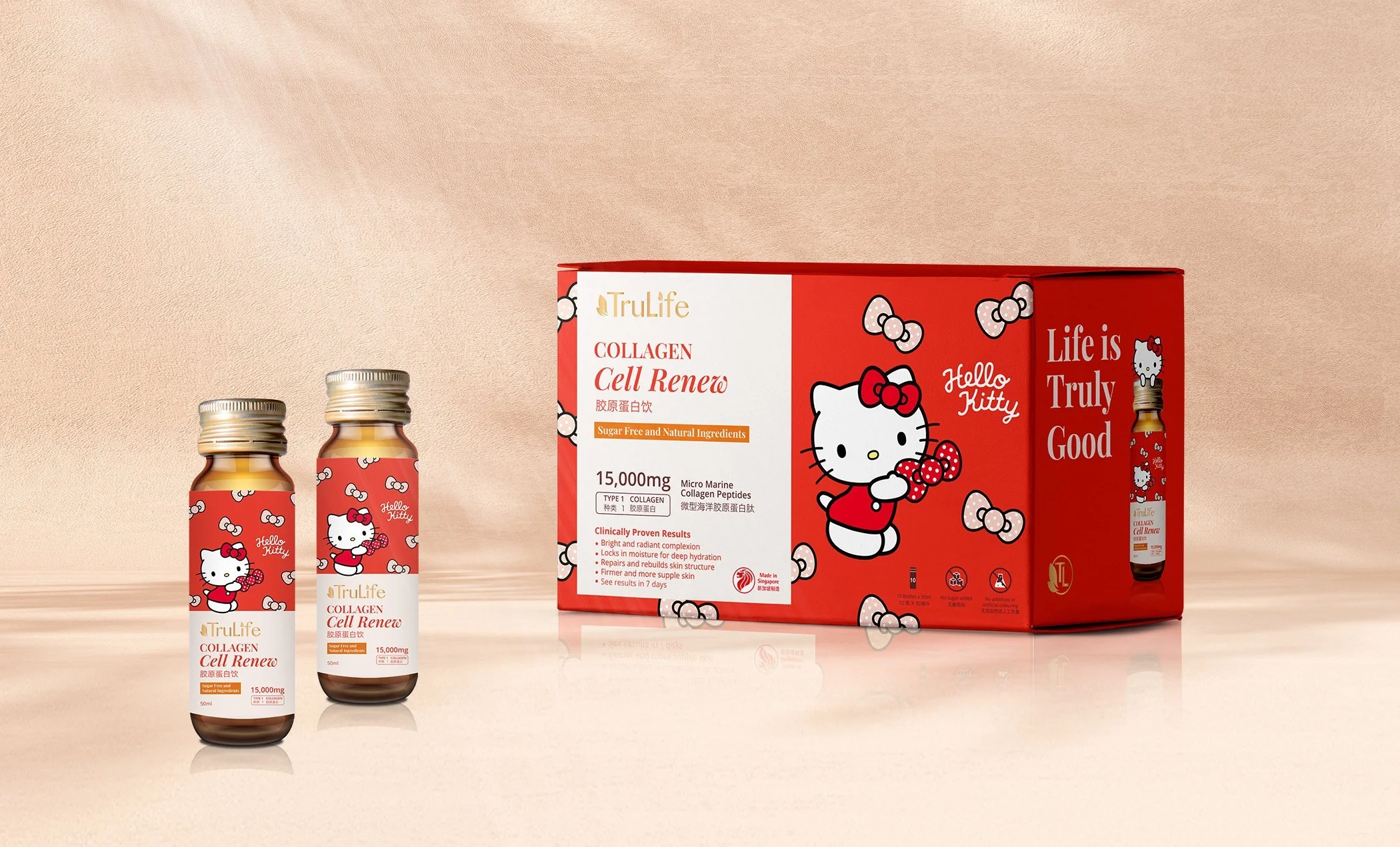
A good consultancy stays close through the first ninety days of live use, adjusts what needs adjusting, and hands over a brand your team can actually run. Our work with TruLife which drove a 300% increase in sales following their rebrand and the launch of the Sanrio Hello Kitty and My Melody campaign is what that continuity looks like in practice: strategy, identity and channel work aligned by the same senior people, at the same tempo.
For founders navigating complex categories, consider how employer branding integrates with your external identity, a unified brand attracts both customers and talent.
If your sector demands regulatory precision such as healthcare or fintech under MAS sandbox rules, ensure your partner understands how ethical advertising standards shape brand expression.
Conclusion
The best brand consultancy in Singapore is not the one at the top of the most lists, it is the one whose strategic sequencing, senior involvement and craft match the weight you are placing on your brand. That match is decided by criteria you can test for: research rigour, discipline hierarchy, portfolio evidence, fee allocation, and continuity of the team.
Read a shortlist against those criteria and the field narrows quickly. A branding-first, senior-led agency will out-perform a much larger network on positioning, rebrand and launch briefs; a full-service network will out-perform a branding agency on integrated multi-market rollouts across dozens of stakeholders. Neither is universally better, both are answers to different questions.
If the question you are actually asking is who should shape your brand as a long-term business asset, including the positioning, the identity, the audit, the rebrand, the answer is a consultancy that leads with the thinking, staffs the work with senior practitioners, and treats the brand as something worth taking time over. That is the shortlist worth building.
If a rebrand, launch or brand-position shift is on your horizon, send us a note at info@delitierco.com with your current situation and what you hope a brand engagement might achieve. We’ll reply with whether we think there’s a fit and if so, what a first conversation might cover.
Frequently Asked Questions
What is the difference between a brand consultancy and a branding agency?
A brand consultancy is a strategy-led advisory practice. It defines positioning, identity and brand behaviour, and produces creative work from that thinking. A branding agency often skips the strategic sequencing and starts with identity or creative execution. Both make logos; only the consultancy produces a brand designed to compound value as a business asset.
How much should I budget for a strategy-led brand consultancy engagement in Singapore?
Strategy-led engagements for SMEs typically sit in the mid-five to low-six-figure range in Singapore dollars, depending on scope, research depth and rollout support. Enterprise or multi-market briefs run considerably higher because of research volume, governance and stakeholder complexity. Pricing should be broken down by workstream including research, strategy, identity, guidelines, rollout so you can see exactly what you are buying.
Should I choose a brand consultancy or a full-service network?
Choose a brand consultancy when the brief is strategic, where positioning, rebrand, launch, premium positioning and continuity of senior thinking matters. Choose a full-service network when the brief is scale, a multi-market rollout with dozens of stakeholders across geographies. Neither is better in the abstract; both are answers to different problems.
How long does a proper brand consultancy engagement take?
A strategy-led rebrand for an SME typically runs three to six months from discovery to launch, with the strategy phase taking meaningfully longer than most founders expect. Enterprise engagements can run six to twelve months and often carry a rollout retainer beyond that. Compressed timelines under two months usually mean the strategy was skipped.
What is the first sign that a consultancy is design-focused rather than strategy-led?
Look at the fee split. A practice that allocates less than 15% of its fee to research and strategy is a design shop, regardless of what the pitch deck says. The second signal is in the case studies: strategy-led consultancies describe the thinking, the positioning decision and the outcome; design shops show the artwork.
Does the consultancy need to be Singapore-based to do good work here?
Cultural fluency matters. Singapore's multicultural audience and the region's category dynamics reward practitioners who have actually worked in the market. That does not mean every practitioner on the team needs to be local, but the account team should have real, current market context. Regional experience across ASEAN adds meaningful depth when the brief has any cross-border ambition.
Do we need a full rebrand or a brand refresh?
If the positioning is still right and the audience still recognises you, a refresh, tightening the identity system without changing the underlying strategy is usually the correct choice. If the positioning is unclear, the category has shifted, or the brand has outgrown its current identity, a full rebrand is the honest answer. The audit is what tells you which; skipping the audit is what leads to expensive re-do work eighteen months later.