What a Retail Activation Agency Does, and How It Differs From an Event Producer
A retail activation agency turns an existing brand position into a commercial moment a shopper can act on: a product launch, a new counter, a seasonal drop, a first month on a marketplace. The work is expressed across packaging and shelf, the window and the fixture, the product page, social and paid media, and what the floor team says when someone picks the product up — one idea carried through every one of them. It is brand work with a date attached, not an event staged around a logo.
Delitier & Co. is a premium, digital-first branding agency working with premium retail, consumer goods, beauty and lifestyle brands across Singapore and Southeast Asia.
Key Takeaways
Search for "activation" and the results return experiential event companies — stages, booths, crowds, footfall. That is one legitimate trade. It is not the same trade as expressing a brand position at the point of sale, and buying one when you needed the other is the most common and most expensive mix-up in this category.
A retail activation is the same idea said in five places at once: packaging, shelf, product page, feed, paid. When those five disagree, the spend buys attention and the brand keeps nothing.
Activation is downstream work. If the position is not settled and written before the launch date is set, the moment has nothing to express, and the results arrive as a spike that decays to the prior baseline.
What retail activation means when a branding agency runs it
Retail activation is the point where a settled brand position becomes something a buyer meets, evaluates and pays for, and every element of that meeting says the same thing.
Take a fragrance launching a new range into a department-store counter. The activation is not one thing. It is the outer carton and the tester layout; the counter graphics and the order in which products are arranged on it; the launch film and the fifteen-second cutdown; the product page copy and the first three images on it; the paid media that carries the same line as the carton; and the two sentences the counter staff use to introduce the range. A branding agency treats those as a single deliverable with several surfaces, because the buyer experiences them that way. She sees the ad, then the shelf, then the page, and she is deciding whether they belong to the same brand long before she decides whether she wants the product.
That is a different job from producing an event. An event producer is hired to build and run a moment in physical space: venue, structure, permits, crew, staging, guest flow, teardown. It is a real discipline with real craft, and for a brand whose position is already resolved and whose brief is already written, hiring one directly is the correct decision. The distinction is not quality. It is what the engagement is accountable for. A production company is accountable for the moment going off well. A branding agency is accountable for what the brand is worth after the moment ends.
The underlying principle runs through everything a branding agency in Singapore does: strategy first, so identity, marketing and everyday touchpoints all descend from one idea rather than being assembled independently and reconciled later. Activation is where that principle is tested hardest, because a launch compresses every touchpoint into the same fortnight.
Why search results send you to event production
Search "activation agency" from Singapore and the answers skew heavily toward experiential event companies, because that is the segment of the market that has named itself most loudly around the word.
This is worth knowing before you brief, because it shapes the shortlist you assemble without you noticing. The results will show you pop-up builders, roadshow operators, booth fabricators and experiential specialists, and the vocabulary they return, footfall, dwell time, samples handed out, media value will start to sound like the definition of activation rather than one measurement frame within it. If the brand's actual problem is that a new range is going onto a shelf next to four established competitors and nobody knows what it stands for, that shortlist cannot solve it, and no amount of production quality will.
The partner-selection question of how to test a prospective activation partner, what to ask, and which shape of firm suits which brief is covered separately in our guide to choosing a brand activation agency in Singapore. What follows here is the prior question: what kind of work you are actually buying.
Activation run by a branding agency vs by an event producer
The two disciplines start in different places, and that difference is visible in the first meeting.
| Branding agency | Event producer | |
|---|---|---|
| Where the work starts | The brand position, and whether it is written down | The brief, the date and the venue |
| What the activation is | An expression of the position at the moment of purchase | A produced experience in physical space |
| Primary surfaces | Packaging, shelf and window, product page, social, paid, floor script | Venue, build, staging, crew, guest flow |
| What is delivered before the date | Positioning line, launch idea, creative system, channel plan | Production schedule, layout, run sheet, vendor management |
| What is measured | Attention converted, leads, sell-through, what the brand can reuse afterwards | Attendance, dwell, samples, media value |
| What remains afterwards | A creative system the next launch inherits | A finished event and its documentation |
| Best-fit brief | A launch, repositioning, range extension or channel entry where the brand still has to argue its case | A resolved brand with a settled idea that needs a moment built well |
Read the table as a fit question, not a ranking. Both columns describe competent work. The failure is buying the right column for a left-column problem, then judging the result on attendance when what you needed was a brand that a shopper could still recognise three months later.
Activation without a position: the failure mode, its cause, and the fix
The pattern is easy to recognise after the fact. A launch runs, the numbers spike for a fortnight, and then everything returns to where it was, the same conversion rate, the same shelf performance, the same blank look when a customer is asked what the brand stands for. Nothing was left behind, and the next launch starts from the same standing start, which is why the budget feels like rent rather than investment. The cause is almost always sequence: the date was fixed before the position was written, so the creative team was briefed to fill a moment rather than to express an argument, and every surface then resolved its own choices independently, the packaging said crafted, the paid media said value, the counter script said clinical, and the buyer, unable to reconcile them, filed the brand under nothing in particular. The fix is procedural and costs nothing. Make one written positioning statement, what the brand is for, who it is for, and what it refuses to be, a signed deliverable before any launch creative is commissioned, and make every subsequent surface pass a single test: could a shopper who saw only this one surface describe the brand the same way as a shopper who saw only one of the others? Surfaces that fail get reworked, not launched. What survives that test is reusable, and the next launch inherits it instead of rebuilding it.
Proof: launches run from an existing position
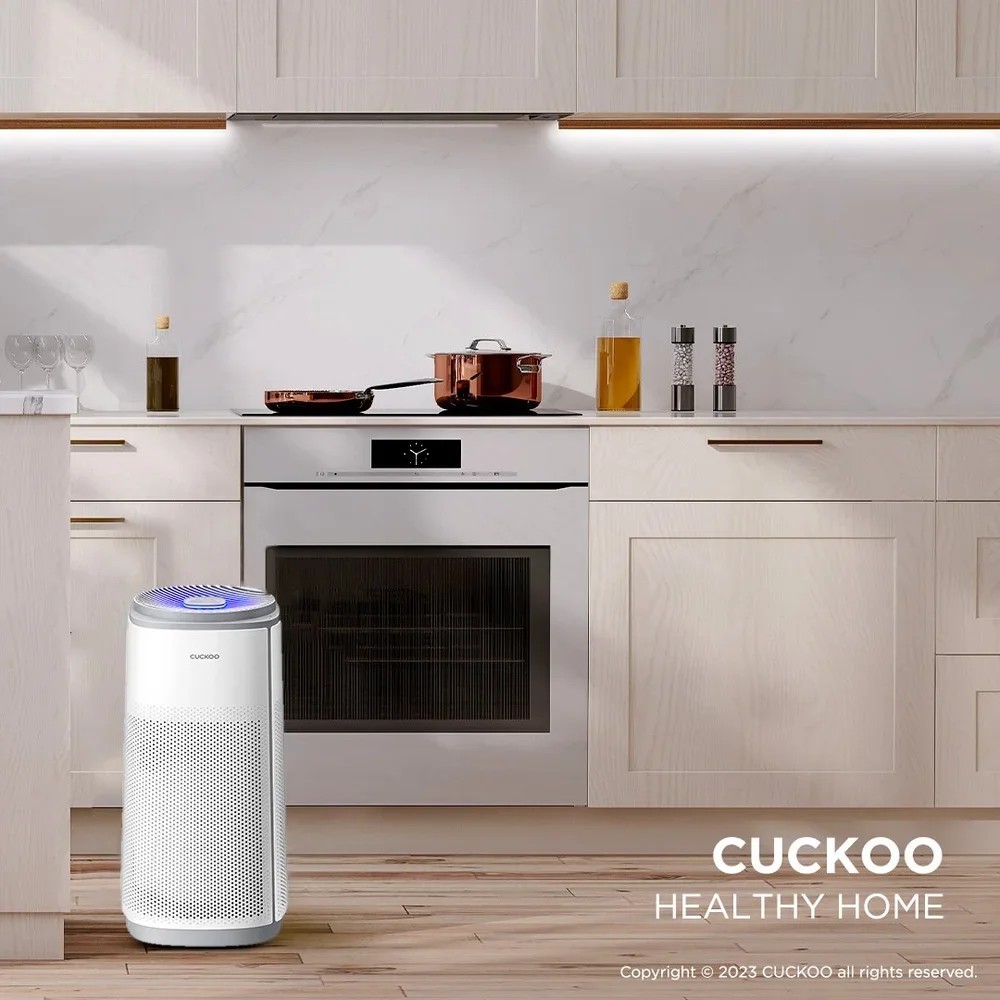
For CUCKOO, a Korean premium lifestyle appliance brand, the category problem was that the products live in the background of everyday life, so the brand had to work to stay top of mind and make functional products feel desirable. The decision was to treat the always-on programme and the launch moments as one system rather than two budgets. Ongoing social strategy, content and creative direction ran on a rolling monthly schedule so the audience was already familiar with the brand; dedicated campaign rollouts then gave the flagship launches, festive moments and a Mother's Day collaboration their own creative and media plans on top of that base. Performance marketing ran alongside and brought in 50 to 80 quality leads every month, and the content programme reached over 1 million impressions every month, evidence that attention converted into pipeline rather than sitting as an impression count on a report.
The same sequence: settle what the brand is saying, then decide how the moment should say it, sits behind an activation for Wearnes Harley-Davidson of Singapore in 2024, and behind campaign work for the fragrance brand Maison 21G. The grand opening for Wearnes Harley-Davidson was a resounding success, drawing an impressive crowd of 500 guests. The event featured a variety of activities and showcases that highlighted the essence of the Harley-Davidson lifestyle, from live music and entertainment to exclusive bike displays and interactive experiences.

Why Delitier & Co.
Delitier & Co. is a premium, digital-first branding agency, founded in 2014 and headquartered in Singapore. The work runs from brand strategy, brand identity and packaging design through spatial design, brand campaigns, social media storytelling and performance marketing, which is why a launch can be carried end to end rather than handed between a strategy team, a design team and a media team. Clients include Chow Tai Fook, CUCKOO, BreadTalk Group, Kinohimitsu, Sephora, Converse and Wearnes. The agency holds a 5.0 Google Business Profile rating from 13 reviews and 5.0 on Clutch, and was named to DesignRush's Top 30 Digital Advertising Agencies in 2021 and Clutch's Leading Social Media Agency in Singapore in 2022. Future-proof by strategy, timeless by design.
Frequently Asked Questions
What is a retail activation agency?
A retail activation agency plans and delivers the commercial moment when a brand meets a buyer, a launch, a range extension, a new counter or a first month in a new channel and makes every surface of that moment carry the same idea. In practice that covers packaging and shelf presence, the product page, the campaign creative, the paid media and what the retail team says on the floor. The defining feature is that the moment expresses a brand position that already exists rather than inventing one for the occasion.
Is a marketing activation agency the same as a brand activation agency?
The terms are used interchangeably in the market and neither has a fixed definition. What differs is the firm behind the label. Some are event producers who build experiences to a brief; some are media firms who buy the launch window; some are branding agencies who treat the moment as an expression of the brand system. Ask which of the three you are speaking to before comparing proposals, because the three cannot be compared on price.
Do I need an event producer or a branding agency for a product launch?
If the brand position is settled, written down and agreed internally, and the job is to build a physical moment well, an event producer is the efficient choice. If the launch is also meant to establish what the brand stands for, a new brand, a repositioning, a range that has to hold its own next to established competitors, the thinking has to come first, and that is a branding agency's job. Some launches need both, in that order.
What does a retail activation include?
Typically: the positioning line the launch expresses, the launch idea and creative system, packaging and shelf or window execution, product page and e-commerce assets, social content, paid media creative and plan, and the guidance the retail team uses in store. Not every launch needs all of them. Every launch needs the ones it does use to agree with each other, which is the part most often left to chance.
How do you measure a retail activation?
Measure two things separately. The moment itself, reach, engagement, leads, sell-through during the window tells you whether the execution worked. What remains afterwards, whether recall, search interest and conversion sit higher than they did before, and whether the creative system can be reused tells you whether the brand got anything out of it. Firms that report only the first set are reporting on the event, not on the brand.
When should activation planning start?
Before the date is locked, not after. The order that works is: settle and write the position, decide what this specific moment is meant to change, then set the date and design the moment against it. Working backwards from a fixed date is the single most reliable way to produce a launch that performs for a fortnight and leaves nothing behind.
Can an activation work if the brand has no formal brand strategy?
It can generate short-term attention, and sometimes that is genuinely all a brief requires. It will not build anything the brand keeps. If there is no time to run a full strategy engagement before the launch, the minimum viable version is a one-page written position including what the brand is for, who it is for, what it refuses to be, signed off before any creative is commissioned. That page is what every surface is then checked against.