The Best Packaging Design Agency for Your Brand: A Buyer's Framework
The best packaging design agency for your brand is the one that sequences the work correctly: brand strategy first, brand architecture second, packaging as the output of both. Packaging is the last mile of a brand decision, not the first. Judge candidates on five things, strategy leadership, continuity of the people who pitch, architecture capability, category fit, and whether past work reads as reasoning rather than a logo wall. Ranking lists cannot answer that. A structured shortlist can. Delitier & Co. is a premium, digital-first branding agency working with FMCG, consumer goods and F&B brands across Singapore and Southeast Asia, where the pack has to carry the same argument as the brand behind it.
Key Takeaways
The best packaging design agency is not the one with the strongest showreel. It is the one that settles position, audience and architecture before artwork begins.
Five criteria sort a shortlist in a single pass: strategy leadership, continuity of the people who pitch, brand-architecture capability, category fit, and past work explained as decisions.
For FMCG and multi-SKU consumer brands, packaging is a system decision. A partner who designs one pack beautifully can still leave you with a range that reads as three unrelated brands.
What "best" actually means when you are buying packaging design
"Best" is not a general ranking; it is a match between an agency's method and the brand decision you are making. Every stage before the pack: audience, position, architecture, identity sets the constraints inside which the artwork is drawn. Reverse that order and you get attractive packaging attached to an unclear brand.
Search results for the term return directory shortlists and category lists. Those pages solve discovery, not selection. What a beauty range needs from a packaging partner differs from what a chef-led sauce line needs, which differs again from what a portfolio of household products needs. A launch has different needs from a rebrand, and a portfolio consolidation from either.
So rewrite the question inside your own team before the first agency conversation. Not "who is the best packaging agency", but "who is the right packaging partner for this brand, at this stage, in this range". That single edit does more shortlisting work than any directory.
The five criteria that drive a shortlist
A shortlist that survives internal review is built on five criteria, applied in order. They are the questions your board or your group brand director will ask when the recommendation lands, so answer them at the shortlisting stage rather than in the room.
Strategy leadership. Does the agency lead with positioning, audience and architecture, or with visual capability? This is the difference between a rebrand that changes the business and a rebrand that redraws the logo. It is the first filter because it determines whether everything downstream holds together.
Continuity of the people who pitch. Are the people in the pitch the people on the work? Continuity of attention is what keeps the strategic thread intact from the position statement to the print-ready file.
Brand-architecture capability. Any brand with more than one SKU or more than one market needs the pack to sit inside a system. An agency that treats each project as a single pack cannot build the structure that carries the second, third and tenth.
Category fit. Has the agency worked deeply enough in your category, F&B, FMCG, wellness, consumer goods to know its shelf conventions and its buyer's rituals? Category fit is not showreel volume. A partner who has thought hard about two categories reads a third faster than one who has skimmed twenty.
Evidence read as reasoning. Can the agency walk you through a project as a chain of decisions rather than a highlight reel? A partner who traces the pack back to a positioning call is treating the work as reasoning. A partner who reaches for the moodboard is treating it as taste.
Applied in order, these settle most shortlists in one pass. Drop anyone who fails the first and the rest tends to sort itself out. Keep them and the conversation drifts into taste debates that are hard to arbitrate and harder to defend internally afterwards.
Strategy before pack: the sequence that matters most
The strongest packaging partners refuse to open the artwork stage until three questions are answered: who the pack is for, where the brand sits, and how the pack fits inside its own range.
Audience is a brand decision, not a design decision. In our brand work for Monarchs & Milkweed, a craft gelato brand founded in 2020 by two chefs, research through competitor studies, focus groups and customer surveys showed a core audience of young working professionals, roughly twenty-five to forty, with a meaningful skew toward women. They were not looking for the cheapest scoop; they wanted something crafted that still felt within reach on an ordinary week. That produced a positioning of affordable premium and a growth rule the whole brand obeys: expand reach, protect accessibility, keep the craft. The packaging came out of that rule. It did not lead it.
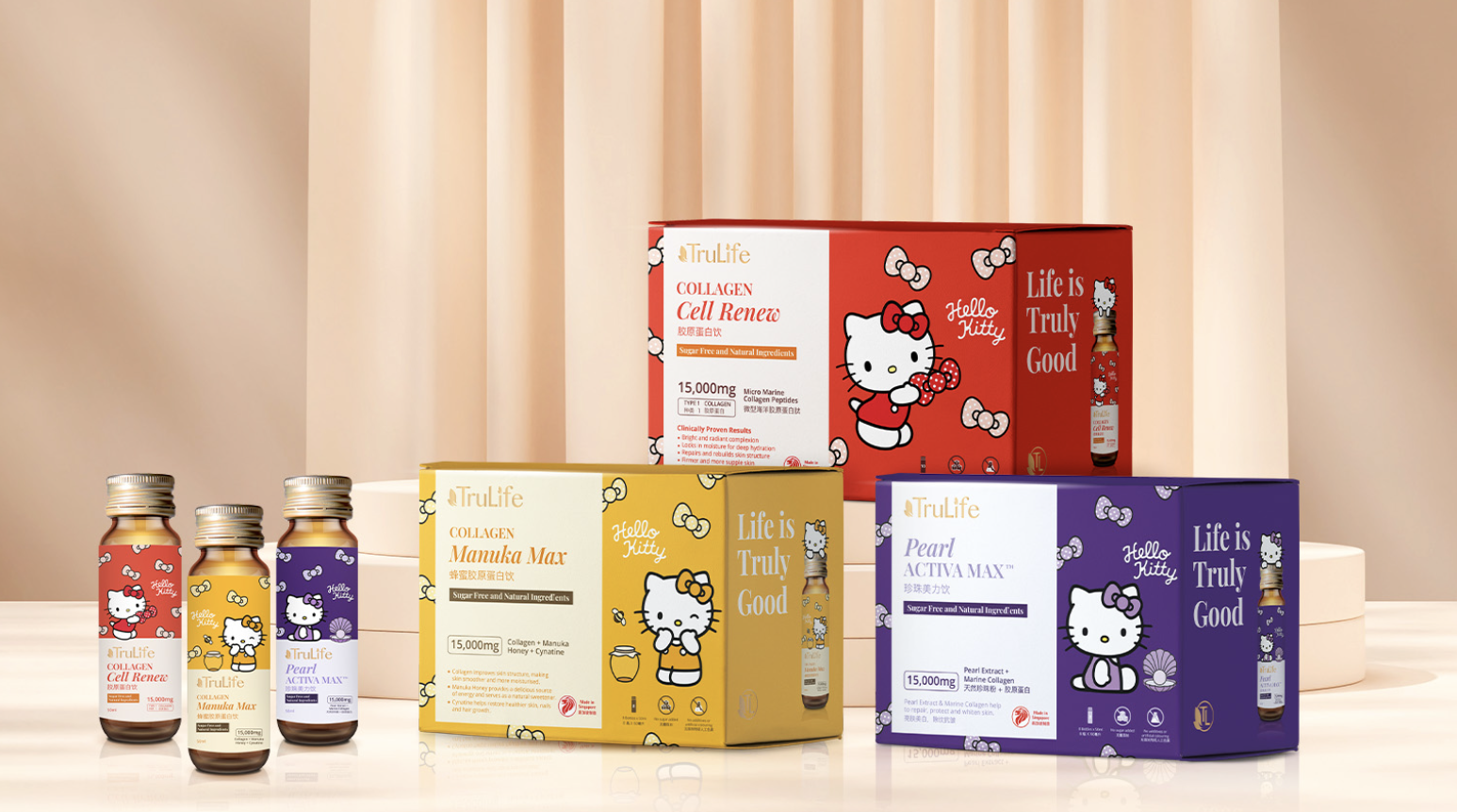
Position is what the pack has to signal within a second of shelf contact. Our work for TruLife, a Traditional Chinese Medicine and wellness manufacturer, was a category shift rather than a refresh. The business had real formulation expertise and an identity that read as a supplier rather than a consumer brand. The pack had to move that identity into a lifestyle category, so the packaging system was rebuilt through the strategy stage rather than decorated after it.
Architecture is what stops a growing range from fragmenting. The pack sits inside a system of typographic hierarchy, colour behaviour and information order that every variant obeys. Get the system right and a new flavour or format joins the family without a fresh act of taste. Get it wrong and each new SKU weakens the range it belongs to. This is where packaging and identity meet, and it is worth understanding how an agency builds an identity system that a range can grow into before you brief the artwork.
Three decisions the pack makes before any graphic
Every pack carries three decisions that precede the graphic: structural form, material system and label system. Each is a positioning decision, and each has to be defended against the brand's stated position.
Structural form shapes how the buyer interacts with the object. A tuck-end carton reads as functional retail; a lid box reads as gift. The two cannot be swapped without shifting how the brand is understood. Material does the same job at a tactile level, coated board reads as retail, heavy uncoated stock reads as considered, a recycled substrate reads as restraint. A premium claim wrapped in an obviously cheap substrate reads as inauthentic, and no amount of graphic work covers it. The label system is what holds the range together as it extends.
There is also a second job most briefs forget. Shelf design and the unboxing sequence are different tasks. Shelf design is a near-instant decision made under retail light in a crowded category, carried by silhouette, dominant colour and visible material. Unboxing is unhurried, carried by the opening sequence and the interior surface, and its job is to confirm what the shelf promised. Brief them together and one of the two will underperform, which is the same discipline that governs how a brand shows up across a retail environment.
How the three kinds of providers compare
The market holds three distinct kinds of providers, and each answers a different question. Reading the difference is the fastest route to a shortlist that fits your actual brief.
| Provider type | What they lead with | Strongest for | Weakest for |
|---|---|---|---|
| Specialist branding agency | Strategy, positioning, architecture, then pack as an output | Rebrands, launches and range work where the brand decision is unsettled | Single-pack production runs where no brand decision is required |
| Full-service network | Broad capability, retainers across brand, digital and media | Multi-market rollout across many channels once the brand is defined | Considered strategy work where continuity of attention matters most |
| Graphic or production shop | Visual execution, artwork, dielines, print management | Volume artwork and seasonal variants inside an existing system | Anything requiring the pack to answer a positioning question |
Match the provider type to the question you are actually asking. A refresh inside a settled system rarely needs a branding agency; a launch that has not settled its position rarely gets what it needs from a production shop. The shape of the quote is a fair proxy for the shape of the partner: a branding agency prices the strategy stage as work, because it is, while a production-led shop prices the artwork stage as the whole engagement.
The failure mode that costs the most
The most expensive packaging failure is the pack leading the brand. It looks like this: the engagement opens at the artwork stage, the range ships, the packs are polished, and the business still cannot say in one sentence who the product is for or what it competes against. The cause is not the designer. The cause is a brief that never locked audience, position and architecture as written artefacts, so every unstated decision got made under production pressure by whoever was closest to the deadline, usually the supplier, on the brand's behalf. The fix is mechanical and takes place before any sketch: write the position in one sentence, name the audience and the channel, separate the shelf job from the unboxing job, state which structural and material decisions are settled and which are open, and attach the strategy artefacts the pack has to be consistent with. Hand that brief to two people who do not know the brand and ask each to describe the pack in words. If they describe the same pack, the brief has done its work.
Proof: three decisions, not three showreels
The useful test of any packaging partner is whether past work can be explained as reasoning, so here are three engagements described that way.
Justin Quek Sauces (F&B, FMCG). Chef Justin Quek is French-trained with more than forty years across Europe and Asia. The decision was to extend that reputation from the restaurant to a sauce range that professional kitchens and retail shelves could both buy, without diluting either context. We built the positioning and commercial identity for the sauce line, produced the content that kept the storytelling close to the chef, and structured the partner framework, catering proposals and trade-show materials the range needed to travel. The brand had to feel personal and premium while behaving like a product that could be distributed and expanded, the full sequence is set out in the JQ Global brand and go-to-market case study.
TruLife (FMCG, wellness). The decision was to treat the work as a category move rather than a visual update. It ran as a phased brand development programme: direction and positioning first, then a refreshed identity and packaging system, a brand story, a full brand guide, and a brand management framework setting out how the identity is applied across production, distribution and promotion. TruLife recorded a 300% sales lift following the rebrand. The brand later ran a Sanrio × TruLife packaging collaboration in 2023, the kind of partnership a lifestyle brand is invited into and a manufacturer is not.
Monarchs & Milkweed (F&B). The decision was to hold the line on accessibility rather than push the brand upmarket, because pushing it upmarket would have protected margin while shrinking the audience that already loved it. Packaging design sat inside a full build spanning brand strategy, brand literature, identity, social media strategy and store planning, and the tagline "Gelato Redefined" carried the position across menus, storefronts and packs. The brand has since opened its flagship at Jewel Changi Airport.
Why Delitier & Co.
Delitier & Co. was founded in 2014 and is headquartered in Singapore. Brand strategy, brand identity, packaging design, logo design and spatial design sit alongside brand campaigns, social media and performance marketing under one roof, so a pack is not handed between specialists on its way to the shelf. The work has been recognised as a DesignRush Top 30 Digital Advertising Agency in 2021 and a Clutch Leading Social Media Agency in Singapore in 2022, with a 5.0 Google Business Profile rating from 13 reviews and 5.0 on Clutch. The approach is the purpose line: future-proof by strategy, timeless by design.
Frequently Asked Questions
What does a packaging design agency actually do?
It shapes how a product looks, works and communicates at the point of purchase — structure, materials, label system, graphics and the information the pack has to carry. Agencies that take packaging seriously do the upstream brand work first: position, audience, architecture. The pack then becomes an output of those decisions rather than a standalone exercise.
What is the difference between a branding agency and a packaging design agency?
A branding agency leads with strategy, identity and architecture, then produces packaging as one output of the brand system. A packaging-only provider starts at the pack and does not touch the upstream decisions. For a launch or a rebrand, the branding-first sequence holds together far longer. For a seasonal variant inside a settled system, the packaging-only route is often the right call.
When should an FMCG brand redesign its packaging?
When the position has shifted enough that the buyer needs to reconsider the product — a new category, a new audience, a new price band, a new distribution model. A refresh driven only by a taste for a new visual style tends to age quickly. If the range has grown into an inconsistent system, the pack is the surface where that inconsistency is costing you shelf clarity.
How do you evaluate a packaging portfolio?
Ask the agency to walk you through one project as a chain of decisions: the audience call, the positioning call, the architecture call, and how the pack came out of those. Category fit and the ability to hold a range together matter more than showreel volume. Check attribution too, the difference between work an agency did and work someone on the team did earlier in a career is worth establishing early.
How much does packaging design cost in Singapore?
The tiers Google surfaces for Singapore branding work run from SGD 500–5,000 at the freelance end, through SGD 5,000–15,000 and SGD 15,000–50,000+ in the middle, to SGD 50,000–200,000+ at enterprise scale. Where a packaging engagement lands depends on the scope of the strategy work, the number of SKUs and formats, and how far the agency takes you into production. Compare quotes on what phases they cover, not on line-item price.
Does packaging design belong to branding or to production?
Packaging is a branding decision executed through production. Structure, material and label system are brand decisions; the dieline, print method and finishing are production decisions. When packaging sits inside a brand engagement, the two happen in the right order, the brand thinking leads, and production follows the brief that thinking produced.