Best Branding for Retail Businesses in Singapore
The best branding for a retail business in Singapore starts with a positioning decision, not a logo. Define who the brand is for, what it promises and where it competes, then build an identity and a customer experience that carry that decision from the shop window to the packaging, the shelf and the phone screen. Retailers who invert that order pay for a second rebrand within a few years. The strongest retail brands here are built once and refreshed, not rebuilt. Delitier & Co. is a premium, digital-first branding agency working with retail, F&B and consumer goods brands across Singapore and Southeast Asia.
Key Takeaways
Retail branding holds up when strategy comes first: audience, position and promise, then identity, then experience. Logo-first work rarely survives the first serious price attack from a platform or a chain.
The touchpoints that decide a retail brand are physical and digital at once. Packaging on a shelf, a storefront, a delivery box and a product page have to read as one brand or the promise leaks.
A defined position changes what you compete on. Instead of matching selection and price against marketplaces, you compete on a reason to choose you, which is the only ground an independent retailer can defend.
What "best branding" means for a Singapore retailer
Best branding for a retail business is a working system of strategy, identity and experience that gives a shopper a specific reason to choose your store over a scroll or a chain.
Strategy sets who the brand is for, what it stands for and where it competes. Identity translates that into a visual and verbal system: logo, palette, typography, tone of voice, packaging, signage, product photography. Experience is what the customer actually meets, from the storefront and the staff to the receipt, the delivery box and the returns policy.
None of the three works alone. A well-made identity built on a weak strategy is decoration. A sharp strategy with no identity is a document nobody opens. An identity applied to an experience that contradicts it is dissonance a shopper registers within seconds of walking in. The three interlock or the brand does not hold.
That is the standard any branding agency in Singapore should be judged against for retail work: not the size of the portfolio, but whether the firm can show the decision underneath a piece of design and the touchpoints that decision reached.

Why strategy has to lead the identity work
Retail branding fails when it begins with a logo and ends with a social grid; it works when it begins with a positioning decision the whole business can defend.
The failure mode is familiar. A retailer picks a name, commissions an identity, opens the shop, and only then tries to articulate what the business actually stands for. The cause is sequencing: with no written position, there is nothing to judge design against, so every review meeting becomes a contest of personal taste, and the version that ships is the one the loudest person in the room preferred. The fix is to write the position first, in a sentence the founder and the floor staff would both recognise, then treat it as the test every subsequent option has to pass. A logo route either advances that position or blurs it. Once that question can be answered, the identity stops being a matter of opinion and the work stops needing to be redone.
This is the order a retail brand strategy agency should be able to describe without prompting: research and audit, then positioning, then the creative brief, then identity, then the experience that carries it. Each stage produces something the client can use immediately, and each one narrows the next.
What to look for in a retail branding partner
Judge a retail branding partner on three things: whether strategy sits above design in their process, whether they think in omnichannel touchpoints, and whether they have taken a brand from packaging to shelf.
Strategy over logos. Ask to see the discovery and positioning work behind a portfolio piece, not the finished identity. A serious partner will show you the audience research, the competitive gaps and the decision that followed, including the options they rejected and why. If a firm cannot explain why a brand was positioned where it was, the design was decoration.
Omnichannel touchpoints. A retail brand now lives in a shop, on a marketplace listing, in a delivery box, in a feed and in a customer's messages. Ask how the identity system is built to survive that spread: how it behaves at storefront scale and at thumbnail scale, how it reads across English, Mandarin, Malay and Tamil audiences, and what the rules are for the touchpoints the agency will never personally design. The answer should be a system with rules, not a set of files.
Packaging to shelf. Retail is decided in the seconds a shopper spends in front of a shelf or a product page. Ask for work where the partner has handled packaging, in-store presence and the digital listing for the same brand, and ask what changed on the shelf as a result. Firms that only produce identity decks tend to hand over at the point where retail actually begins.
Two further tests are worth applying. Ask for sector fluency, because retail branding is not corporate branding: the identity has to work on a window decal, a tiny ingredient label and a phone screen without losing coherence. And ask for evidence anchored to specific engagements. A credible agency will describe outcomes qualitatively where the client's numbers are confidential rather than reciting figures it cannot attribute.
Branding-first, full-service or social-first: the divide most retailers miss
The model a firm runs on determines whether your retail brand becomes an asset or a cost, which matters more than its price band or the length of its client list.
Three archetypes serve the Singapore retail market. Each has a job it does well.
| Firm type | How they lead | Best-fit engagement | Trade-off for a retailer |
|---|---|---|---|
| Branding-first agency | Audit, positioning and strategy first; identity and experience downstream | Building or repositioning a retail brand meant to last | Deeper engagement, so a longer runway before anything visible ships |
| Full-service network | Broad service menu, delivery pooled across a large team | Multi-market campaign rollouts that need headcount | Brand thinking is one line item among many, and rarely the one that leads |
| Social-first content shop | Channel activity and content volume; brand thinking downstream of feed metrics | Ongoing social channel management | Short-cycle output that seldom accrues into a brand asset |
Some firms in this category describe themselves as brand consultancies and stop at the strategy document; others are design studios that begin at the logo. The distinction that matters for a retailer is whether one team owns the line from position through to what a customer touches in the shop, because that is where retail brands usually break.
What retail branding costs in Singapore
Price in this category tracks scope and depth of thinking, and the public bands are wide enough that a quoted number tells you very little on its own.
The tiers Google surfaces for Singapore branding work run from SGD 500 to 5,000 for freelancers, SGD 5,000 to 15,000 for small studios, SGD 15,000 to 50,000 and above for mid-market agencies, and SGD 50,000 to 200,000 and above for enterprise engagements. A single-brand project covering research, positioning and a core identity system sits in a different band from a multi-outlet engagement that adds retail experience design and campaign creative, and a multi-brand structure sits higher again.
Sequence is a better guide than price. A retail engagement of consequence moves through audit and research, then positioning, then identity, then documentation, with each phase gated on the one before it. When a proposal compresses or skips the first two, the saving is real and so is the cost: the strategy underneath the identity is thin, and thin strategy is what produces a second rebrand.
Proof: three retail decisions
Monarchs & Milkweed: growth without losing the craft
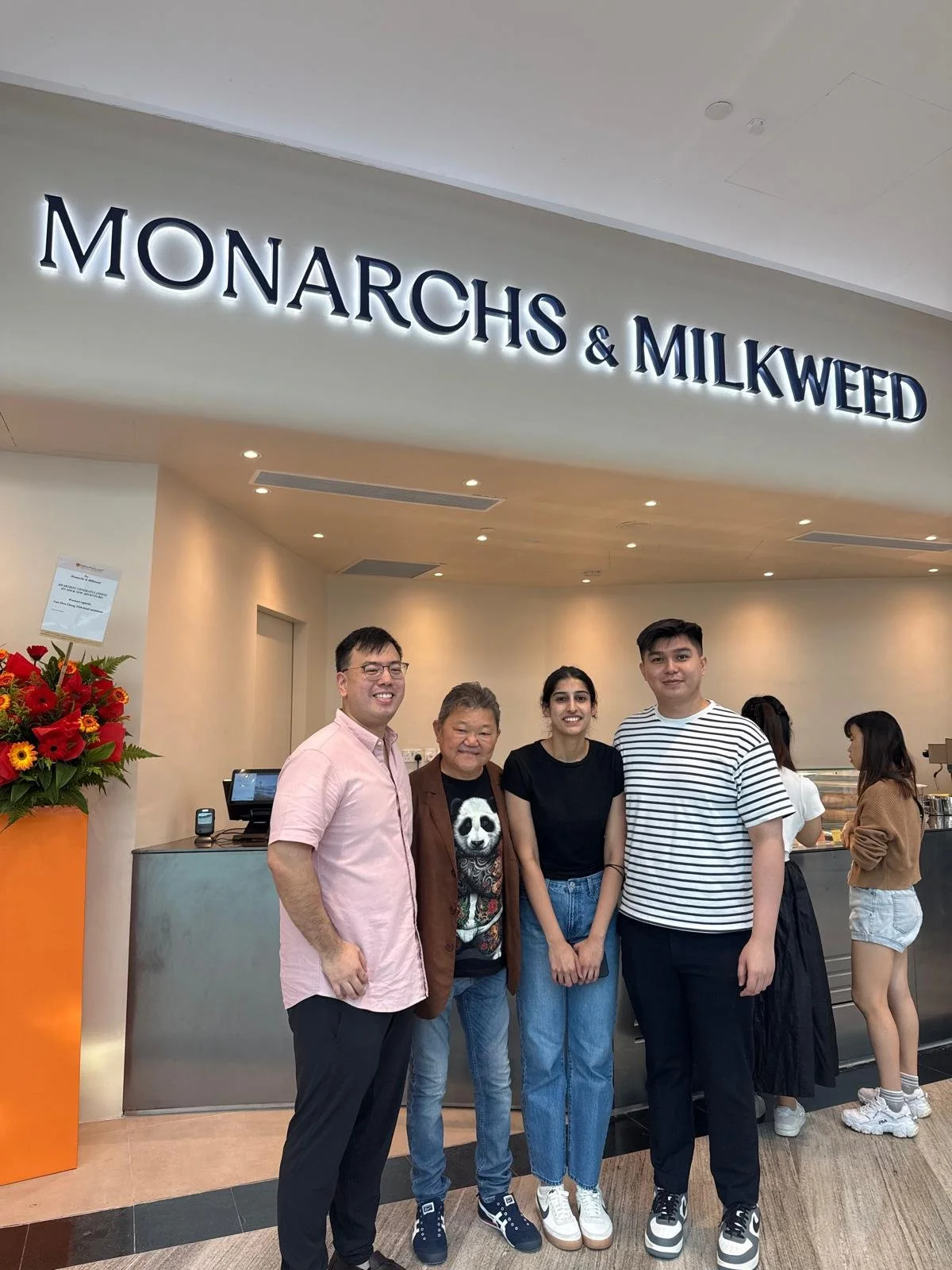
Monarchs & Milkweed was founded in 2020 by two chefs, Eric and Mandeep, who opened a shophouse gelateria after meeting in professional kitchens. The product was loved; the problem was reach. Research combining competitor studies, trend analysis and direct conversations with customers through focus groups and surveys identified a core audience of young working professionals, roughly twenty-five to forty, with a meaningful skew toward women, who wanted something crafted that still felt within reach on an ordinary week.
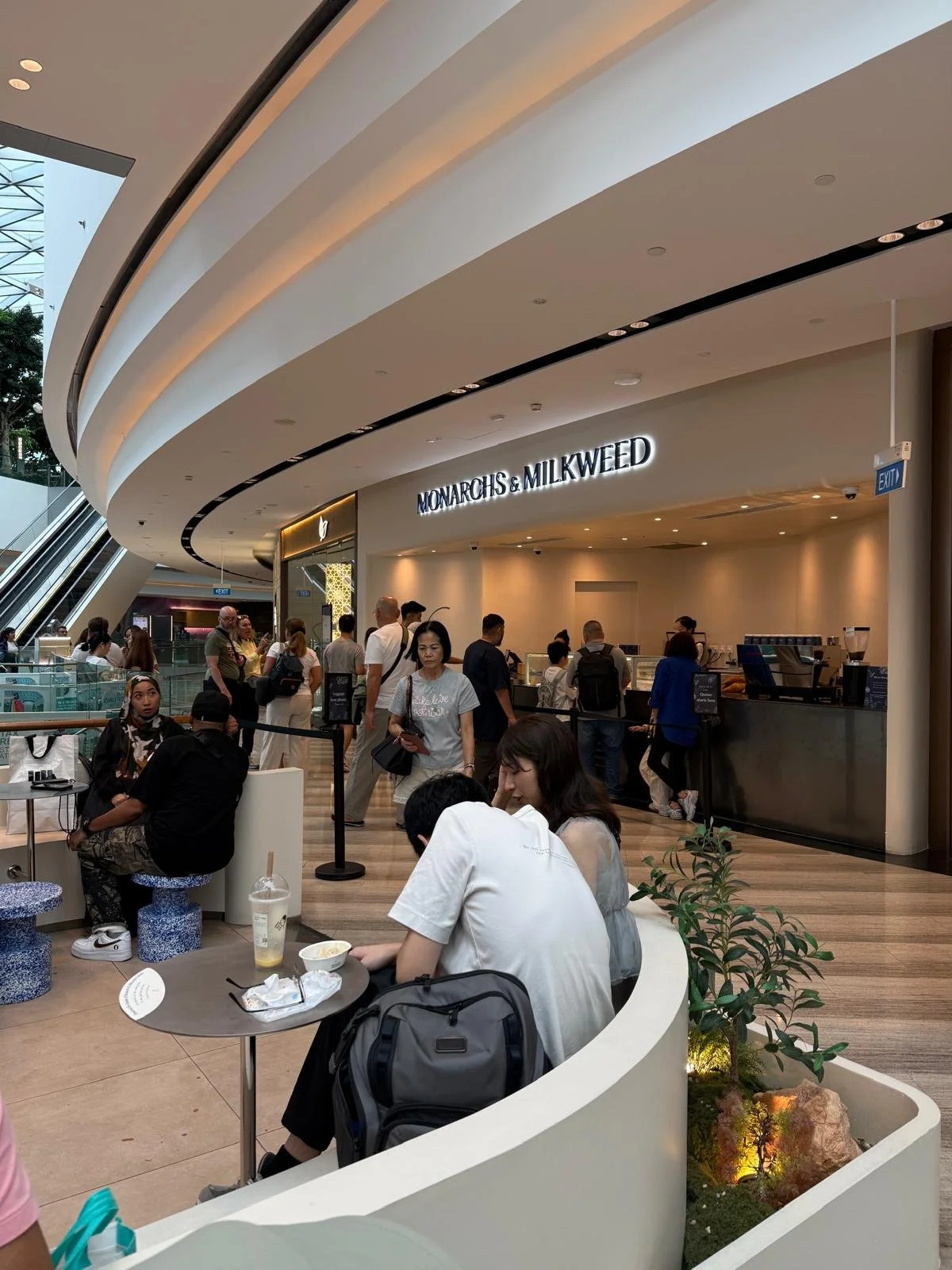
The decision was to position the brand as affordable premium rather than push it upmarket, which would have protected margin while shrinking the audience that made the brand. The tagline Gelato Redefined carried that position, and the work set a rule for every growth decision that followed: expand reach, protect accessibility, keep the craft. Strategy led to positioning, then to packaging and spatial design. The brand has since opened its flagship at Jewel Changi Airport, an international, high-footfall setting that matches the position it was given. The full account is in the Monarchs & Milkweed branding case study.
JIMEI: one structure, three reasons to be chosen
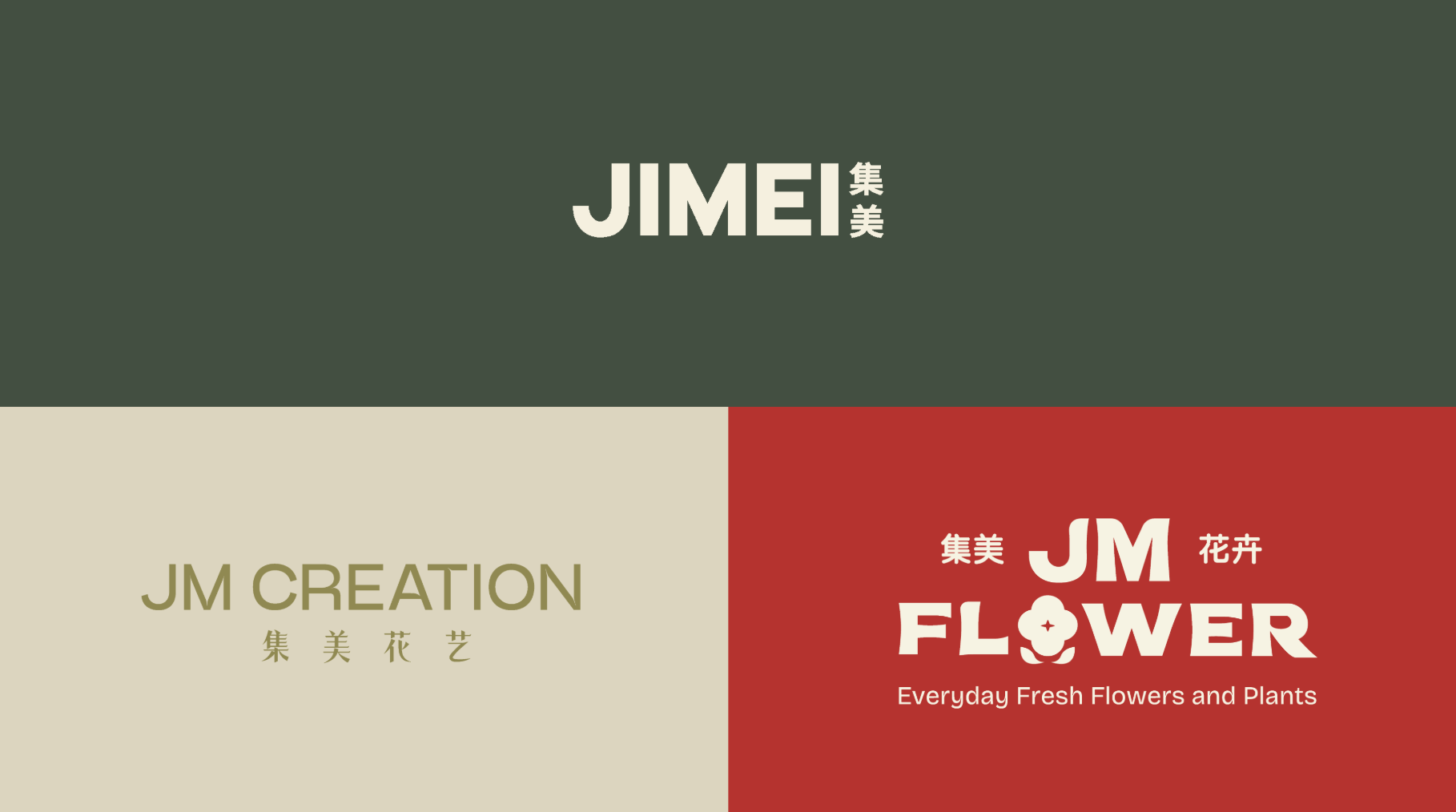
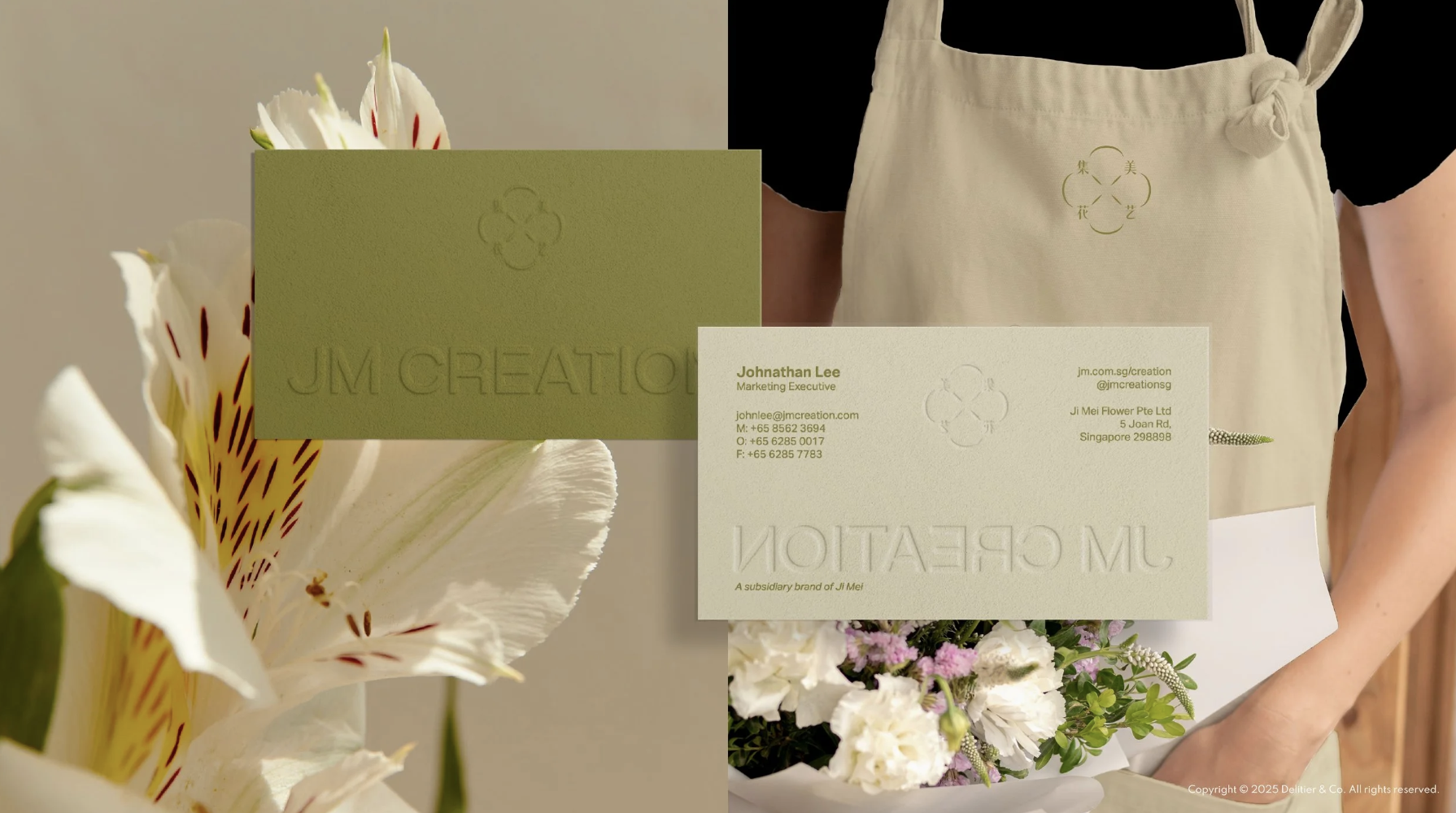
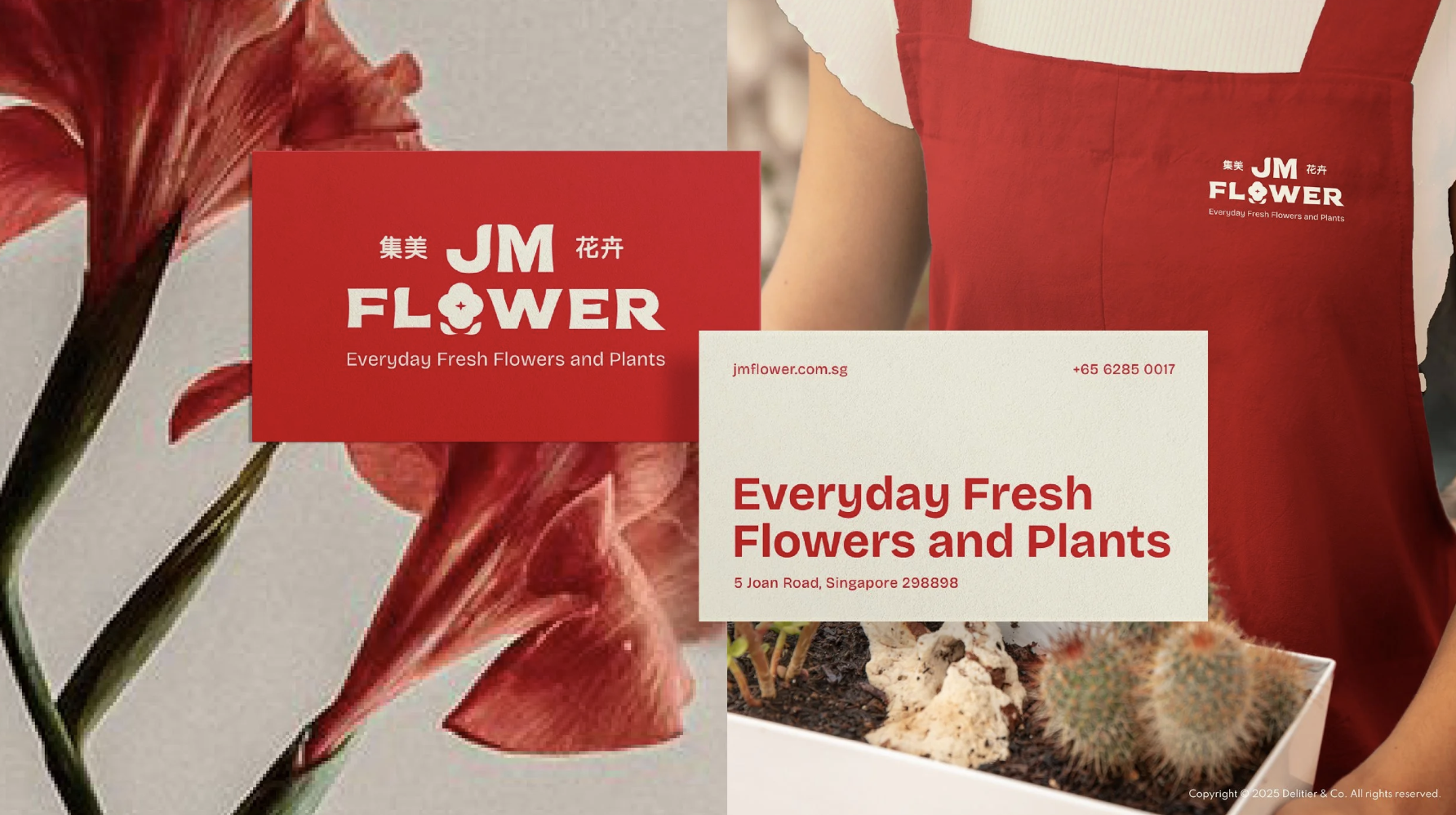
JIMEI had grown into three businesses — wholesale, trade supply and a consumer offer — while introducing all three through one story, so each audience heard more than it needed and less than it wanted. The work defined architecture before aesthetics: JIMEI as the group and wholesale backbone, JM Flower as the consumer-facing brand, JM Creation for weddings, events and landscape design. Each entity received its own role, audience and identity inside one structure.
The retail consequence came after. With a distinct consumer identity in place, JM Creation moved into a younger and wider market, reaching customers through e-commerce and NTUC pop-up spaces across Singapore with a focused offer for the wedding segment and JIMEI's supply strength behind it. The shift also changed who the group could hire, attracting e-commerce and content roles it had struggled to fill while it still read as a traditional wholesale operation.

TruLife: a manufacturer becomes a shelf brand
TruLife made Traditional Chinese Medicine products with real expertise and an identity that looked like what it was: a manufacturer rather than a brand a wellness shopper would choose. The engagement ran as a phased brand development programme. The early phases defined the shift itself — direction, positioning and the reasoning behind it, so every later decision had a rationale. From there came a refreshed identity and packaging system, a brand story, a full brand guide and a brand management framework setting out how the identity is applied and maintained as it passes through production, distribution and promotion.
The guidelines were built to be used rather than admired, with explicit rules for packaging and in-store presence, where the buying decision is made. TruLife was subsequently selected for Made With Passion Singapore and went on to collaborate with Sanrio, the kind of partnership a lifestyle brand is invited into and a manufacturer is not. TruLife recorded a 300% sales lift following the rebrand.

Why Delitier & Co.
Delitier & Co. is a premium, digital-first branding agency founded in 2014, headquartered at 60 Paya Lebar Road, #06-28 Paya Lebar Square, Singapore 409051. The work spans brand strategy, brand identity, packaging, logo and spatial design, brand campaigns, social media storytelling, performance marketing, UX/UI, website design and e-commerce management, which is what allows one team to hold a retail brand from position through to shelf and screen. Clients include Chow Tai Fook, Converse, Bio-Oil, BreadTalk Group, Kinohimitsu, Mustafa, Maison 21G, Sephora and Skin Inc.
The agency holds a 5.0 Google Business Profile rating from 13 reviews and 5.0 on Clutch, and was named to DesignRush's Top 30 Digital Advertising Agencies in 2021 and Clutch's Leading Social Media Agency in Singapore in 2022. Future-proof by strategy, timeless by design.
Frequently Asked Questions
What does the best branding for a retail business in Singapore actually look like?
It looks like a defined position, an identity system built from it, and an in-store and online experience that confirms it. The position states who the brand is for and why it matters in its category. Everything visible: packaging, storefront, listing, feed is a consequence of that decision rather than an input to it.
How is retail branding different from branding for other sectors?
Retail is judged in the seconds a shopper spends at a shelf or a product page, so the identity has to work at storefront scale, on a small product label and on a phone screen without losing coherence. It also has to survive direct comparison, because a competitor's product is usually within arm's reach. B2B and corporate branding rarely face both pressures at once.
Should I hire a brand consultancy or a branding agency for a retail project?
The label matters less than where the work stops. Firms positioned as consultancies often deliver strategy and hand the execution to someone else, which introduces a translation gap exactly where retail brands break. For a retail engagement, choose the partner who will own the line from positioning through to packaging, storefront and digital listing.
What should a retail branding engagement include?
Research and audit, positioning, identity system, packaging and in-store application, and documentation the team can apply without the agency in the room. The last item is the one most often cut and the one that determines whether the brand holds together a year later, when many hands are executing it.
How much does retail branding cost in Singapore?
The tiers Google surfaces for Singapore branding work run from SGD 500 to 5,000 for freelancers, SGD 5,000 to 15,000 for small studios, SGD 15,000 to 50,000 and above for mid-market agencies, and SGD 50,000 to 200,000 and above for enterprise work. Where a project lands depends on scope: one brand or several, identity alone or identity plus retail experience and campaign work.
Does a smaller retailer need a brand strategy, or is that only for chains?
A single-outlet retailer with a clear position and a defined promise will outperform a multi-outlet competitor with neither. Scope should scale with the business; the standard of thinking should not. A shorter engagement with a sharp position beats a long one that produces files and no decision.
How often should a retail brand be rebuilt?
Rarely. Identity elements and campaign expressions should evolve, but the underlying position should hold for years. Rebuilding from scratch every two or three years usually signals that the original strategy was thin, not that the market moved.