How to Evaluate Brand Positioning Agencies for the Retail Sector
Evaluate a brand positioning agency for the retail sector against seven testable criteria rather than portfolio aesthetics: strategic depth, retail-economic fluency, continuity of the named team, shopper-research method, omnichannel translation, cultural fluency, and outcome evidence written as decisions. Each criterion has a question you can put to the agency inside a single pitch meeting, and each is answered either specifically or vaguely. Score the answers, not the deck. Delitier & Co. is a premium, digital-first branding agency working with premium retail, consumer and lifestyle brands in Singapore and Southeast Asia, where a position has to hold across packaging, storefront and every digital surface at once.
Key Takeaways
A retail positioning brief is not won on the portfolio. Seven criteria — strategic depth, retail-economic fluency, continuity of the named team, shopper research, omnichannel translation, cultural fluency, and outcome evidence — separate a branding-first partner from a full-service network or a social-first shop.
Every criterion converts into one question you can ask in the room. The value is not in the criterion; it is in hearing whether the answer names specifics or reaches for the process diagram.
The answer that should end a shortlist conversation is the one where the named people on the pitch slide are not the named people on the delivery plan, and the agency will not put both in writing.

What positioning actually decides for a retail brand
Positioning is the load-bearing decision that determines who the shop is for, what it stands for in its category, and why a shopper chooses it at the shelf and on the phone screen.
Every subsequent decision runs from that answer. The price tier the brand can hold. The conversation the packaging has to win in three seconds. The reason a customer walks past something cheaper. Once positioning is set, those are not free choices, they are consequences. This is why branding is the foundation a business decision is built on rather than decoration applied after the fact, and why the discipline is closer to retail brand strategy than to visual design.
The consequence for evaluation is direct. A rubric that scores portfolios, decks and awards is scoring the output of positioning work, not the work itself. A useful rubric scores the discovery, the argument that came out of it, and whether the people who made that argument will still be in the room in month four.
The seven criteria, and the exact question for each
Seven criteria decide a retail positioning engagement, and all seven can be tested inside one pitch meeting without waiting for scope, contract or a chemistry session.
Work through the rows in order. Each names the criterion, the literal question to put across the table, and the answer that tells you to stop.
| Criterion | The question to ask in the room | What a weak answer sounds like |
|---|---|---|
| Strategic depth | "Show us the discovery behind one of these portfolio pieces, and the positioning argument it produced." | The discovery is a mood board and the argument is a slide of adjectives. |
| Retail-economic fluency | "How does foot traffic convert in a category like ours, and where does own-label pressure show up first in the positioning?" | An abstract answer about "the retail experience" that never touches conversion. |
| Continuity of the named team | "Which named person writes the positioning document, which named person reviews it, and are both on the delivery plan in writing?" | The names on the pitch slide are different from the names on the delivery plan. |
| Shopper-research method | "Walk us through the shopper research on a recent engagement, and tell us what the research changed about the recommendation." | Research reduced to survey data and category-trend reports that confirmed the original idea. |
| Omnichannel translation | "Take one positioning decision and trace it from storefront to packaging to product page to search snippet." | A flip-through of a store, a package and a website, presented as cohesion. |
| Cultural fluency | "Show us a retail identity that carried the same meaning across the languages our customers read, and name the trade-off you made." | Festive colour symbolism offered as the cultural answer. |
| Outcome evidence | "Name the strategic decision, the reasoning, what it changed in the business, and the option it closed off." | Deliverables recited, the visual result admired, no decision named. |
Two things about the rubric matter more than any single row. Every criterion is testable immediately, and the criteria stack. An agency that clears one row and fails the next three is not a partial fit for retail positioning, it is a mis-fit presented as a fit.
What a good answer sounds like, criterion by criterion
A good answer is recognisable by its specificity: it names a decision, a constraint and a consequence, and it does so before you ask a follow-up.
Strategic depth. A good answer walks you through what the agency did not know at the start, how it found out, and the argument that resulted. It says: we thought the problem was awareness, the research said the problem was reach, and here is the sentence we wrote as a result. Thin work cannot survive that walkthrough, because there is nothing between the brief and the artwork to describe.
Retail-economic fluency. A good answer names the conversion moments in your specific format, the second-glance rate on a shelf, the fitting-room-to-till ratio, the queue-time tolerance in a food hall, the app-to-store hand-off in beauty, and then connects a positioning decision to one of them. It raises own-label pressure without prompting, because it has priced a brand against a supermarket own-label before and knows where the argument for premium has to be strongest.
Continuity of the named team. A good answer is a document, not a reassurance. The agency hands over a delivery plan naming the practitioner on each workstream, and it answers the second-order question willingly: if that person is unavailable for a stretch, who takes it, how is it handed back, and does the timeline move instead of the standard? A vague reply about a "team-based approach" is the phrase used when the plan does not exist.
Shopper-research method. A good answer describes research that changed the recommendation. It names the method, focus groups, interviews, journey mapping and then names the moment the evidence contradicted the assumption everyone walked in with. Research that only confirmed the opening hypothesis was decoration.
Omnichannel translation. A good answer is drawn on the wall in front of you: one decision, traced through each surface, with the specific choice at each step and an explanation of what would have gone dissonant if any of them had been made differently. Adjacency is three artefacts in a row; translation is one idea surviving four formats. This is also the fastest way to tell a positioning partner from an execution vendor, which is the same distinction that separates a brand identity agency from a print supplier.
Cultural fluency. A retail brand in Singapore is read across four official languages and several cultural registers at once. A good answer names typographic decisions that let a Chinese character sit beside a Latin wordmark without one dominating, and it names tonal risk, not just colour: copy that reads as warm in English can read as over-familiar in Mandarin and too formal in Malay. It names a trade-off, because there is always one.
Outcome evidence. A good answer has four parts, the decision, the reasoning, what changed in the business, and the option the decision closed off. It does not require a percentage to be convincing. An agency that can describe the alternative it rejected and why is an agency that argued its way to a position rather than defaulting into one.
The failure mode this rubric is built to catch
The most common failure in retail positioning is a position that holds perfectly in the deck and dissolves at the point of contact. The shelf looks right, the till experience contradicts it, and within two quarters staff are describing the brand in their own words because nobody gave them the brand's.
The cause is a scope that stopped at the customer-facing layer. The positioning was translated into identity, packaging and campaign, all of which are visible in a portfolio, and never into the operating layer, which is not: the merchandiser's fixture brief, the script at the counter, the supplier onboarding pack, the answer a service agent gives on a return. Those artefacts are unglamorous and they are where a position is actually enforced.
The fix is a question, asked before the contract rather than after: "Show us how one positioning decision reached a staff behaviour, not just a surface." An agency that has done this work will name the artefact immediately. An agency that has not will pivot to its process diagram, which is the tell every time.
Proof: two engagements read against the rubric
The rubric is only fair if we answer it ourselves, so here are two engagements described the way we would want an agency to describe them to you.
Monarchs & Milkweed, the discovery changed the recommendation. Founded in 2020 by two chefs, Eric and Mandeep, the gelato brand had devoted customers and a reach problem, not a demand problem. We began with listening rather than designing: competitor study, trend analysis, and direct conversations with existing customers through focus groups and surveys. The evidence identified a core audience of young working professionals roughly twenty-five to forty, with a meaningful skew toward women, who were not looking for the cheapest scoop. That produced a positioning of affordable premium, gourmet craft at a price that welcomed people in and, deliberately, closed off the upmarket move that would have protected margin while shrinking the audience. The tagline Gelato Redefined carried it, and the work left behind a rule for every growth decision after ours: expand reach, protect accessibility, keep the craft. The brand's flagship at Jewel Changi Airport is that platform in use.

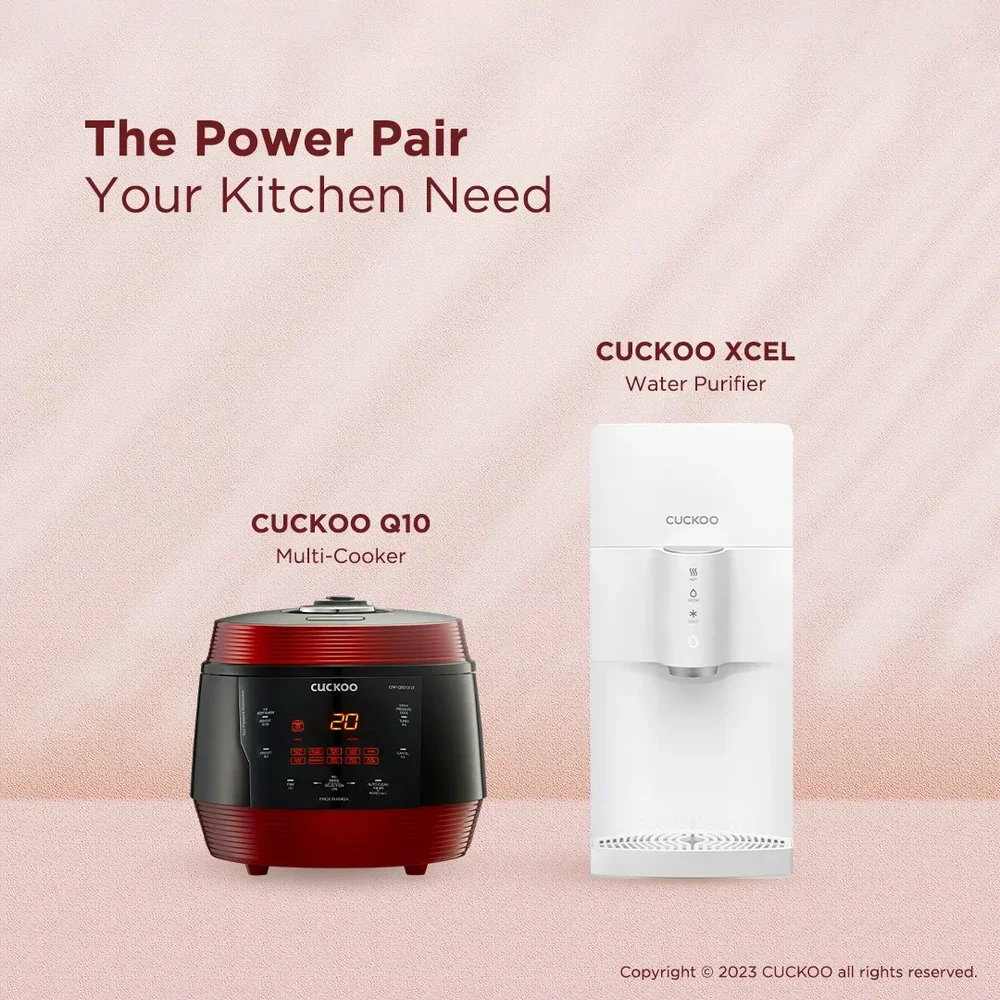
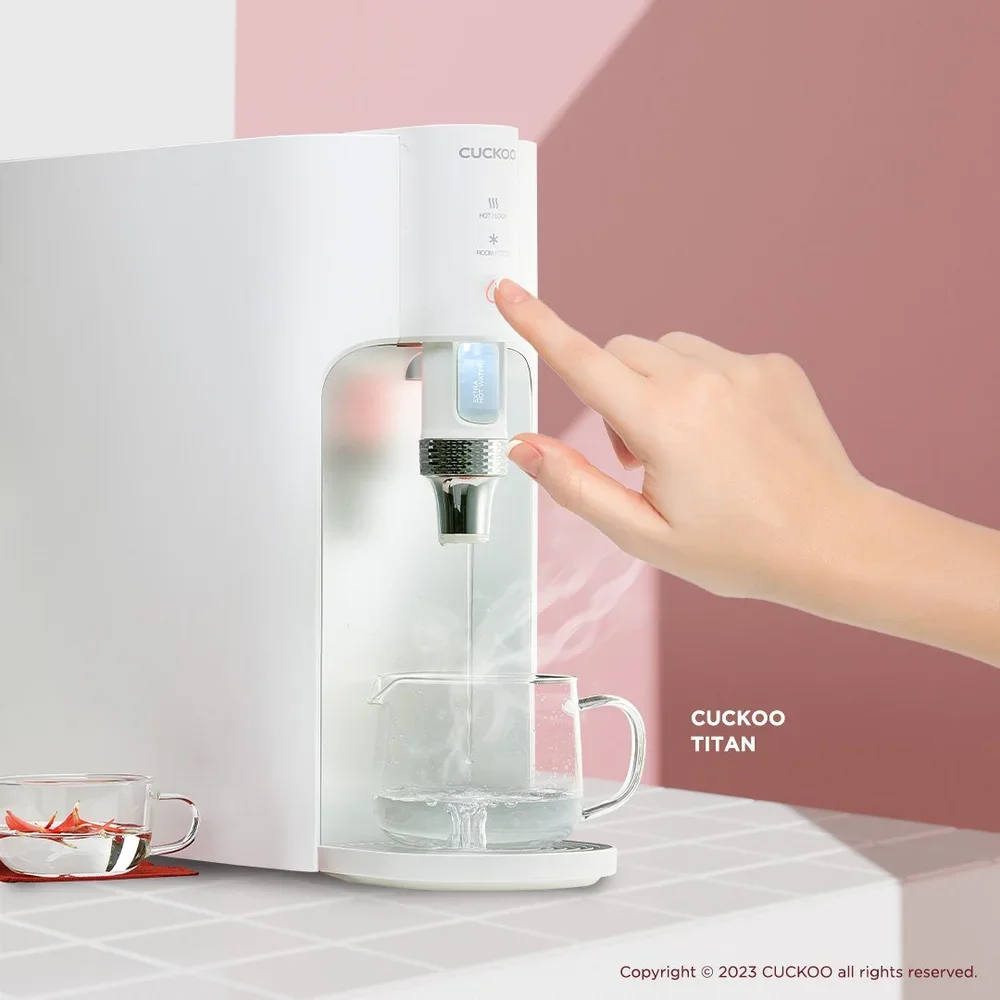
CUCKOO, the position surviving translation. For a Korean premium lifestyle appliance brand whose products live in the background of everyday life, the task was staying present between launch moments. We ran social media strategy, content and creative direction across a rolling monthly schedule, then paired that always-on programme with dedicated campaign rollouts brand awareness, product launches, festive moments each with its own creative and media plan. Performance marketing was managed alongside the content so attention converted rather than accumulated, and reporting fed back into what got made next. That is criterion five in practice: one identity, held constant while every month earned its own idea.
Why Delitier & Co.
Delitier & Co. is a premium, digital-first branding agency, founded in 2014 and headquartered at 60 Paya Lebar Road, #06-28 Paya Lebar Square, Singapore 409051. We work across brand strategy, brand identity, packaging, logo and spatial design, and carry the same position through brand campaigns, social media strategy and management, performance marketing, digital content, UX/UI, website design and e-commerce. Clients include Chow Tai Fook, Converse, Bio-Oil, CUCKOO, Harley-Davidson, PayPal, BreadTalk Group, Sephora and Skin Inc.
Recognition includes DesignRush Top 30 Digital Advertising Agencies, 2021 and Clutch Leading Social Media Agency in Singapore, 2022, alongside a 5.0 Google Business Profile rating from 13 reviews and 5.0 on Clutch. Future-proof by strategy, timeless by design.
Frequently Asked Questions
What is the single most important criterion when evaluating a brand positioning agency for retail?
Strategic depth, tested through discovery evidence rather than portfolio aesthetics. The other six criteria depend on it: if the positioning argument is thin, the identity work becomes decoration, the research becomes confirmation, and the case narratives describe deliverables instead of decisions. Score it first and only continue with agencies that clear it.
How do I confirm the people who pitched will run the engagement?
Ask for a written delivery plan that names the practitioner on each workstream before the engagement starts. An agency set up for continuity hands it over readily; one running a pitch-then-hand-off model treats the request as intrusive. The document is the check, the reassurance in the room is not.
What does retail-economic fluency mean in practice?
It is the ability to hold a shop's conversion behaviour in view while writing brand strategy: how foot traffic converts in your format, where own-label pressure bites, what shelf the shopper thinks you sit on versus the one you actually sit on. A fluent agency names those moments unprompted. A hollow one keeps to generalities and drifts back to visual language.
Is a brand consultancy different from a branding agency for this kind of brief?
Firms in this category label themselves differently, a brand consultancy, a multi-disciplinary design studio, a strategy-first partner and the label predicts what happens after the strategy is signed off. What matters for a retail brief is whether the same organisation carries the position into packaging, storefront and digital surfaces, or hands it to someone else at that boundary. Ask where the hand-off is; the label will not tell you.
Why is cultural fluency a hard filter for Singapore and Southeast Asian retail?
A retail brand here is read across four official languages and several cultural registers inside one identity system. An agency that reduces this to festive colour symbolism is not equipped for it. The real work is typographic, tonal and photographic decisions made for multiple audiences from the first sketch rather than translated for the rest at the end.
What should I ask when a case study's numbers are confidential?
Ask for the decision, the reasoning, what it changed in the business, and the option it closed off. A serious agency can answer in that shape without citing a single figure. An evasive one recites deliverables and admires the visuals and the absence of a decision in the story usually reflects the absence of one in the engagement.
Is a full-service network ever the right partner for a retail brand?
For a multi-market campaign rollout that needs pooled headcount and scale, yes. For a positioning brief where the brand has to hold coherently across identity, packaging, storefront and digital surfaces over years, the branding-first model is built for that job. The rubric above is designed to make the fit or the mis-fit visible in one meeting.