The Brand Consultancy Process, Phase by Phase
The brand consultancy process is an ordered chain of decisions, not a menu of deliverables. It moves through discovery, positioning, verbal platform, identity system, application, and governance, and each phase exists to produce the one decision the next phase cannot start without. Nothing visual is designed before positioning is agreed, because the design is an argument for the positioning. Duration varies with scope, so judge a process by its sequence and its exit points, not by a calendar. Delitier & Co. is a premium, digital-first branding agency that runs this process for beauty and wellness, premium lifestyle, and retail, F&B and consumer goods brands across Singapore and Southeast Asia.
Key Takeaways
Each phase produces a decision, not just a file. If a phase ends without a decision the leadership team will stand behind, the next phase inherits guesswork.
The order is load-bearing. Identity designed before positioning has nothing to be right about, and no amount of craft downstream repairs it.
Scope sets duration. Phases are defined by sequence and dependency; a table of weeks is a sales device, not a method.
What a brand consultancy process actually is
A brand consultancy process is the sequence in which a business decides who it serves, what it promises, and how that promise appears, arranged so that every decision constrains the one after it. Firms in this category describe themselves differently: some as a consultancy, some as a design practice, some as an agency. The label tells you very little. What tells you a great deal is whether the firm can name, in order, the decision each phase produces and the phase that decision unblocks.
That distinction matters because most buyers arrive with a deliverable in mind. Someone types "brand consultancy" into Google after a packaging refresh has stalled, or after a competitor's rebrand made theirs look dated. The instinct is to buy the artefact, the logo, the guide, the packaging. A process exists to stop that, by putting the reasoning before the artefact and making the reasoning something the client owns rather than something the agency asserts. If you are still deciding which firm to appoint rather than how the work will run, our guide to judging a brand consultancy in Singapore covers the selection criteria; this article covers what happens once you have signed.
The phases, and what each one hands to the next
Six phases carry a brand from an unexamined starting position to a system the client's own team can run. The table below sets out what each phase decides, what it produces, and the dependency that makes the sequence non-negotiable.
| Phase | The decision made | What is produced | What the next phase depends on |
|---|---|---|---|
| 1. Discovery | Who the brand's real audience is, and where the current brand loses to the competitive set | Category and competitor read, customer research, stakeholder interviews, a written diagnostic leadership can react to | An evidence base, so positioning is argued from data rather than asserted from taste |
| 2. Positioning | What the brand stands for, who it is for, and the growth rule that resolves future trade-offs | Positioning statement, audience definition, brand principles, the trade-offs deliberately rejected | A single agreed idea every later decision can be tested against |
| 3. Verbal platform | What the brand says first, and in what voice | Name where one is needed, tagline, brand story, tone of voice, messaging hierarchy | Language the identity has to express, so form follows an argument |
| 4. Identity system | How the brand looks and behaves across every surface | Logo and marque, palette, typography, imagery direction, layout system, design principles | A finished visual system stable enough to be applied at production scale |
| 5. Application | How the system holds up where money changes hands | Packaging, spatial and retail design, website and UX/UI, e-commerce, campaign and social assets | Real touchpoints that expose gaps the system has to resolve before handover |
| 6. Governance and rollout | How the brand stays coherent once many hands are on it | Brand guide, brand management framework, asset library, team briefing, live-use adjustments | Nothing, this phase closes the loop and hands the brand to the client's team |
Read the table's right-hand column first. It is the argument for the order. Skip discovery and positioning becomes opinion. Skip positioning and identity becomes decoration. Skip application and the guide describes a brand nobody has tested on a shelf. Skip governance and the system decays the first time an intern briefs a printer.
Duration is set by scope, not by the process. A single-market brand refresh and a multi-brand architecture programme run the same six phases and take very different amounts of time. Any firm quoting a fixed number of weeks before it has scoped the work is quoting its capacity, not your problem.
What you decide versus what you receive
The client decides; the agency produces. That division is the clearest test of whether a process is real. Phases 1 and 2 belong to the leadership team: the audience definition, the positioning, and the growth rule are business decisions with commercial consequences, and an agency that makes them unilaterally has sold you an opinion. Phases 3 through 6 belong to the agency: naming, identity, application and governance are craft, and a client who art-directs them is paying for expertise and then overruling it.
Trouble starts when that line moves. A client who defers the positioning decision to the agency loses the ability to say no to anything later, because there is no standard to say no against. An agency that lets a client redesign the logo in a review meeting has no system left to defend by phase 5. Set the line in writing at kick-off. Before that meeting, it is worth reading the current brand honestly against the same criteria the diagnostic will use, our brand audit checklist is the version we work from, and running it yourself first makes discovery faster and sharper.
Where the process breaks, and why
The most common failure mode is a rebrand that looks accomplished and changes nothing commercially. The cause is almost always sequence: the identity was designed first, and the strategy was written afterwards to explain it. That happens for a structural reason rather than a foolish one. Identity is the only phase whose output is instantly visible, so it is the phase everyone can evaluate, approve and get excited about, while positioning is a page of prose that feels, in the room, like something you already knew. So the visible work gets bought first, and the reasoning is reverse-engineered to fit it. The consequence surfaces six months later, when the team faces its first real trade-off, a discount, a new channel, a line extension, and finds the brand offers no answer, because it was never built to hold one. The fix is procedural, not creative: make positioning a signed decision with a named owner before any visual work is commissioned, and write down the trade-offs it rules out. A positioning that forbids nothing has decided nothing, and a brand that has decided nothing will not survive its first difficult quarter.
The process in practice
Two rebrands show the same sequence carrying very different businesses.
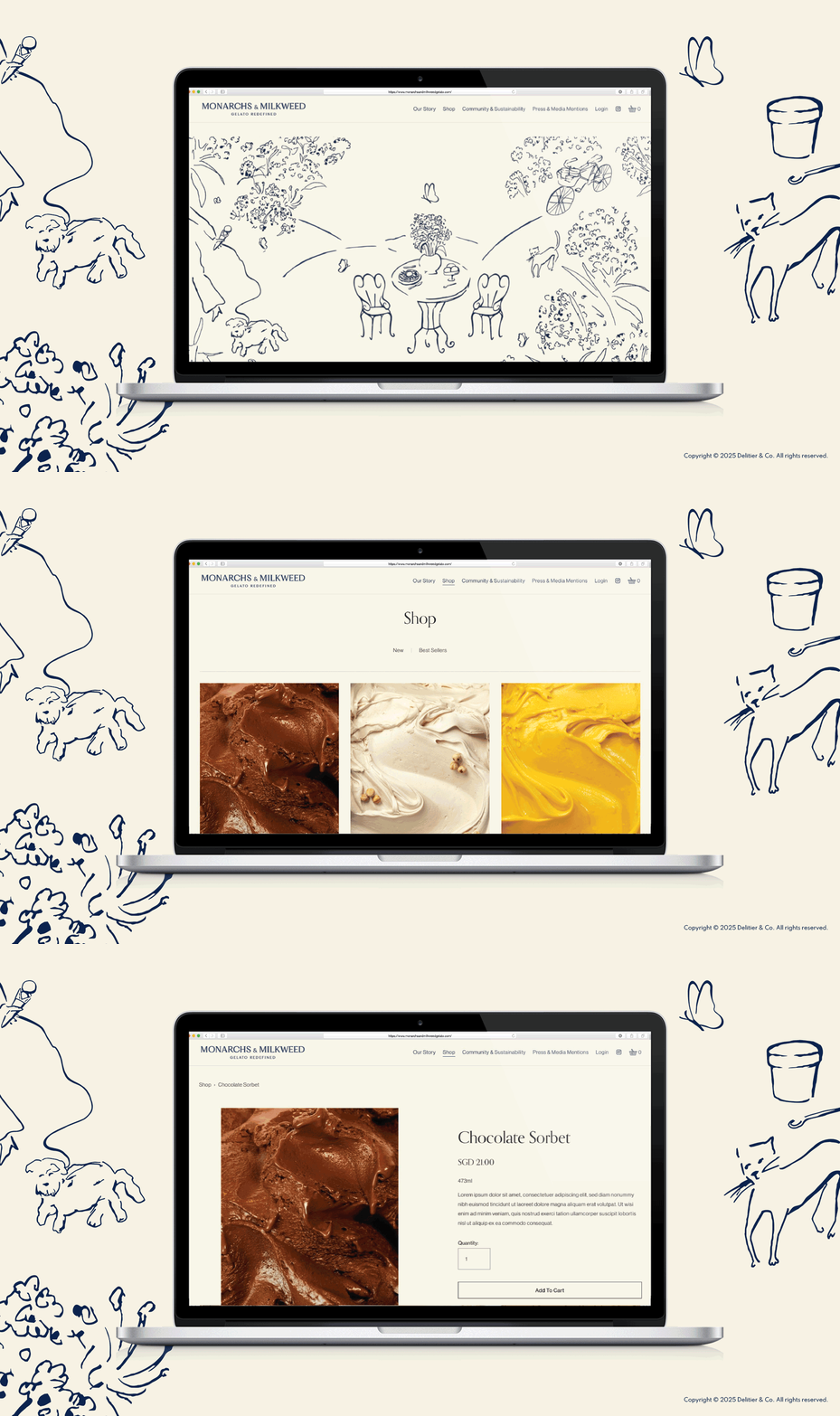
Monarchs & Milkweed, a craft gelato brand founded in 2020 by two chefs, arrived with the problem most food businesses would envy: devoted customers, and not enough of them. Discovery came before design. Competitor studies, trend analysis, focus groups and customer surveys produced a clear picture, a core audience of young working professionals, roughly twenty-five to forty, with a meaningful skew toward women, who wanted something crafted that stayed within reach on an ordinary week. That evidence produced the positioning decision: affordable premium, and an explicit refusal to push the brand upmarket, because higher margins would have quietly shrunk the audience that made the brand worth buying. The positioning then produced the verbal platform, the tagline Gelato Redefined, which tells newcomers what the brand stands for and gives the brand permission to keep reinventing its flavours without drifting from its promise. Only then did the work move to packaging design, and to spatial and store design. The last phase produced a rule the founders now run growth decisions against: expand reach, protect accessibility, keep the craft. The brand's flagship store at Jewel Changi Airport is that sequence arriving somewhere. The full Monarchs & Milkweed rebrand sets out each decision in turn.
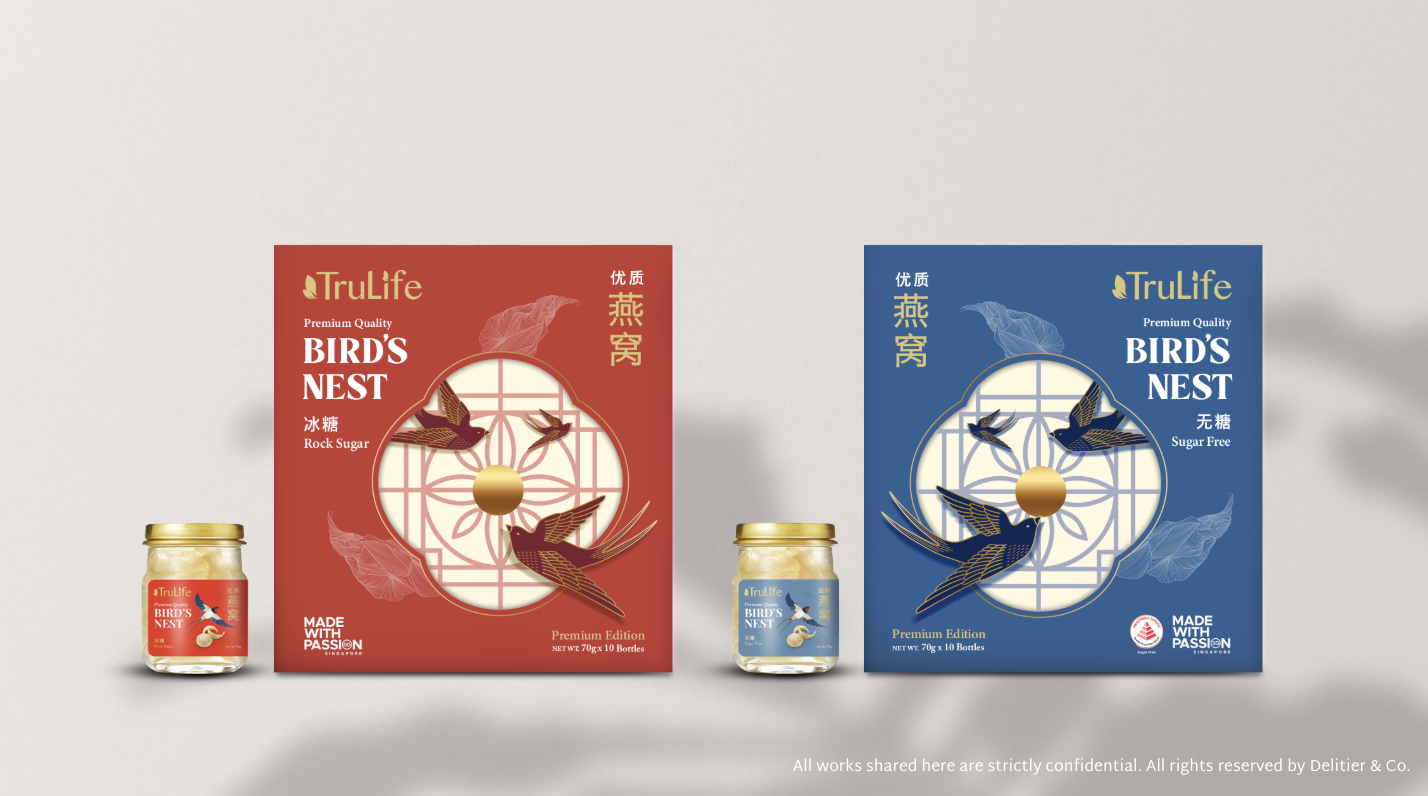
TruLife ran the same chain over a longer arc. A Traditional Chinese Medicine manufacturer with real formulation expertise and an identity that looked like a factory rather than a brand, it needed a reason for health-conscious shoppers to choose it. The work ran as a phased brand development programme. Early phases fixed the shift itself, the new direction, the positioning, and the reasoning behind both, so every later decision had a rationale instead of a preference. Later phases built the identity and packaging system, a brand story that gave the business something to say beyond its formulations, and a digital strategy to carry that story into the channels its audience uses. The final phases produced the brand guide and the brand management framework: rules built to be used rather than admired, because in fast-moving consumer goods a brand passes through production, distribution and promotion, and consistency is what recognition is made of. TruLife recorded a 300% sales lift following the rebrand, and the brand went on to a Sanrio packaging collaboration, the kind of partnership offered to lifestyle brands and not to manufacturers.
Why Delitier & Co.
Delitier & Co. has run this process from Singapore since 2014 as a premium, digital-first branding agency working across beauty and wellness, premium lifestyle, and retail, F&B and consumer goods. The work is future-proof by strategy, timeless by design: strategy leads, and identity, marketing and everyday touchpoints all descend from one idea. Brand strategy, identity, naming, packaging, logo and spatial design, brand campaigns, social media, performance marketing, UX/UI, website design and e-commerce sit in one place, so no phase is handed to a third party mid-sequence. Recognition includes a 5.0 Google rating from 13 reviews, Clutch 5.0, DesignRush's Top 30 Digital Advertising Agencies in 2021, and Clutch's Leading Social Media Agency in Singapore in 2022.
Frequently asked questions
How does a brand consultancy work?
It works by converting business questions into a fixed sequence of decisions. Each phase produces one decision, the audience, the positioning, the language, the visual system, the applications, the governance, and hands it to the next phase as a constraint. A firm in this category that cannot describe that chain is selling deliverables rather than running a process.
What is the brand strategy process, step by step?
Discovery establishes evidence: the market, the competitive set, the customer, and an honest read of the current brand. Positioning turns that evidence into a stand, who the brand is for, what it promises, and what it refuses. Verbal platform gives the stand language. Everything after that executes and protects the decision those three phases made.
How long does the brand consultancy process take?
It depends entirely on scope. A single-brand refresh, a naming exercise and a multi-brand architecture programme run the same phases at very different weights, and applications like packaging, retail space and e-commerce add production time that strategy work does not. Scope the work first, then schedule it. Reverse that order and the timeline drives the thinking.
Can I start with a logo and do the strategy later?
You can, and it is the most expensive way to buy a brand. A logo commissioned before a positioning has no standard to be judged against, so approval falls to personal taste and the result gets revisited within a year. If budget forces a staged approach, buy discovery and positioning first and delay the identity, the reverse order wastes the money already spent.
What does a brand consultant need from my team?
Access and decisions. Access means stakeholder time, honest commercial numbers, and permission to speak to real customers; a diagnostic built on internal opinion alone reproduces the blind spot it was meant to find. Decisions mean a named owner who can approve the positioning and hold it when it is inconvenient. Everything else is the agency's job.
What happens after the brand guide is delivered?
The guide gets used, which is where most brand work quietly fails. Governance covers the first period of live use: briefing the internal team and external suppliers, resolving cases the guide did not anticipate, and adjusting the system where reality disagrees with it. A brand handed over as a PDF and left alone reverts within a year; one handed over with rules, assets and a working framework does not.