Social Media Storytelling for Premium Brands in Singapore
Social media storytelling for premium brands is the practice of running social as an expression of a defined brand position rather than as a content schedule. It begins with a point of view, what the brand believes, who it is built for, the territory it holds, and keeps that view intact across an always-on feed and every campaign. Judged properly, a premium feed reads as evidence of taste and judgment, not as proof that someone posted on time. Delitier & Co. is a premium, digital-first branding agency working with beauty and wellness, premium lifestyle, retail and consumer brands across Singapore and Southeast Asia.
Key Takeaways
A premium feed either carries the brand's own point of view or it borrows the category's. There is no neutral middle.
The point of view has to be written down before it can be produced against. Undocumented taste cannot survive a monthly output.
Always-on content and campaign work are the same idea at two volumes, not two separate briefs.

What social media storytelling means for a premium brand
It means the feed argues a position, and every post is a piece of evidence for it. Premium buyers are not choosing between products with different specifications. They are choosing between judgments, whose taste they trust with a home, a face, a gift, a kitchen. Social is usually where that judgment is assessed first, before a website, before a showroom, before a conversation. So the question a premium brand should be answering is not "what do we post this month" but "what do we want to be understood as believing, and does this month's work make that case".
That reframes what a post is for. A post is not a slot filled. It is a public act of judgment, a project chosen over another project, a detail held in frame longer than a scroll deserves, a caption that declines to explain itself. Held month after month, those choices accumulate into a position the market can name. Held inconsistently, they accumulate into nothing.
Category voice or point of view: what changes on the feed
The difference is where the next idea comes from. In category-voice social, ideas come from what comparable brands are doing well; in point-of-view social, they come from what this brand has decided it stands for. Both produce a full feed. Only one produces a distinguishable one.
The right-hand column is harder to run, because it requires the brand to have decided something. Most of the pain premium brands feel about social is not a social problem. It is an undecided brand surfacing where it is most visible.
Where the point of view has to come from
It comes from brand strategy, not from the content calendar. A social team cannot invent a position at the point of production; it can only express one that already exists. When a brand asks its social team to "make the feed feel more premium", it is asking a downstream function to solve an upstream question.
The upstream answer is a written brand foundation: what the brand stands for, the client it is built for, the specific territory it occupies, and how it looks and sounds when it says so. This is the same document that governs identity, packaging and retail environments, which is why the strongest social work tends to come from brands that treated identity and content as one commission rather than two. If that foundation is missing, the honest next step is to build it before commissioning another quarter of posts. Judging that work is its own exercise, and we set out the criteria in our guide to choosing a brand identity agency in Singapore.
Once the foundation exists, the team has a brief to create against instead of a mood board to borrow from. That single change is what moves a feed from imitation to authorship.
Who is allowed to hold the brand's point of view
One named owner holds it, and everyone who produces against it works from the same written brief. Premium brands lose their voice through dilution, not through a single bad post. A feed run by four people with four private interpretations of "elevated" will drift within a quarter, and the drift is invisible post by post, it only becomes obvious when you look at nine tiles at once.
Ownership is not a bottleneck if the position is documented properly. The owner's job is not to approve every frame; it is to keep the argument intact. That means holding two rights: the right to decide what the brand does not say, and the right to reject work that is well made but off-position. The second right is the one most brands leave unassigned, and it is the one that protects the feed.
For brands running social alongside identity, campaigns and e-commerce, the same discipline applies across every surface. We describe how that joins up in our view of what a digital-first branding agency actually does differently.
Why premium feeds drift into the category's voice
The failure mode is convergence: a premium brand's feed slowly becomes indistinguishable from its competitors', usually within two or three quarters of consistent posting. The cause is not laziness or a weak team. It is that content decisions are being made in isolation, without a written position to test them against, so the only available reference for "what good looks like" is what other brands in the category are already doing. Every individual decision is defensible; the aggregate is a copy. The fix is upstream and one-time: define the brand's territory, audience and sensibility, write it down as a brief the team creates against, then give one owner the right to reject on-position grounds. After that, the feed's reference is internal, and convergence stops, not because the team tries harder, but because it is finally answering a different question.
How to tell whether social is expressing a position or filling a calendar
Four tests, none of which require analytics access.
The logo test. Cover the handle and the logo on nine consecutive posts. If a competitor could have published them, the feed is running on category voice.
The rejection test. Ask what was declined last quarter and why. A team producing against a position can name work it killed for being off-brand rather than off-quality. A team filling a calendar rejects almost nothing, because everything fits.
The audience test. Look at who is engaging, not how many. Engagement from people who will never commission the work is a cost, not a result. This is the test most feeds fail while appearing healthy.
The campaign test. Put the launch creative beside three months of always-on content. If the campaign looks like it came from a different brand, the always-on programme is decoration and the campaign is the only place strategy is being applied.
Proof: two premium brands, two decisions
EightyTwo, premium interior design, Singapore. Established for over 12 years, EightyTwo had work that was never in question and a brand that did not speak with the same authority. The feed was being kept alive with borrowed, Pinterest-style imagery, which made an award-winning firm look like every other interior practice in the market, and the attention it drew was not consistently coming from the clients it wanted to be commissioned by. The decision was to fix the source rather than the output: brand guidelines built from meaning first, what the studio stands for, who it is for, and the specific territory of understated luxury it occupies, then a visual language and asset library to hold it. On that foundation we ran ongoing social media management, treating the feed as a portfolio in motion and building content around the projects EightyTwo wanted to be hired for. Content is now produced from the studio's own point of view rather than assembled from the category's. Instagram engagement moved from a 0.04% baseline to consistently above the 5% industry benchmark, peaking at 7.2%; the firm gained over 1,000 new Instagram followers, and Facebook link clicks reached 5,758 in a single quarter. The full account is in the EightyTwo case study.

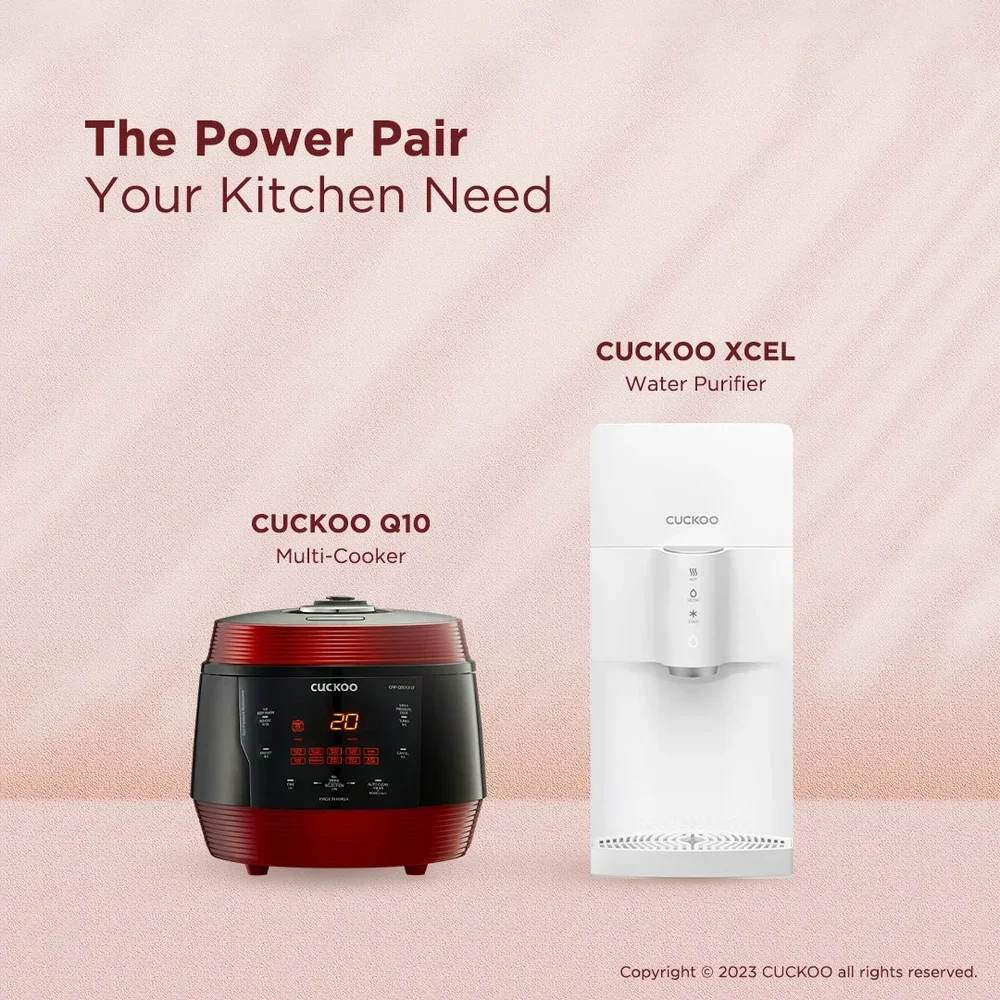
CUCKOO, Korean premium lifestyle appliances. Appliances live in the background of everyday life, so the brand has to work to stay in mind and to make functional products feel desirable. The decision was to run one programme at two volumes: always-on social to keep the brand present and coherent between big moments, and dedicated campaign rollouts, product launches, festive moments, a Mother's Day collaboration, each with its own creative and media plan. We gave each month its own ideas while holding the CUCKOO identity fixed, added performance marketing so attention converted into leads rather than impressions, and reported across the engagement so decisions followed how audiences actually responded. The everyday content builds the audience; the launch campaign converts it at the moment it matters.



Why Delitier & Co.
Delitier & Co. has been building brands from Singapore since 2014 for beauty and wellness, premium lifestyle, retail, F&B and consumer goods. We are a premium, digital-first branding agency: strategy first, so identity, campaigns, social and every everyday touchpoint descend from one idea rather than four. That is what lets a feed and a launch read as the same brand. Our work spans brand strategy, identity, packaging and spatial design through to social media strategy and management, brand campaigns and performance marketing. We hold a 5.0 rating on Google from 13 reviews, 5.0 on Clutch, and were named a Clutch Leading Social Media Agency in Singapore in 2022. Future-proof by strategy, timeless by design.
Frequently Asked Questions
What is social media storytelling for a premium brand?
It is running social as the public expression of a defined brand position rather than as a posting schedule. The brand decides what it believes, who it is for and the territory it holds, then produces content that argues that case. The test of success is whether the feed would still be recognisable with the logo removed.
How is this different from social media strategy?
Social media strategy in the usual sense covers platforms, formats and measurement. Storytelling sits above that: it determines what the brand is actually saying and why anyone premium should care. A brand can execute a flawless strategy and still say nothing distinctive, which is the most common outcome we are asked to fix.
Do we need a brand foundation before commissioning social content?
Yes, if you want the content to be yours. Without a written position, a team's only reference is what the rest of the category is producing, so the feed converges on the category look regardless of how good the individual posts are. Building the foundation first is cheaper than running two quarters of content you later replace.
Can an existing in-house team run this?
Often, once they have a brief to create against and a single owner with the right to reject off-position work. The constraint is rarely craft. It is that the team has been asked to invent a position at the point of production, which is not a job a content function can do.
How do we know whether our current feed is working?
Look at who engages rather than how many. Engagement from people who will never buy at your price point costs you money and flatters the reporting. Alongside that, check whether your campaign creative and your everyday content look like they came from the same brand, if they don't, the strategy only exists inside campaigns.
Should a premium brand be on every platform?
No. Presence on a platform you cannot hold to your standard damages the position more than absence does. Choose where the people who commission or buy your work actually pay attention, then produce at a level that would survive being seen beside your product.
What does an always-on programme deliver that campaigns alone don't?
Familiarity, and the goodwill that comes with it. A launch lands with people who already know and like the brand, or it lands cold. The everyday work is what builds the audience a campaign then converts.