Premium Brand Activation: How to Choose a Brand Activation Firm
A brand activation firm turns a brand's position into something a customer can see, touch and act on, a launch, a retail counter, a campaign, a seasonal moment. For a premium brand the job is narrower than reach. Every activation either confirms the position or contradicts it, and a contradiction costs more than the impressions it buys. The right firm is judged on judgement: what it refuses to do, not only what it can produce.
Delitier & Co. is a premium, digital-first branding agency in Singapore, working with beauty and premium lifestyle brands across Southeast Asia, and it treats activation as the visible end of a strategy rather than a separate discipline.
Key Takeaways
Activation is the moment a position stops being a document and becomes something a customer meets. For a premium brand, one off-brand moment costs more than the reach it buys.
Mass-market activation optimises for volume. Premium activation optimises for fit between what the customer sees and what the brand claims. Different brief, different approval, different measure.
Judge a brand activation firm on whether it can state the rule your activation must not break, before it shows you a single format.

What a brand activation firm actually does
A brand activation firm makes a brand position visible and actionable at a specific moment, in a specific place, to a specific audience. That covers a product launch, a department store counter, a pop-up, a festive or seasonal campaign, a collaboration with another brand, and the paid and social work that carries the moment beyond the people physically present. The output is not one asset. It is a set of touchpoints that have to agree with each other: the space, the packaging on the table, the creative in the feed, the copy in the ad, the way a staff member describes the product.
The word "activation" gets used for two different jobs, which is why shortlists come back so mixed. One job is production, building the thing, staffing it, running the logistics on the day. The other is deciding what the thing should be, given what the brand has already claimed about itself. Production firms are good at the first. A branding agency is accountable for the second, and the two are separable. Our companion piece on what a retail activation agency does across shelf, packaging, social and paid sets out that division in detail.
Premium activation and mass-market activation are not the same job
The difference is the direction of risk. A mass-market activation is a volume exercise: more people reached, more samples handed out, more trials, more conversion at the bottom of a wide funnel. A weak execution is inefficient but rarely damaging, it underperforms and the brand moves on. A premium brand carries the opposite exposure. Its price, its distribution and its restraint are the argument. An activation that feels cheap, crowded or generic does not simply underperform; it supplies evidence against the position the brand has spent years building. The reach was real, and so was the damage.
That asymmetry should change how the work is commissioned. Where a mass-market brief asks how many people we can put in front of the product, a premium brief asks which people, in what setting, in what state of mind, and what the encounter has to feel like to be worth having at all. Fewer moments, held to a higher standard, is usually the correct answer for a premium brand and it is an answer a firm paid on footprint will rarely volunteer.
| Mass-market activation | Premium brand activation | |
|---|---|---|
| What it is for | Trial and volume | Confirming the position in person |
| Judged by | Reach, samples, cost per contact | Fit, quality of encounter, what the customer says afterwards |
| Audience | As many as the budget allows | The people whose opinion moves the category |
| Creative source | The campaign calendar | The brand's position and identity system |
| Cost of a weak execution | Inefficiency | Evidence against the brand's own claim |
| Sign-off | Marketing | Whoever owns the brand |
| After the moment | Report and move on | The assets become part of the brand's permanent library |
What buyers are typing, and what they mean by it
The search terms tell you what the market is worried about. Alongside "brand activation firm" and "brand activation company singapore", buyers type longer, more specific questions "which singapore company specialises in luxury brand activation" is one of them. Read literally it asks for a specialism. Read honestly it asks something narrower: who can be trusted not to cheapen this brand.
That is a question about restraint, not about capability lists. Almost any competent firm can build a counter and staff it. Far fewer will tell a client that the mall atrium on offer is wrong for the brand, that the sampling mechanic will attract the wrong crowd, or that the collaboration being proposed borrows credibility in the wrong direction. When you meet a shortlist, the useful question is not what they have produced. It is what they have talked a client out of, and why.
The rule your activation must not break
Every premium activation should be governed by one written rule, agreed before any format is discussed. The rule comes out of the brand's position, and it is specific enough to kill an idea. Expand reach but protect accessibility. Never discount in public. The product is always shown in use, never in a pile. Staff explain, they do not pitch. A firm that can write that sentence for your brand, in your words, has understood the position. A firm that cannot will default to the category's habits, which for a premium brand is how drift begins.
The rule only exists if the brand has a settled position and an identity system to execute it. Where those are unresolved, activation exposes the gap immediately, the creative has nothing to descend from, so each moment invents its own look and the brand accumulates versions of itself. If that is the situation, the sequence is position, then identity, then activation, and our guide to judging a brand identity agency in Singapore covers the step that has to come first.
Where premium activations fail, and the fix
The failure mode is familiar: the activation looks fine on the day, performs acceptably on paper, and leaves the brand slightly harder to recognise afterwards. The cause is procurement. Activation is usually budgeted inside the marketing calendar rather than the brand, so it is briefed on dates and deliverables and awarded on footprint and cost per contact. Nobody in that chain is accountable for whether the moment agreed with the brand, because no one was asked to be. The fix is structural and cheap: brief the activation from the position document rather than the calendar, carry the one rule into the brief in writing, and give final creative approval to whoever owns the identity, not to whoever owns the campaign budget. That single change in sign-off does more for consistency than any amount of post-event reporting.
The launch moment and the months either side of it
A premium activation works when it lands on an audience that already knows the brand, which makes the always-on programme part of the activation, not a separate line item. A launch aimed at strangers has to spend its budget building recognition before it can convert anything. A launch aimed at an audience that has been kept warm for months converts attention that already exists. The practical implication for a brand activation firm is that the same team should be running the everyday content and the campaign moments, so the launch inherits a voice rather than introducing one.
This also settles what happens after. Photography, film, copy and design produced for an activation are brand assets, not event leftovers. Commissioned properly, they carry the brand for months in social, on the website and in retail. Commissioned as event coverage, they are unusable a fortnight later. Specify the afterlife of the assets in the brief, and the same budget produces materially more.
Proof, written as decisions
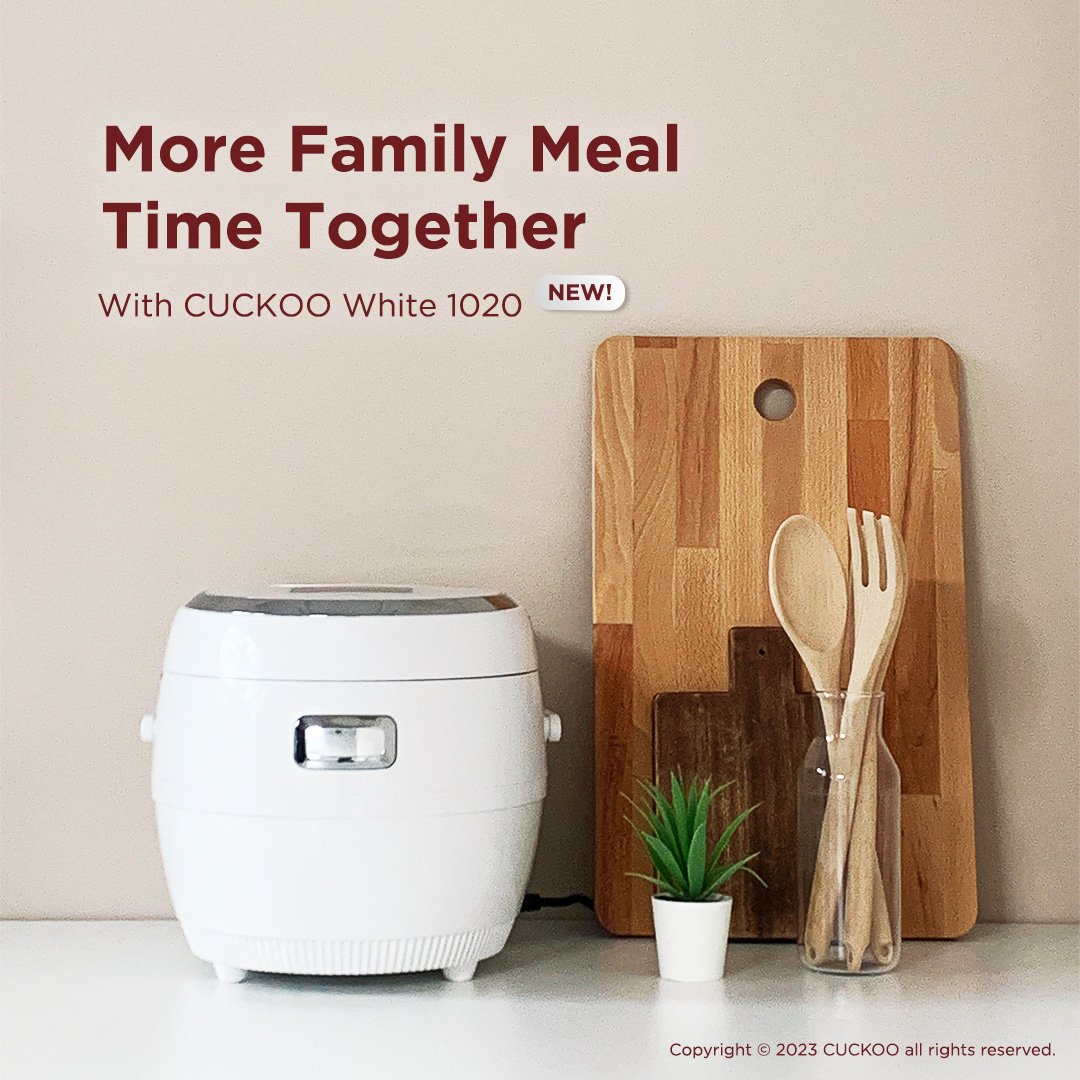
CUCKOO, a Korean premium lifestyle appliance brand, is the clearest illustration of the launch-plus-always-on structure. The challenge was one every premium lifestyle brand recognises: the products live in the background of everyday life, so the brand has to work to stay top of mind and to make functional objects feel desirable. The decision was to take on ongoing social media management, strategy, content creation and creative direction across a rolling monthly schedule, so the brand stayed present and coherent in its audience's feeds between the big moments. That always-on layer was then paired with dedicated campaign rollouts, each with its own creative and media plan: brand awareness, product launches, festive season moments and a Mother's Day brand collaboration. Media planning and ads management ran alongside the content, and performance was reported across the engagement so content and campaign decisions followed how audiences actually responded. The discipline that made it work was consistency: each month given its own ideas without ever drifting from the CUCKOO identity. The full CUCKOO social and campaign engagement sets out the scope.
In fragrance, Maison 21G accounts for four engagements, the perfume brand work itself, a Mother's Day campaign, a home scents line and a hand sanitiser range. For Mother’s Day 2020, we were tasked to launch a campaign to celebrate this special occasion. We came up with a customised design for Maison 21G’s perfume bottles for those who were looking for gift ideas, where customers could also write a message to show their appreciation to their moms. Overall, it garnered great response from the public and many bottles were sold after the campaign.

Why Delitier & Co.
Delitier & Co. has worked from Singapore since 2014, from 60 Paya Lebar Road, #06-28 Paya Lebar Square, Singapore 409051, with brand strategy, brand identity, packaging, spatial design, brand campaigns, social media strategy and management, and performance marketing held in one place, which is why an activation here is briefed by the people who wrote the position. The work carries a 5.0 Google Business Profile rating from 13 reviews and 5.0 on Clutch, alongside DesignRush's Top 30 Digital Advertising Agencies listing in 2021 and Clutch's Leading Social Media Agency in Singapore in 2022. It is a premium, digital-first branding agency: future-proof by strategy, timeless by design.
Frequently Asked Questions
What is brand activation?
Brand activation is the point where a brand's position becomes something a customer can experience directly, a launch, a counter, a pop-up, a seasonal campaign, a collaboration, and the paid and social work that carries it. It is not a category of event; it is a stage of brand building. The test of a good activation is whether someone who encounters it comes away with the impression the brand intended.
"Which Singapore company specialises in luxury brand activation?"
Buyers type this exact phrase, and the honest answer is that the specialism they are looking for is judgement rather than a format. What matters is whether the firm can state the rule your brand's activation must not break, and whether it will decline the sites, mechanics and partnerships that break it. Ask a shortlist what they have advised a premium client against, and why. The answer separates the field faster than a portfolio does.
How is a brand activation firm different from an events company?
An events company is accountable for producing the moment: the build, the staffing, the logistics, the day itself. A branding agency is accountable for deciding what the moment should be, given what the brand has already claimed about itself, and for making sure every touchpoint agrees. Both are legitimate disciplines and premium brands often use both. The mistake is assuming the second is included when you have only bought the first.
What does premium brand activation cost in Singapore?
There is no single figure, because scope varies from a single seasonal moment to a year-long programme with always-on content and paid media behind it. For context on the wider market, the tiers Google surfaces for Singapore branding work run from roughly SGD 500–5,000 for freelancers, SGD 5,000–15,000 for independent teams, SGD 15,000–50,000+ for mid-market agencies and SGD 50,000–200,000+ for enterprise engagements. Treat those as orientation for the category, not as a quote.
Do we need our brand identity finished before we activate?
For a premium brand, yes in practice. Activation executes a position; without a settled position and an identity system to draw on, each moment invents its own look and the brand ends up with versions of itself rather than one recognisable presence. If a date is fixed and the identity is not ready, the sensible move is to narrow the activation to what can be held to standard rather than to proceed at full scope with unresolved fundamentals.
How should a premium activation be measured?
Measure fit as well as volume. Attendance, leads and reach are worth tracking, but for a premium brand the more telling measures are qualitative and downstream: what customers say about the brand afterwards, whether the assets produced are still usable months later, and whether the activation made the next one easier to sell in. A moment that hit its reach target while making the brand harder to recognise has not succeeded.
Can one firm run always-on work as well as launches?
It is preferable. When the same team runs the everyday content and the campaign moments, the launch inherits an established voice and an audience that already knows the brand, rather than spending its budget on recognition. Splitting the two across suppliers is workable, but it puts the burden of consistency on the client — and consistency is precisely what a premium brand cannot afford to lose.